
Hematologic Oncology
Latest News
Advertisement
Latest Videos














































Advertisement
More News
The first cerebral edema death in the ZUMA-1 CAR T-cell therapy trial was disclosed today by Kite Pharma on a conference call with investors announcing the company’s first quarter financial results.
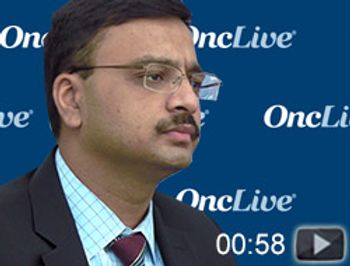
Nitin Jain, MD, assistant professor, Department of Leukemia, The University of Texas MD Anderson Cancer Center, discusses the treatment of patients with chronic lymphocytic leukemia who have developed Richter’s transformation.

JUNO Therapeutics announced that it hopes to accelerate its process for developing CAR T cells from weeks to just 2 days.

Sattva S. Neelapu, MD, discusses the ZUMA-1 trial and the potential impact of these results on patients with non-Hodgkin lymphoma.
Grzegorz S. Nowakowski, MD, discusses ongoing efforts to determine prognostic factors of mantle cell lymphoma and what other challenges lie ahead.
John P. Leonard, MD, associate dean of Clinical Research, interim chair of the Department of Medicine, Weill Cornell Medical College, Weill Cornell Medicine/NewYork-Presbyterian Hospital, discusses the emergence and potential of chimeric antigen receptor (CAR) T-cell therapy across hematologic malignancies.
The European Commission has approved pembrolizumab for the treatment of adult patients with relapsed or refractory classical Hodgkin lymphoma who have progressed following autologous stem cell transplant and brentuximab vedotin, or who are transplant-ineligible and have failed brentuximab vedotin.
Richard M. Stone, MD, discusses the impact that midostaurin could have for patients with AML, as well as ongoing research with the agent.
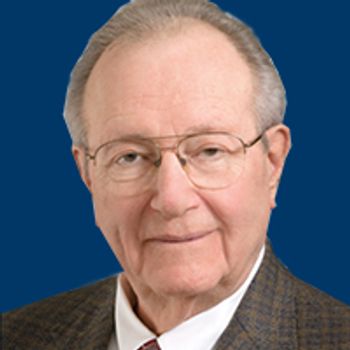
Emil J. Freireich, MD, DSc, was the originator of combination chemotherapy, the primary architect of the first cure for a systemic cancer, a major contributor to the cures for half a dozen other systemic cancers and, quite possibly, the man who did the most to transform MD Anderson from a minor facility to one of the world’s leading cancer centers.
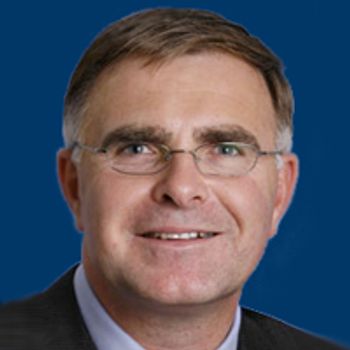
The European Commission has approved daratumumab for use in combination with lenalidomide and dexamethasone or bortezomib and dexamethasone for the treatment of patients with multiple myeloma following at least 1 prior therapy.
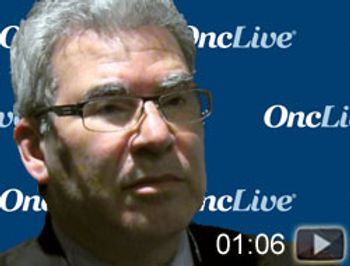
Martin S. Tallman, MD, chief, Leukemia Service, Memorial Sloan Kettering Cancer Center, discusses the FDA approval of midostaurin (PKC412) for adult patients with newly diagnosed FLT3-mutated acute myeloid leukemia (AML).

The FDA has approved midostaurin (Rydapt) for the treatment of adult patients with newly diagnosed FLT3-positive acute myeloid leukemia in combination with standard cytarabine and daunorubicin induction and cytarabine consolidation. The drug has also been approved for the treatment of patients with advanced systemic mastocytosis (SM), including aggressive systemic mastocytosis, SM with associated hematological neoplasm, and mast cell leukemia.
Grzegorz S. Nowakowski, MD, discusses the ever-changing landscape of mantle cell lymphoma, the intriguing combinations being studied, and the promise that immunotherapy could hold.
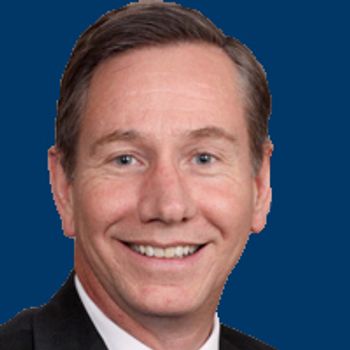
Stephen M. Ansell, MD, PhD, discusses the potential of immunotherapy agents in lymphoma, ongoing clinical trials, and where this blends in with chimeric antigen receptor (CAR) T-cell therapy.
Ronald Go, MD, associate professor of Medicine, Mayo Clinic, discusses treatment for patients with thrombotic microangiopathy.
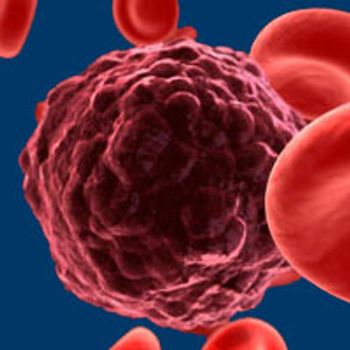
Achieving a complete response following ABVD chemotherapy offered the best chance for survival for patients with chronic lymphocytic leukemia who developed Hodgkin lymphoma following Richter transformation, according to a retrospective study published in the American Journal of Hematology.

Low disease burden prior to treatment with CD19-specific chimeric antigen receptor T-cell therapy appears to be a positive prognostic factor for long-term survival outcomes of patients with relapsed B-cell acute lymphoblastic leukemia.

The FDA has granted a breakthrough therapy designation to tisagenlecleucel-T (CTL019) for use as a treatment for adult patients with relapsed/refractory diffuse large B-cell lymphoma after the failure of at least 2 prior therapies.
Nathan Fowler, MD, discusses the current management of high-risk follicular lymphoma and ongoing developments in the field.

Frederick L. Locke, MD, discusses the ZUMA-1 trial in non-Hodgkin lymphoma and the next steps going forward.
Clara D. Bloomfield, MD, a groundbreaking researcher in adult leukemia and lymphoma who helped define new roles for women in science, was honored in the Myeloid Neoplasms category with a 2015 Giants of Cancer Care® award, a program that OncLive® developed to recognize leaders in the field.
Alfred L. Garfall, MD, discusses the latest developments with CAR T-cell therapy in hematologic malignancies

A supplemental biologics license application has been submitted to the FDA for the use of denosumab for the prevention of skeletal-related events in patients with multiple myeloma.
According to results from the phase II CHRONOS-1 trial, a majority of patients with relapsed or refractory indolent lymphoma responded to treatment with the PI3K dual-isoform inhibitor copanlisib.
Martin Dreyling, MD, associate professor, University of Munich, discusses primary results of the pivotal CHRONOS-1 study, which looked at copanlisib in patients with relapsed or refractory indolent B-cell lymphoma, during the AACR Annual Meeting.
Advertisement
Advertisement
Trending on OncLive
1
FDA Accepts NDA for Daraxonrasib in Previously Treated Metastatic Pancreatic Cancer
2
Teclistamab Plus Talquetamab Yields Significant Survival Benefits in Earlier-Line R/R Myeloma
3
European Commission Approves Camizestrant Plus CDK4/6 Inhibition for Emergent ESR1-Mutated Advanced Breast Cancer
4
FDA Approves Zidesamtinib in Pretreated ROS1+ NSCLC
5