

Immuno-Oncology
Latest News
Advertisement
Latest Videos






























































Advertisement
More News
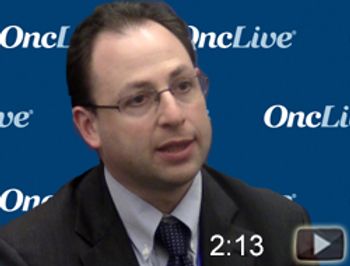
Jonathan D. Schoenfeld, MD, MPhil, MPH, director, melanoma radiation oncology, physician, assistant professor of radiation oncology, Harvard Medical School, Dana-Farber Cancer Institute, discusses the potential benefit of using radiation and immunotherapy in combination.
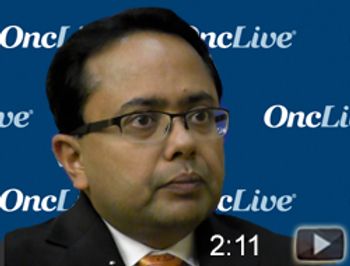
Neeraj Agarwal, MD associate professor in the Division of Oncology, Department of Medicine, director of the Genitourinary Medical Oncology Program, Huntsman Cancer Institute at the University of Utah, discusses the pox viral vaccine rilimogene galvacirepvec/rilimogene glafolivec (PROSTVAC) and the future of immunotherapy in prostate cancer.
Dmitriy Zamarin, MD, PhD, medical oncologist, Memorial Sloan Kettering Cancer Center, discusses the ways in which immunotherapy is slated to play a major role in multiple cancer types.
Rimas V. Lukas, MD, associate professor of Neurology, director, Medical Neuro-Oncology, University of Chicago Medicine, discusses some of the exciting advances recently seen with immunotherapy in the treatment of patients with glioblastoma
Mary Jo Fidler, MD, associate professor, medical oncology, hematology, internal medicine, Rush University Medical Center, discusses how early and persistent oligoclonal T cell expansion correlates with durable response to anti-PD1 therapy in non-small cell lung cancer treatment (NSCLC).

Maria Ignez Braghiroli, MD, medical oncologist, Instituto do Câncer do Estado de São Paulo, discusses what the current treatment landscape looks like for patients with colorectal cancer, as well as what the future may hold.

Winald Gerritsen, MD, PhD, professor and medical oncologist, Radboud Medical Center, discusses some of the recent shortcomings seen with immunotherapy agents in the treatment of patients with castration-resistant prostate cancer.
Marcus Bosenberg, MD, PhD, associate professor of dermatology and pathology, Yale University, discusses mouse models for testing immunotherapies.
Updated results from the CheckMate-205 trial showed that nivolumab had an objective response rate of 73% in a cohort of patients with classical Hodgkin lymphoma who received brentuximab vedotin before and/or after autologous hematopoietic stem cell transplantation.

Results from an expansion cohort of a preliminary clinical trial have shown encouraging activity for a novel antibody-drug conjugate in patients with heavily pretreated advanced ovarian cancer.
Heather A. Wakelee, MD, associate professor of Medicine (Oncology), Stanford University Medical Center, regent, International Association for the Study of Lung Cancer (IASLC) discusses the FDA approval of pembrolizumab (Keytruda) in the frontline setting for patients with non–small cell lung cancer (NSCLC).
The FDA has approved pembrolizumab (Keytruda) for the frontline treatment of patients with metastatic non­–small cell lung cancer whose tumors have ≥50% PD-L1 expression based on an FDA-approved test and who do not harbor EGFR or ALK aberrations.
Hossein Borghaei, DO, associate professor at Fox Chase Cancer Center, discusses selecting between nivolumab (Opdivo) and pembrolizumab (Keytruda) in second-line non–small cell lung cancer (NSCLC).
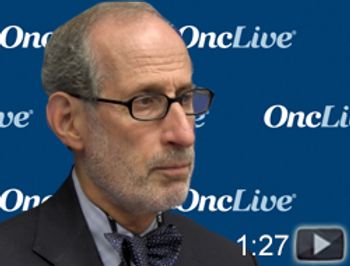
Jeffery S. Weber, MD, PhD, deputy director of the Laura and Isaac Perlmutter Cancer Center, co-director of the Melanoma Program, and head of Experimental Therapeutics at NYU Langone Medical Center, discuses the key takeaways from the phase II CheckMate-064 trial, in which patients were randomized to receive either nivolumab followed by ipilimumab followed by nivolumab maintenance therapy, or ipilimumab followed by nivolumab and maintenance therapy with nivolumab.
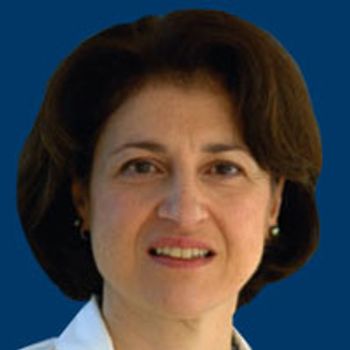
Suzanne L. Topalian, MD, discusses the development of PD-1/PD-L1 inhibitors, emerging biomarkers, and why a precision medicine approach is necessary to identify effective immunotherapy combination regimens.
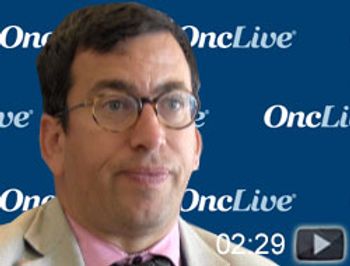
Edward B. Garon, MD, director, Thoracic Oncology, Jonsson Comprehensive Cancer Center, UCLA, discusses his concerns for potential immunotherapy combinations for the treatment of patients with lung cancer.
The FDA has granted a priority review designation to nivolumab as a treatment for patients with locally advanced unresectable or metastatic urothelial carcinoma following progression on a platinum-containing therapy.
Lisa Carey, MD, associate director, Clinical Research, UNC Lineberger Comprehensive Cancer Center, Richardson and Marilyn Jacobs Preyer Distinguished Professorship for Breast Cancer Research, UNC-Chapel Hill, discusses the possibility of administering immunotherapy as treatment for patients with HER2-positive breast cancer.
Pembrolizumab improved survival compared with chemotherapy in previously treated patients with advanced urothelial cancer in the phase III KEYNOTE-045 trial.
Given the poor prognoses often seen in patients with anaplastic thyroid cancer, researchers are seeking novel therapies that may hold more promise than surgery or radiation.
Jason Luke, MD, assistant professor of Medicine, The University of Chicago Medicine, discusses the various methods involved in immunotherapy diagnostics in the treatment landscape of melanoma.
Toni K. Choueiri, MD, clinical director, Lank Center for Genitourinary Oncology, director, Kidney Cancer Center, senior physician, Dana-Farber Cancer Institute, discusses some of the ongoing trials evaluating different immunotherapy agents in renal cell carcinoma.
Patrick M. Forde, MBBCh, assistant professor of oncology, Johns Hopkins Hospital, discusses a study presented at ESMO 2016 on neoadjuvant nivolumab, in early stage resectable non-small-cell lung cancer (NSCLC).
Anthony B. El-Khoueiry, MD, associate professor of Clinical Medicine, USC Norris Comprehensive Cancer Center, discusses the role that immunotherapy currently plays, and will continue to play, in the treatment landscape of hepatocellular carcinoma (HCC).
Stefani Spranger, PhD, postdoctoral fellow, Cancer Research Institute at The University of Chicago, discusses the basic knowledge all oncologists should have regarding immunotherapy.
Advertisement
Advertisement
Trending on OncLive
1
FDA Approves Tucatinib Plus Trastuzumab/Pertuzumab as First-Line Maintenance in Advanced HER2+ Breast Cancer
2
Iberdomide Plus Daratumumab/Dexamethasone Yields Significant PFS Benefit in R/R Myeloma
3
FDA Approves Atezolizumab Plus Chemo for Stage III dMMR Colon Cancer
4
VIR-5500 Receives FDA Fast Track Designation in mCRPC
5