






Immuno-Oncology
Latest News
Advertisement
Latest Videos

































































Advertisement
More News

Therapeutic options for patients with renal cell carcinoma have increased rapidly in the past decade, yet the field is still poised to expand significantly in the coming years, said Robert S. Alter, MD.

It has been about 18 months since the first immunotherapy checkpoint agent was approved for patients with non–small cell lung cancer. Now there are 3 monoclonal antibodies that target the PD-1/PD-L1 pathway on the market for the tumor type and the focus has shifted rapidly to establishng immunotherapy as a new frontline standard.

Sonja Althammer, PhD, Team Leader Bioinformatics at Definiens, Munich, Bavaria, Germany, discusses a study looking to define a subgroup of patients with non–small cell lung cancer (NSCLC) who respond well to treatment with the PD-L1 inhibitor durvalumab.

Suzanne L. Topalian, MD, professor of Surgery, Johns Hopkins Medicine, discuses novel immunotherapy biomarkers in colorectal cancer (CRC).
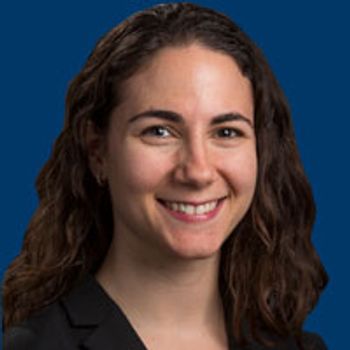
The expression of PD-L1 has been at the forefront of biomarker development for PD-1/PD-L1 inhibitors, but there is much uncertainty surrounding its use and other biomarkers are needed.
Sarah B. Goldberg, MD, MPH, assistant professor of Medicine, Yale Cancer Center, discusses the use of PD-L1 as a biomarker in treating patients with lung cancer.

Immunotherapy and chemotherapy are options physicians should not dismiss for patients with HER2-positive breast cancer, according to Lisa Carey, MD, even with the available targeted agents trastuzumab, pertuzumab, lapatinib, and ado-trastuzumab emtansine.

While immunotherapy continues to make headway in various malignancies, the chemotherapy docetaxel maintains a key role in the treatment of patients with metastatic prostate cancer.
Hossein Borghaei, DO, chief, Division of Thoracic Medical Oncology, director, Lung Cancer Risk Assessment, associate professor, Department of Hematology/Oncology, Fox Chase Cancer Center, discusses the management of slightly rarer side effects that patients with lung cancer can experience when treated with immunotherapy agents.

Lisa Butterfield, PhD, professor of Medicine, Surgery and Immunology, director, University of Pittsburgh Cancer Institute Immunologic Monitoring and Cellular Products Laboratory, University of Pittsburgh, discusses the goals of the Society for Immunotherapy of Cancer (SITC) Immune Biomarkers Task Force during an interview at the SITC 31st Annual Meeting and Associated Programs.

Recent research suggests that the presence of PD-L1–positive and CD8+ cells may be useful for predicting responses in patients with non-small cell lung cancer who have been treated with durvalumab.

Pembrolizumab reduced the size of tumors in patients with a subtype of soft tissue sarcoma, according to updated interim results from the phase II SARC028, multicenter clinical trial, which were reported at the most recent meeting of the Connective Tissue Oncology Society in Lisbon, Portugal.

Immunotherapy continues to revolutionize the field of non–small cell lung cancer, with researchers now focusing on the optimal use of immune agents in the frontline setting.

Hossein Borghaei, DO, discuss what lies ahead for immunotherapy in lung cancer, and what changes may be on the horizon for such agents as pembrolizumab (Keytruda), nivolumab (Opdivo), and ipilimumab (Yervoy) in the frontline setting.

The combination of nivolumab and ipilimumab led to a high response rate and improved overall survival versus historical controls for patients with pretreated metastatic urothelial carcinoma.
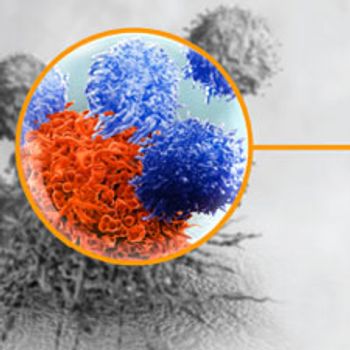
Immuno-oncology is among the most discussed topics in cancer research, but many are unaware of the science behind this class of treatments. Learn how it works.

Following on their impressive success in the treatment of several other tumor types, immune-based therapies are being studied in clinical trials for hepatocellular carcinoma and are showing promising signals of efficacy.

Tim F. Greten, MD, senior investigator thoracic and gastrointestinal oncology branch, head, gastrointestinal malignancy section, National Cancer Institute (NCI), discusses the potential for immunotherapy in hepatocellular carcinoma (HCC).

The use of immunotherapy as a treatment for cancer is progressively increasing with a flood of recent approvals for immune checkpoint inhibitors directed against CTLA-4 and PD-1.

Pembrolizumab monotherapy reduced the risk of death by 27% compared with chemotherapy for patients with advanced urothelial carcinoma whose disease progressed after prior treatment.

The combination of lirilumab and nivolumab resulted in an objective response rate of 24.1% in patients with squamous cell carcinoma of the head and neck.
Anne Chiang, MD, PhD, professor and thoracic oncologist at Yale Cancer Center, discusses molecular testing in lung cancer and how it affects treatment decisions.
Joaquim Bellmunt, MD, PhD, attending physician of Solid Tumor Oncology at Dana-Farber Cancer Institute, discusses findings from the phase III KEYNOTE-045 study, which compared second- or third-line pembrolizumab with investigator-choice chemotherapy as a treatment for patients with metastatic or locally advanced, unresectable urothelial carcinoma.
Everett Vokes, MD, John E. Ultmann Professor of Medicine and Radiation Oncology, physician-in-chief, University of Chicago Medical Center, chair, Department of Medicine, University of Chicago Medicine, discusses the FDA approvals of the PD-L1 inhibitors nivolumab (Opdivo) and pembrolizumab (Keytruda) for the treatment of patients with head and neck cancer.
Nivolumab (Opdivo) may be the only checkpoint inhibitor that is approved by the FDA as a treatment of patients with Hodgkin lymphoma, but other immunotherapies—alone and in combination with other novel agents—are emerging in other indications.
Advertisement
Advertisement
Trending on OncLive
1
FDA Approves Tucatinib Plus Trastuzumab/Pertuzumab as First-Line Maintenance in Advanced HER2+ Breast Cancer
2
Iberdomide Plus Daratumumab/Dexamethasone Yields Significant PFS Benefit in R/R Myeloma
3
FDA Approves Atezolizumab Plus Chemo for Stage III dMMR Colon Cancer
4
VIR-5500 Receives FDA Fast Track Designation in mCRPC
5