





Melanoma & Skin Cancer
Latest News
Advertisement
Latest Videos

































































Advertisement
More News
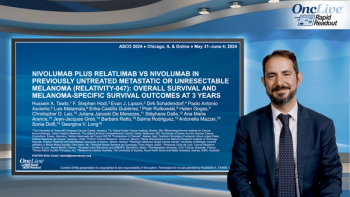
A 3 year survival update on the RELATIVITY-047 trial (NCT03470922), a global, randomized, double-blind phase 2/3 study comparing nivolumab plus relatlimab vs nivolumab in previously untreated metastatic or unresectable stage III or IV melanoma.
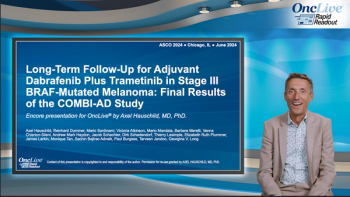
COMBI-AD (NCT01682083) evaluated dabrafenib plus trametinib for patients with BRAF-mutated AJCC-stage III melanoma, and here the final results for RFS, distant-metastasis-free survival and overall survival are presented.
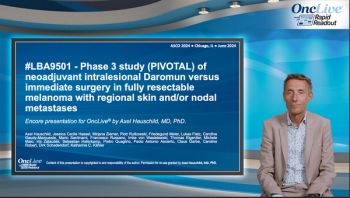
PIVOTAL (NCT02938299) is an open label, randomized, multicenter, phase 3 trial evaluating Daromun as a neoadjuvant intralesional therapy for resectable, locally advanced Stage III melanoma.
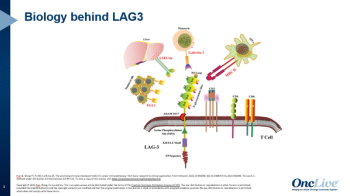

UV1 added to pembrolizumab elicited sustained OS outcomes as frontline therapy in advanced, unresectable, or metastatic malignant melanoma.

The combination of RP1 and nivolumab was safe and effective in patients with anti–PD-1-failed advanced melanoma.

Neoadjuvant Nivolumab/Ipilimumab New Standard of Care for Stage III Melanoma
Published: | Updated:
Neoadjuvant nivolumab/ipilimumab followed by TLND and response-driven adjuvant therapy reduced the risk of progression, recurrence, or death in melanoma.

Induction encorafenib/binimetinib before nivolumab/ipilimumab did not improve PFS in unresectable or metastatic BRAF V600E/K–positive melanoma.

The COMBI-AD dataset is the longest follow-up to date of adjuvant treatment for patients with stage III melanoma.

An artificial intelligence-based smartphone app used by primary care physicians showed high diagnostic accuracy in detecting cutaneous melanoma.

Patrick Ott, MD, PhD, discusses the investigation of cancer vaccines, highlighting the clinical implications of this treatment modality in melanoma.

Press Release
Mitchell Fane, PhD, has received a grant to investigate the role of aging in immune-regulated reactivation from metastatic melanoma.

The phase 3 KeyVibe-010 trial of adjuvant vibostolimab plus pembrolizumab in patients with resected high-risk melanoma has been discontinued.
A multipeptide vaccine combination approach with 12MP plus 6MHP vs 12MP plus tet extended overall survival in patients with stage IIB to IV melanoma.

Zeynep Eroglu, MD, discusses a phase 1/2 trial that evaluated ceritinib alone and in combination with trametinib in patients with mutant melanoma.
Zeynep Eroglu, MD, discusses the efficacy and safety of ceritinib as monotherapy and in combination with trametinib in pretreated advanced melanoma.
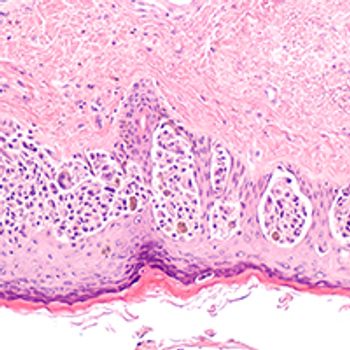
Immunogenomic information displays predictive capability in terms of immunotherapy resistance in metastatic uveal melanoma.

Zeynep Eroglu, MD, discusses how findings from a phase 1/2 study of ceritinib and trametinib could help inform future research in melanoma.
Zeynep Eroglu, MD, discusses future steps for assessing ceritinib in combination with trametinib in patients with metastatic melanoma.

Zeynep Eroglu, MD, discusses the safety profile of ceritinib plus trametinib in pretreated metastatic melanoma.

OBX-115 was well tolerated and produced durable antitumor responses in patients with immune checkpoint inhibitor (ICI)-resistant advanced melanoma.

Daniel Olson, MD, discusses the benefit associated with lifileucel in patients with unresectable or metastatic melanoma.

Investigators examined 100 metastases and developed a Uveal Melanoma Immunogenomic Score to predict which patients will respond to immunotherapy.

Vishal Patel, MD, FAAD, FACMS, discusses the evolving use of neoadjuvant and adjuvant PD-1 inhibition in cutaneous squamous cell carcinoma.

SCIB1 plus nivolumab and ipilimumab elicited responses in patients with advanced, unresectable melanoma.
Advertisement
Advertisement
Trending on OncLive
1
FDA Approves Atezolizumab Plus Chemo for Stage III dMMR Colon Cancer
2
VIR-5500 Receives FDA Fast Track Designation in mCRPC
3
Individualized Neoantigen Vaccine Elicits Durable T-Cell Responses in Resected HPV– HNSCC
4
China’s NMPA Approves Adjuvant T-DXd for HER2+ Early Breast Cancer With Residual Invasive Disease
5