




Melanoma & Skin Cancer
Latest News

Advertisement
Latest Videos





































































Advertisement
More News
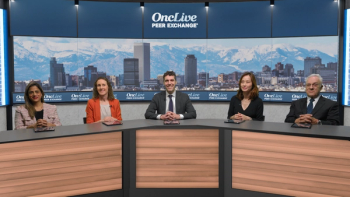
Doctors discuss the effectiveness of different treatment combinations for patients with BRAF-mutated metastatic melanoma and brain metastases, highlighting that consideration of patient preferences is essential in making treatment decisions.
Experts discuss treatment of patients with BRAF-mutated melanoma and symptomatic brain metastases, detailing radiation therapy, corticosteroid use, and the choice between BRAF/MEK inhibitor therapy and immunotherapy.
For patients with BRAF-mutated melanoma with asymptomatic brain metastases, immunotherapy, particularly the combination of ipilimumab and nivolumab, is the preferred treatment option due to its effectiveness and durability, as supported by the seven-year follow-up data from the CHECKMATE 204 trial.

Treatment with SD-101 distributed via pressure-enabled drug delivery with immune checkpoint inhibition was tolerated and resulted in the depletion of Tregs, M-MDSCs, and M2 macrophages in liver metastases in patients with uveal melanoma.

The FDA has issued a complete response letter to the biologic license application seeking the approval of cosibelimab for use in patients with metastatic or locally advanced cutaneous squamous cell carcinoma who are not eligible for curative surgery or radiation.
The tumor-infiltrating lymphocyte cell therapy OBX-115 produced responses with no dose-limiting toxicities in heavily pretreated patients with advanced or metastatic melanoma whose who had progressed on anti–PD-1 and anti–CTLA-4 therapy with disease that was primary-resistant to immune checkpoint inhibitor therapy.

The FDA has granted fast track designation to naporafenib plus trametinib for use as a potential therapeutic option in adult patients with unresectable or metastatic melanoma with an NRAS mutation who progressed on or are intolerant to a PD-1/PD-L1–based regimen.

The combination of RP1 and cemiplimab provided a numerical, but not statistically significant, improvement in response rates vs cemiplimab alone in patients with locally advanced or metastatic cutaneous squamous cell carcinoma, missing the primary end points of the phase 2 CERPASS trial.
Panelists discuss the potential benefits of rechallenging patients with BRAF-mutated metastatic melanoma with BRAF/MEK inhibitors after a break from treatment, especially for those who initially responded well, and emphasizing the success of this approach in some cases, while highlighting the importance of monitoring and utilizing ctDNA tracking for more informed decision-making.
The 7-year follow-up data for encorafenib/binimetinib showing that around 21% of patients remained progression-free supports BRAF/MEK inhibition as a later treatment option after immunotherapy failure, but doctors are reluctant to stop BRAF/MEK inhibitors given lack of data, even in those patients doing well long-term on the medications with minimal toxicity.
The panel explains which BRAF/MEK inhibitor combination therapy they each tend to turn to when treating a patient with BRAF-mutated metastatic melanoma.
Key opinion leaders explain that clinicians should warn patients with BRAF-mutated metastatic melanoma starting BRAF/MEK inhibitor therapy about short-term toxicities like fever, chills, and rash that can differ greatly from immunotherapy toxicities.
Experts discuss a preference for ipilimumab/nivolumab as the frontline immunotherapy for patients with BRAF-mutant metastatic melanoma given its proven long-term efficacy but acknowledge nivolumab/relatlimab as an option with less toxicity, especially adrenal insufficiency.
Beyond symptoms, doctors consider the psychosocial factors impacting treatment access and adherence, like insurance coverage, cost, family support, and preexisting conditions, when deciding between immunotherapy and targeted therapy for patients with BRAF-mutated metastatic melanoma.

The FDA has granted clearance for an investigational new drug application for a phase 1/2 safety lead-in trial investigating the engineered tumor-infiltrating lymphocyte KSQ-001EX in patients with melanoma, head and neck squamous cell carcinoma, and non–small cell lung cancer.
Paul D. Nathan, MBBS, PhD, FRCP, discusses the design of the phase 3 IMCgp100-202 trial of tebentafusp-tebn in patients with previously untreated, HLA-A*02:01–positive metastatic uveal melanoma, highlighting the key enrollment criteria of the randomized, open-label study.
Paul D. Nathan, MBBS, PhD, FRCP, discusses the rationale for launching the phase 3 IMCgp100-202 trial evaluating tebentafus in patients with previously untreated, HLA-A*02:01–positive metastatic uveal melanoma, as well as the mechanism of action of the agent.

Jeffrey S. Weber, MD, PhD, discusses the use of circulating-tumor DNA dynamics when guiding treatment decision-making in melanoma, according to data from the phase 2b mRNA-4157-P201/KEYNOTE-942 trial.

Omid Hamid, MD, director, Melanoma Program, The Angeles Clinic and Research Institute, Cedars-Sinai, discusses the rationale for a phase 1 trial of fianlimab plus cemiplimab in patients with advanced melanoma who have received prior adjuvant PD-1 inhibitors.

Elizabeth Buchbinder, MD, discusses the investigation of treatment with nivolumab maintenance therapy in patients with melanoma who experienced severe immune-related adverse effects associated with combination therapy with nivolumab and ipilimumab.
For patients with BRAF-mutant metastatic melanoma, doctors assess symptoms and disease status to determine if they should start treatment with combination immunotherapy, or 8-12 weeks of BRAF/MEK targeted therapy before switching to immunotherapy, which offers the possibility of durable responses or cure.
The panelists emphasize the importance of obtaining tissue for BRAF-mutation testing and dedicated tissue tracking in patients with metastatic melanoma, with immunohistochemistry followed by confirmatory next-generation sequencing, and discuss the promise of liquid biopsies like ctDNA as a future biomarker tracking modality.

The addition of bemcentinib to the standard-of-care therapies of pembrolizumab or dabrafenib plus trametinib was well tolerated in patients with metastatic melanoma; however, it did not lead to improvements in overall response rate, progression-free survival, or overall survival vs SOC alone.

Paul Nathan, MBBS, PhD, MRCP, discusses the differences between cutaneous melanoma and uveal melanoma that have led to unique unmet needs for patients with the latter malignancy; updated findings from the IMCgp100-202 trial; and how these findings may influence future clinical practice.
When a patient with metastatic melanoma patient tests negative for the BRAF V600E mutation, doctors recommend sending the sample for next-generation sequencing testing which can take 2-3 weeks, during which time they may start immunotherapy if the patient has aggressive disease, but ideally should wait for results to guide treatment.
Advertisement
Advertisement
Trending on OncLive
1
FDA Approves Atezolizumab Plus Chemo for Stage III dMMR Colon Cancer
2
VIR-5500 Receives FDA Fast Track Designation in mCRPC
3
China’s NMPA Approves Adjuvant T-DXd for HER2+ Early Breast Cancer With Residual Invasive Disease
4
Individualized Neoantigen Vaccine Elicits Durable T-Cell Responses in Resected HPV– HNSCC
5