



Melanoma & Skin Cancer
Latest News
Advertisement
Latest Videos































































Advertisement
More News
Sathya Neelature Sriramareddy, MD, PhD, discusses how the interaction between uveal melanoma cells and the liver microenvironment could influence metastasis growth and therapeutic response.
Closing out their discussion on the management of cutaneous squamous cell carcinoma, expert panelists share clinical pearls and excitement for the future.
An expert panel analyzes BRAF/MEK dual inhibitor therapy for the treatment of melanoma.
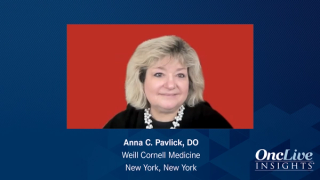
Anna C. Pavlick, DO, discusses factors that impact treatment selection for patients with melanoma.
The FDA has granted full approval to cemiplimab-rwlc for the treatment of patients with metastatic basal cell carcinoma who previously received a hedgehog inhibitor (HHI) or for whom a HHI is not appropriate.
Alexander I. Spira, MD, PhD, shares new dose escalation data from the first-in-human Phase 1 KIN-2787 study of the pan-RAF inhibitor exarafenib in patients with BRAF-altered solid tumors or NRAS-mutant melanoma.
Dr Vishal Patel shares a surgeon’s perspective on MDC, followed by a discussion on how intensifying treatment after surgery may improve outcomes for higher-risk patients with CSCC.
Experts in the field of CSCC revisit the concept of multidisciplinary care and consider best communication strategies.
Expert oncologists look to the future of treatment for cutaneous squamous cell carcinoma.
Skin cancer expert Anna C. Pavlick, DO, discusses treatment duration approaches for cutaneous squamous cell carcinoma.
The combination of darovasertib and crizotinib demonstrated clinical activity and an acceptable safety profile when utilized in first- and any-line patients with metastatic uveal melanoma.

Ryan J. Sullivan, MD, explains the prolongation of survival with tebentafusp-tebn despite apparent initial radiographic tumor progression in patients with uveal melanoma.
Ryan J. Sullivan, MD, discusses findings from a study investigating the effects of early circulating tumor DNA reduction on overall survival in patients with uveal melanoma treated with tebentafusp.
Jason J. Luke, MD, FACP, discusses initial results from the phase 1 GLIMMER-01 trial of E-602 in advanced solid tumors.
Shared insight on novel treatment modalities in the setting of cutaneous squamous cell carcinoma and how they may be triaged moving forward.
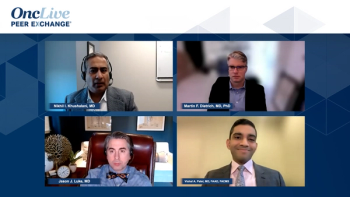
Following their review of recent clinical data, expert panelists consider how neoadjuvant cemiplimab will fit into the real-world treatment paradigm of resectable CSCC, including the possibility of delaying or avoiding surgery in patients who have an adequate response to cemiplimab.
Patients with unresectable metastatic desmoplastic melanoma achieved high response rates when treated with single-agent pembrolizumab in the SWOG S1512 trial, according to data presented during the 2023 AACR Annual Meeting.

mRNA-4157 in combination with pembrolizumab improved recurrence-free survival compared with pembrolizumab alone when used as an adjuvant treatment in patients with resected high-risk melanoma, regardless of tumor mutational burden.

The European Medicines Agency has granted Priority Medicines scheme designation to the personalized cancer vaccine mRNA-4157/V940 and pembrolizumab for use as adjuvant treatment in patients with high-risk, stage III or IV melanoma following complete resection.

The phase 3 LEAP-003 and LEAP-017 trials evaluating pembrolizumab plus lenvatinib did not meet their primary end points of overall survival in select patients with unresectable or metastatic melanoma and metastatic colorectal cancer, respectively.

The combination of the interleukin-12 encoding plasmid TAVO™-EP plus pembrolizumab did not meet the prespecified primary end point for overall response rate in patients with advanced melanoma that was refractory to anti–PD-1 therapy.
A panel of skin cancer experts give an overview of cutaneous squamous cell carcinoma and melanoma.
Expert perspectives on real-world, in-practice identification and management of patients with resectable CSCC.
Panelists round out their review of staging and risk stratification in CSCC by considering how each affects the selection of optimal surgical strategies.
Iovance Biotherapeutics has submitted a rolling biologics license application to the FDA seeking the approval of the tumor infiltrating lymphocyte therapy lifileucel for the treatment of patients with advanced unresectable or metastatic melanoma who progressed on or after prior anti–PD-1/L1 therapy and targeted therapy.
Advertisement
Advertisement
Trending on OncLive
1
FDA Approves Atezolizumab Plus Chemo for Stage III dMMR Colon Cancer
2
VIR-5500 Receives FDA Fast Track Designation in mCRPC
3
China’s NMPA Approves Adjuvant T-DXd for HER2+ Early Breast Cancer With Residual Invasive Disease
4
Individualized Neoantigen Vaccine Elicits Durable T-Cell Responses in Resected HPV– HNSCC
5