

Melanoma & Skin Cancer
Latest News
Advertisement
Latest Videos
































































Advertisement
More News
Dr Hanna defines basal cell carcinoma (BCC), reviews current treatment options and explains the role of cemiplimab for the treatment of advanced BCC.
Dr Hanna highlights investigational agents that are being studied for the treatment of advanced cSCC and discuss some unmet needs for cSCC.
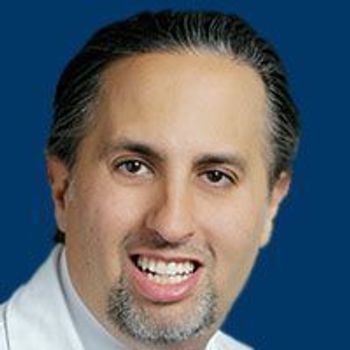
Omid Hamid, MD, highlights the importance of evaluating PRAME×CD3 Immune-mobilizing T cell receptor against cancer for melanoma treatment, the key benefits provided to patients through improved disease control and circulating tumor DNA reduction, and the safety profile of the therapy.
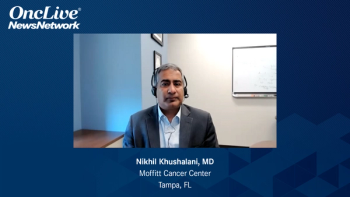
Dr Khushalani provides insights into real-world data that was recently discussed at ESMO 2022 assessing the use of cemiplimab in patients with advanced cSCC.
Nikhil Khushalani, MD, comments on updated data evaluating the use of cemiplimab in the neoadjuvant setting for patients with cSCC.
Neil D. Gross, MD, FACS, discusses the current deficits in the treatment of patients with cutaneous squamous cell carcinoma in the curative setting and avenues for continued research generated by the primary analysis of the phase 2 trial examining neoadjuvant cemiplimab in this population.

Kara M. Schenk, MD, discusses the effect of nivolumab plus relatlimab in advanced basal cell carcinoma.

The combination of encorafenib and binimetinib led to sustained improvements in progression-free survival and overall survival, without new safety signals in patients with BRAF V600–mutant melanoma, according to 5-year follow-up of the phase 3 COLUMBUS trial.
Immunotherapy and targeted therapy combinations containing BRAF and MEK inhibitors have carved out roles in different settings of melanoma, which has given clinicians different options for treatment sequencing.
Dr Hanna comments on updated efficacy and safety data of the EMPOWER-CSCC-1 trial that was recently discussed at the annual ESMO and ASCO 2022 meetings.
Glenn J Hanna, MD, provides a brief overview of cutaneous squamous cell carcinoma (cSCC), and discusses the currently available treatment options for patients with advanced cSCC.
Neil D. Gross, MD, FACS, discusses the investigation of cemiplimab in cutaneous squamous cell carcinoma.

Adjuvant treatment with nivolumab resulted in a statistically significant and clinically meaningful improvement in recurrence-free survival over placebo in patients with completely resected stage IIB or IIC melanoma.
An overview of treatment options for patients for with cSCC, focusing on the neoadjuvant setting.
Dr Khushalani defines cutaneous squamous cell carcinoma (cSCC), reviews the risk factors associated, and explains the staging system for patients diagnosed with cSCC.
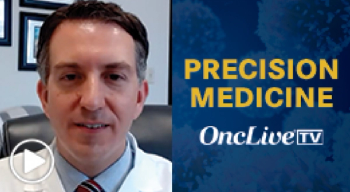
Jeff Yorio, MD, discusses treatment combinations in BRAF-mutated melanoma.
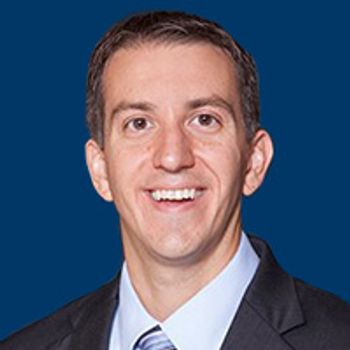
Jeff Yorio, MD, discussed the decision-making process for treating patients with BRAF-mutant melanoma, the use of immunotherapy in melanoma, and the management of cutaneous squamous cell carcinoma and basal cell carcinoma.

Findings from the DREAMseq trial indicate that nivolumab plus ipilimumab should be administered prior to the combination of a BRAF and MEK inhibitor in patients with advanced BRAF-mutant melanoma.

A biologics license application seeking the approval of a reformulation of denileukin diftitox for use as a potential therapeutic option in patients with persistent or recurrent cutaneous T-cell lymphoma has been submitted to the FDA.
The FDA has granted a fast track designation to KIN-2787 for use as a potential therapeutic option in patients with BRAF class II or III alteration–positive and/or NRAS mutation–positive, metastatic or unresectable, stage IIB to IV malignant melanoma.
The combination of fianlimab and cemiplimab demonstrated clinically meaningful activity in patients with advanced melanoma who were naïve to anti–PD-1/PD-L1 therapy.

The European Commission has approved the fixed-dose combination of relatlimab plus nivolumab for use in the frontline treatment of select patients with advanced or metastatic melanoma and a PD-L1 expression of less than 1% on tumor cells.
Adjuvant nivolumab monotherapy elicited a statistically significant and clinically meaningful improvement in recurrence-free survival compared with placebo for patients with completely resected stage IIB/C melanoma.
Cemiplimab produced pathologic complete responses as a neoadjuvant treatment in more than half of patients with resectable, stage II to IV cutaneous squamous cell carcinoma.
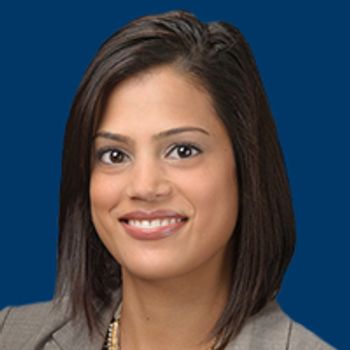
Compared with adjuvant pembrolizumab alone, the addition of neoadjuvant pembrolizumab significantly improved event-free survival outcomes for patients with stage III-IV melanoma with a hazard ratio of 0.58.
Advertisement
Advertisement
Trending on OncLive
1
FDA Approves Atezolizumab Plus Chemo for Stage III dMMR Colon Cancer
2
VIR-5500 Receives FDA Fast Track Designation in mCRPC
3
China’s NMPA Approves Adjuvant T-DXd for HER2+ Early Breast Cancer With Residual Invasive Disease
4
Individualized Neoantigen Vaccine Elicits Durable T-Cell Responses in Resected HPV– HNSCC
5