



Melanoma & Skin Cancer
Latest News

Nivolumab Plus Relatlimab Aims to Become Primary Treatment Option for Advanced Melanoma
By Kyle Doherty
Advertisement
Latest Videos





























































Advertisement
More News
Howard D. Edington, MD, discusses the importance of prevention strategies in melanoma.
Hussein A. Tawbi, MD, PhD, discusses the utilization of relatlimab plus nivolumab in unresectable or metastatic melanoma.

Helen Heng-Shan Moon, MD, discusses the FDA approval of relatlimab plus nivolumab in patients with unresectable or metastatic melanoma.

The combination of the CD40 agonist antibody sotigalimab and pembrolizumab demonstrated a favorable safety profile and led to immunologic changes that correlated with clinical response in patients with unresectable stage III or IV metastatic melanoma.
Howard D. Edington, MD, discusses the evolving treatment paradigm of melanoma.
The combination of nivolumab and ipilimumab demonstrated a statistically significant improvement in progression-free survival vs ipilimumab alone as second-line therapy in previously treated patients with stage III unresectable or stage IV melanoma.

The addition of BO-112 to pembrolizumab demonstrated efficacy and safety in patients with advanced melanoma who were resistant to anti–PD-1 therapies, according to final results from the phase 2 SPOTLIGHT203 trial.
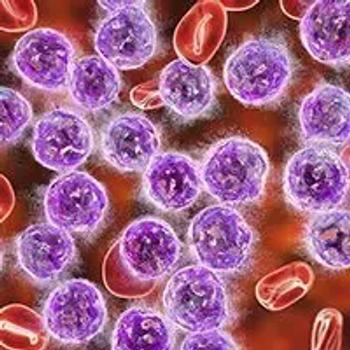
Nivolumab in combination with a PD-L1/IDO peptide vaccine displayed encouraging efficacy and survival results among patients with metastatic melanoma.

The combination of the oncolytic vaccine vusolimogene oderparepvec and nivolumab continued to drive encouraging responses with acceptable tolerability in patients with melanoma and other skin cancers.
The FDA has provided positive feedback regarding Iovance Biotherapeutics, Inc.’s proposed matrix of potency assays for an upcoming biologics license application seeking the approval of lifileucel in the treatment of patients with metastatic melanoma.

Fixed-duration systemic therapies have gained some traction in hematologic malignancies, where advances in drug development and sequencing strategies have afforded investigators the opportunity to conduct trials.
Hussein A. Tawbi, MD, PhD, discusses the recent FDA approval of relatlimab/nivolumab in metastatic melanoma, the significance of the regulatory decision, and potential avenues for further exploration of the regimen.
Hussein A. Tawbi, MD, PhD, discusses the FDA approval of relatlimab plus nivolumab in unresectable or metastatic melanoma.
The FDA has approved the fixed-dose combination of relatlimab plus nivolumab for the treatment of adult and pediatric patients who are 12 years of age or older and who have unresectable or metastatic melanoma.

The FDA has granted a fast track designation to the novel immunostimulant 7HP349 for use in combination with a CTLA-4 inhibitor in patients with unresectable or metastatic malignant melanoma in whom a PD-L1 inhibitor has failed.

The fixed-dose combination of relatlimab and nivolumab continued to demonstrate a consistent progression-free survival benefit, showcased a clinically meaningful improvement in overall survival, and elicited a higher objective response rate than nivolumab alone in previously untreated patients with metastatic or unresectable melanoma.
The addition of bempegaldesleukin to nivolumab did not significantly improve progression-free survival, objective response rate, or overall survival vs nivolumab alone in the frontline treatment of patients with unresectable or metastatic melanoma, missing the primary end points of the phase 3 PIVOT IO-001 trial.
The FDA has placed a partial clinical hold on the phase 1 NEON-2 trial examining the combination of davoceticept and pembrolizumab in patients with advanced solid tumors or lymphoma.
Pembrolizumab significantly improved distant metastasis–free survival vs placebo when used as an adjuvant treatment in patients with resected stage IIB and IIC melanoma, according to additional data from the phase 3 KEYNOTE-716 trial.

Zeynep Eroglu, MD, discusses the utilization of circulating tumor DNA in patients with melanoma.

“I don’t intend to rest on any laurels as thereis still much more to be done.”
Dr Milhem discusses the unique mechanism of action and delivery method of RP1, which is being evaluated in the IGNYTE trial for patients with solid tumors, as well as the parallel studies ARTACUS and CERPASS, which are further exploring the agent.
Michael Atkins, MD, shares data presented at the 2021 American Society of Clinical Oncology Plenary Series regarding results from the phase 3 ECOG-ACRIN EA6134 trial, DREAMseq, evaluating the use of up-front dual immunotherapy in patients with BRAF V600–mutant advanced melanoma.

Frontline administration of the checkpoint inhibitors ipilimumab plus nivolumab followed by the targeted agents dabrafenib plus trametinib improved overall survival in patients with BRAF V600–mutant melanoma vs the reverse sequence of combinations, according to data from the phase 3 DREAMseq trial presented during the ASCO Virtual Plenary Series.
The FDA has approved tebentafusp-tebn for the treatment of HLA-A*02:01–positive adult patients with unresectable or metastatic uveal melanoma.
Advertisement
Advertisement
Trending on OncLive
1
FDA Approves Atezolizumab Plus Chemo for Stage III dMMR Colon Cancer
2
VIR-5500 Receives FDA Fast Track Designation in mCRPC
3
China’s NMPA Approves Adjuvant T-DXd for HER2+ Early Breast Cancer With Residual Invasive Disease
4
Individualized Neoantigen Vaccine Elicits Durable T-Cell Responses in Resected HPV– HNSCC
5