





Melanoma & Skin Cancer
Latest News
Advertisement
Latest Videos

































































Advertisement
More News
Ryan J. Sullivan, MD, discusses the early reduction of circulating tumor DNA in patients with metastatic uveal melanoma treated with tebentafusp and shares how these reductions could correlate with longer overall survival in patients with a best response of stable disease.

The European Medicines Agency’s Committee for Medicinal Products for Human Use has recommended approval of nivolumab monotherapy for the adjuvant treatment of patients at least 12 years of age with completely resected stage IIB or IIC melanoma.

Jason Luke, MD, FACP, discusses key takeaways from the KEYNOTE-716 and KEYNOTE-942 trials and other key updates from across the melanoma landscape presented at the 2023 ASCO Annual Meeting.
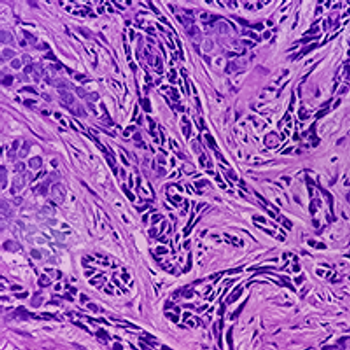
The DecisionDx-Melanoma 31-gene expression profile test displayed the capability to stratify patients with cutaneous melanoma by risk of death from the disease and receival of the 31-GEP test may result in a survival benefit compared with untested patients.
Brian Gastman, MD, discusses results from a biomarkers analysis of patients with stage IIB/C melanoma in the phase 3 CheckMate76K trial.

Varun Monga, MBBS, discusses the mechanism of action of PRT811, key efficacy and safety findings from a phase 1 trial investigating the agent, and potential future directions with this agent in uveal melanoma and IDH-mutant high-grade glioma.

Danielle K. DePalo, MD, discusses findings from a study comparing first-line isolated limb infusion/perfusion vs immune checkpoint inhibitors and intratumoral therapy in patients with surgically unresectable melanoma in-transit metastases.

Pembrolizumab led to sustained improvements in recurrence-free survival and distant metastasis–free survival vs placebo as adjuvant therapy in patients with resected stage IIB or IIC melanoma
Although the highly potent, selective, allosteric, oral, small molecule BRG1/BRM inhibitor FHD-286 elicited signs of clinical activity and safety as monotherapy in patients with metastatic uveal melanoma in the dose-escalation portion of a phase 1 trial, further development in this indication will not be pursued.
Varun Monga, MD, discusses the investigation of the protein arginine methyltransferase 5 brain-penetrant inhibitor PRT811 in patients with recurrent high-grade glioma or uveal melanoma.

Nicholas Coupe, MBBS, PhD, discusses the investigation of IMM60 plus pembrolizumab in patients with advanced melanoma or metastatic non-small cell lung cancer.
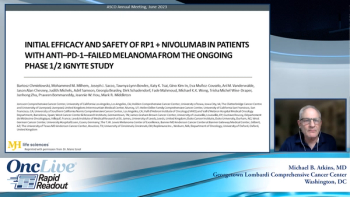
Expert Michael Atkins, MD, reviews data from the ongoing IGNYTE study utilizing RP1 in combination with nivolumab in relapsed/refractory melanoma.

Camrelizumab combined with famitinib elicited responses and was well tolerated in patients with advanced melanoma previously exposed to an immune checkpoint inhibitor regimen.

Timothy I Shaw, PhD, discusses the genetic heterogeneity between paired primary and metastatic solid tumors, as well as the implications for neoantigen-based personalized vaccines in cancer care.
Two-year follow-up data from the RELATIVITY-047 trial showed a continued benefit for patients with previously untreated, unresectable, or metastatic melanoma receiving nivolumab plus relatlimab vs nivolumab monotherapy supporting the use of the combination.

Dabrafenib and Trametinib Plus Navitoclax Meets CR End Point in BRAF V600–mutant Metastatic Melanoma
The combination of dabrafenib and trametinib plus navitoclax generated responses and met the co-primary end point for complete response rate vs historical controls in patients with BRAF V600–mutant metastatic melanoma.

The combination of mRNA-4157 and pembrolizumab reduced the risk of developing distant metastasis or death by approximately 65% compared with pembrolizumab alone as adjuvant therapy in patients with resected melanoma at high risk of recurrence, according to findings from the phase 2 KEYNOTE-942 trial.
Jason Luke, MD, FACP, discusses the final analysis of distant metastasis–free survival in the phase 3 KEYNOTE-716 trial of pembrolizumab vs placebo as adjuvant therapy in patients with stage IIB or IIC melanoma.

OncLive® will be LIVE with OncLive® News Network: On Location at the 2023 ASCO Annual Meeting. Each day, we will broadcast a series of interviews with top thought leaders, to learn their thoughts and reactions to data presented across hematologic oncology during the conference.
Hussein A. Tawbi, MD, PhD, discusses the 2-year findings from the phase 2/3 RELATIVITY-047 trial of nivolumab plus relatlimab in treatment-naïve patients with metastatic or unresectable melanoma.
The protein arginine methyltransferase 5 brain-penetrant inhibitor PRT811 demonstrated preliminary antitumor activity and acceptable safety for patients with recurrent high-grade glioma and advanced or metastatic uveal melanoma, according to data from the dose-expansion portion of a phase 1 trial presented at the 2023 ASCO Annual Meeting.

The FDA has granted priority review to the biologics license application for the tumor infiltrating lymphocyte therapy lifileucel for the treatment of patients with advanced melanoma who progressed on or after prior anti–PD-1/PD-L1 therapy and targeted therapy.
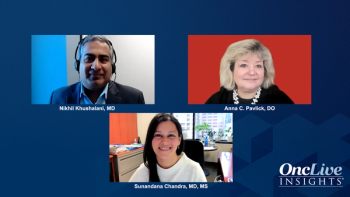
A panel of skin cancer experts offer closing thoughts on intralesional therapy for treating melanoma and CSCC.

Sunandana Chandra, MD, MS, Anna C. Pavlick, DO, MSc, MBA, BSN, and Nikhil Khushalani, MD, discuss the importance of multidisciplinary care in CSCC and patient counseling regarding available therapies.
An expert panel discusses the use of tumor-directed oncolytic therapies for melanoma and cutaneous squamous cell carcinoma.
Advertisement
Advertisement
Trending on OncLive
1
FDA Approves Atezolizumab Plus Chemo for Stage III dMMR Colon Cancer
2
VIR-5500 Receives FDA Fast Track Designation in mCRPC
3
China’s NMPA Approves Adjuvant T-DXd for HER2+ Early Breast Cancer With Residual Invasive Disease
4
Individualized Neoantigen Vaccine Elicits Durable T-Cell Responses in Resected HPV– HNSCC
5