


Melanoma & Skin Cancer
Latest News


RP1 Plus Nivolumab Demonstrates Durable Antitumor Activity in Advanced Melanoma
By Jordyn Sava

Long-Term KEYNOTE-006 Data Support Pembrolizumab as SOC in Advanced Melanoma
By Kristi Rosa
Advertisement
Latest Videos





























































Advertisement
More News
The FDA has approved subcutaneous atezolizumab for use in all indications as the intravenous formulation.

First-line bel-sar displayed tumor control and preserved visual acuity in early-stage choroidal melanoma.
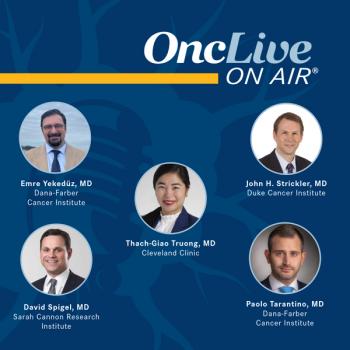
Experts from across oncology specialties discuss the abstracts and presentations they are most looking forward to seeing at the 2024 ESMO Congress.

About 8 to 10 million Americans over 40 have excess white blood cells, which may increase their risk of melanoma.
The FDA has granted fast track designation to the MCR1-targeted theranostic ligand VMT01 for unresectable or metastatic melanoma.

The FDA has granted fast track designation to IBI363 for unresectable advanced or metastatic melanoma after progression on at least 1 line of therapy.

The phase 3 IOB-013/KN-D18 trial of IO102-IO103 plus pembrolizumab in advanced melanoma will continue without modifications.
Here is your snapshot of all therapeutic options that the FDA approved in August 2024 and their clinical implications.
In case you missed any, below is a recap of every OncLive On Air episode that aired in August 2024.

The phase 3 KEYNOTE-867 and KEYNOTE-630 trials evaluating pembrolizumab in NSCLC and CSCC, respectively, have been discontinued by Merck.

Ankit Mangla, MD, expands on key survival data from the phase 2/3 RELATIVITY-047 trial in previously untreated, unresectable, or metastatic melanoma.

A frontline doublet receives FDA approval in EGFR+ NSCLC, a CRL is issued to linvoseltamab in multiple myeloma, and more this week from OncLive.
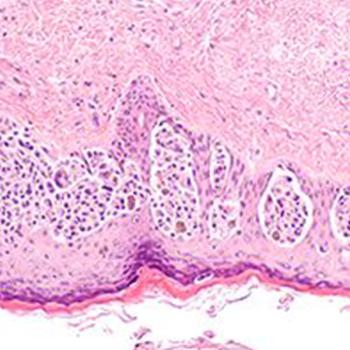
Adjuvant pembrolizumab did not have a significant impact on long-term HRQOL outcomes in patients with resected stage III melanoma.

Jeffrey S. Weber, MD, PhD, inductee of the 2016 Giants of Cancer Care award in Melanoma, has died.
Ahmad Tarhini, MD, PhD, discusses the hypothesis for investigating high-dose bolus IL-2 plus an anti–CTLA-4 agent in patients with advanced melanoma.
Ahmad Tarhini, MD, PhD, discusses the use of high-dose bolus IL-2 with ipilimumab followed by nivolumab in advanced melanoma following prior progression.

Treatment with VP-315 led to reductions in tumor size in patients with basal cell carcinoma.
Georgina Long, MBBS, PhD, FRACP, discusses unmet needs for BRAF-mutant melanoma, highlighting key insights from the phase 3 NADINA trial.
A sNDA seeking the approval of toripalimab for frontline use in patients with unresectable or metastatic melanoma is under review by the NMPA.

A tumor-informed ctDNA assay showed high sensitivity and specificity as well as potential for ctDNA to be used as a prognostic biomarker during surveillance in Merkel cell carcinoma.

Integrating 15-GEP with PRAME expression status into a 4-group prognostic classification system showed prognostic accuracy in uveal melanoma.

The addition of BNT111 to cemiplimab has produced clinical activity in anti-PD-(L)1 relapsed/refractory unresectable stage III or IV melanoma.
FDA Accepts Resubmission of BLA for Cosibelimab in Locally Advanced or Metastatic CSCC
Published: | Updated:
The FDA has accepted the resubmission of a BLA for cosibelimab in advanced or metastatic cutaneous squamous cell carcinoma.

Adjuvant nivolumab plus ipilimumab significantly improved 3-year DMFS rates compared with historical controls in patients with high-risk uveal melanoma.
Neil D. Gross, MD, FACS, discusses the neoadjuvant use of cemiplimab for the treatment of cutaneous squamous cell carcinoma.
Advertisement
Advertisement
Trending on OncLive
1
FDA Approves Atezolizumab Plus Chemo for Stage III dMMR Colon Cancer
2
VIR-5500 Receives FDA Fast Track Designation in mCRPC
3
Individualized Neoantigen Vaccine Elicits Durable T-Cell Responses in Resected HPV– HNSCC
4
China’s NMPA Approves Adjuvant T-DXd for HER2+ Early Breast Cancer With Residual Invasive Disease
5