


Multiple Myeloma
Latest News
Advertisement
Latest Videos
CME Content































Advertisement
More News
Maung Myo Htut, MD, assistant clinical professor of hematology and hematopoietic cell transplantation, City of Hope, discusses the use of immunotherapy in the treatment of patients with multiple myeloma.
The BOSTON trial is randomizing patients with relapsed/refractory multiple myeloma to a triplet combination of selinexor (KPT-330), bortezomib (Velcade), and dexamethasone versus a combination of bortezomib and dexamethasone.
A. Keith Stewart, MB, ChB, and a panel of hematology experts review data concerning emerging frontline strategies for multiple myeloma that were presented at the 2017 ASH Annual Meeting.
In updated guidelines exploring the role of bone-modifying agents, ASCO has recommended expanding the use of bisphosphonates to include all patients being treated for active multiple myeloma.

Jeffrey Wolf, MD, emphasizes the importance of identifying risk when diagnosing patients with multiple myeloma.

Peter Voorhees, MD, discusses treatments for patients with early relapsed multiple myeloma and previews future research efforts.
Jesus G. Berdeja, MD, director of Myeloma Research, principal investigator, Sarah Cannon Research Institute, discusses the FDA approval of frontline daratumumab (Darzalex) in combination with bortezomib (Velcade), melphalan, and prednisone (VMP) for the treatment of patients with newly diagnosed multiple myeloma who are ineligible for autologous stem cell transplant (ASCT).
The FDA has approved daratumumab in combination with bortezomib, melphalan, and prednisone for the treatment of patients with newly diagnosed multiple myeloma who are ineligible for autologous stem cell transplant.
Leif Bergsagel, MD, consultant and professor of medicine, Division of Hematology/Oncology, Mayo Clinic, discusses treatment options for patients with relapsed/refractory multiple myeloma.
Saad Z. Usmani, MD, discusses the clinical applications of minimal residual disease and managing patients with relapsed/refractory multiple myeloma.
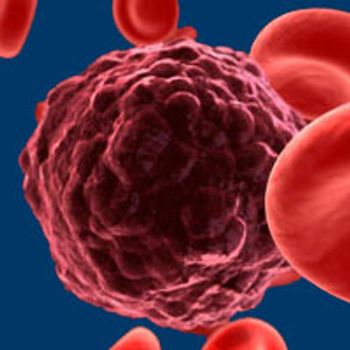
Selinexor induced an overall response rate of 25.4% in patients with penta-refractory multiple myeloma, according to top-line results from part 2 of the phase IIb STORM trial.
Jeffrey Wolf, MD, clinical professor, Department of Medicine, director, Myeloma Program, University of California, San Francisco Helen Diller Family Comprehensive Cancer Center, discusses high-risk multiple myeloma.
Saad Z. Usmani, MD, clinical professor of medicine, UNC-Chapel Hill School of Medicine, chief, Plasma Cell Disorders Program, director, clinical research in hematologic malignancies, Levine Cancer Institute, discusses the evolution of PD-1/PD-L1 inhibitors in the treatment of patients with hematologic malignancies.

The European Medicines Agency’s Committee for Medicinal Products for Human Use has recommended adding final overall survival data from the phase III ASPIRE trial to the label for carfilzomib for the treatment of patients with relapsed/refractory multiple myeloma.
Peter Voorhees, MD, physician, Levine Cancer Institute, discusses treatments for patients with relapsed multiple myeloma.
Keith Stewart, MB, ChB, discusses the role of stem cell transplant, minimal residual disease testing, and maintenance therapy in the treatment of patients with multiple myeloma.

Nitya Nathwani, MD, highlights current treatment options for transplant-ineligible multiple myeloma, as well as combinations on the horizon.
Saad Z. Usmani, MD, clinical professor of medicine, UNC-Chapel Hill School of Medicine, chief, Plasma Cell Disorders Program, director, clinical research in hematologic malignancies, Levine Cancer Institute, discusses the impact of minimal residual disease (MRD) on clinical practice.
Leif Bergsagel, MD, consultant and professor of medicine, Division of Hematology/Oncology, Mayo Clinic, discusses competing strategies in treating patients with relapsed multiple myeloma.
Maung Myo Htut, MD, assistant clinical professor of hematology and hematopoietic cell transplantation, City of Hope, discusses the use of chimeric antigen receptor (CAR) T-cell therapy in patients with multiple myeloma.

C. Ola Landgren, MD, PhD, shares his insight on CAR T-cell therapy, sequencing, and triplet and quadruplet regimens in myeloma.
Nitya Nathwani, MD, assistant clinical professor, Hematology and Hematopoietic Cell Transplantation, City of Hope, discusses the standard of care in patients with newly diagnosed multiple myeloma.
Jeffrey Wolf, MD, clinical professor, Department of Medicine, director, Myeloma Program, University of California, San Francisco Helen Diller Family Comprehensive Cancer Center, discusses the treatment approach for patients with high-risk multiple myeloma.
Rafael Fonseca, MD, discusses the integration of biology and treatment selection for patients with newly diagnosed multiple myeloma.
Leif Bergsagel, MD, discusses the treatment evolution for patients with relapsed/refractory multiple myeloma.
Advertisement
Advertisement
Trending on OncLive
1
Long-Term Cilta-Cel Data Show Low Rates of PFS Events in Standard-Risk R/R Myeloma
2
Nonresponse to Bridging Therapy and Peak ALC After Cilta-Cel Are Associated With Neurotoxicity, NRM in Myeloma
3
FDA Underscores Risks Associated With DPD Deficiency and Capecitabine/5-FU Use in Cancer Care
4
FDA Updates Axi-Cel Label to Remove Limitation of Use in R/R PCNSL
5