
A PRO analysis showed that darolutamide plus ADT improved HRQOL outcomes vs placebo plus ADT in patients with metastatic hormone-sensitive prostate cancer.
A PRO analysis showed that darolutamide plus ADT improved HRQOL outcomes vs placebo plus ADT in patients with metastatic hormone-sensitive prostate cancer.
Daratumumab plus VRd continued to demonstrate improvements in MRD negativity and PFS in newly diagnosed, transplant-ineligible multiple myeloma.

Ziftomenib monotherapy elicited clinically meaningful, MRD-negative responses, including CRs, in heavily pretreated, relapsed/refractory NPM1-mutant AML.

Benmelstobart with or without anlotinib boosted progression-free survival after chemoradiotherapy in unresectable stage III non–small cell lung cancer.
Neoadjuvant nivolumab plus chemo significantly improved OS vs chemo alone in resectable NSCLC, supporting practice-changing potential.

Niraparib plus abiraterone acetate and prednisone improved rPFS vs abiraterone acetate and prednisone and placebo in patients with mCSPC with alterations in HRR genes.
MedNews Week hosts speak with 8 key opinion leaders at ASCO 2025 about the top data highlights of the day.

Tarlatamab improved overall survival and progression-free survival in the second-line treatment of small cell lung cancer.

Neoadjuvant osimertinib as monotherapy or plus chemotherapy was more effective vs chemotherapy alone in patients with resectable EGFR-mutated NSCLC.

Second-line lifileucel generated durable responses and survival signals in patients with advanced melanoma, according to a 5-year analysis.

Gino Kim In, MD, shares findings from a subgroup analysis of RP1 efficacy in injected and non-injected melanoma lesions after PD-1 inhibitor progression.

Sara M. Tolaney, MD, MPH, shares interim efficacy results from the DESTINY-Breast09 study of first-line T-DXd plus pertuzumab in HER2-positive breast cancer.
COCOON DM reduced the severity and QOL influence of dermatologic AEs vs SOC DM in EGFR-mutant, advanced NSCLC treated with amivantamab plus lazertinib.

Alexander Olawaiye, MD, discusses the efficacy and safety of relacorilant plus nab-Paclitaxel in platinum-resistant ovarian cancer.

D-VRd led to deeper and more durable responses that translated into improved PFS vs VRd alone in transplant-ineligible patients with multiple myeloma.
Linda R. Duska, MD, MPH, on incorporating immunotherapy into definitive therapy for high-risk, locally advanced cervical cancer.

The addition of disitamab vedotin to toripalimab and trastuzumab and/or CAPOX led to favorable response rates in HER2-expressing gastric/GEJ cancer.

Relacorilant plus nab-paclitaxel showed meaningful PFS and OS gains, offering a potential new option for patients with platinum-resistant ovarian cancer.

Dostarlimab/chemotherapy plus maintenance niraparib showed clinically modest PFS improvements vs niraparib alone in newly diagnosed advanced ovarian cancer.
Erika Hamilton, MD, discusses data for vepdegestrant vs fulvestrant in ER-positive, HER2-negative advanced breast cancer.

Pembrolizumab plus CCRT showcases sustained survival benefits in high-risk locally advanced cervical cancer.
Neoadjuvant chemotherapy and nivolumab and adjuvant nivolumab prolonged EFS vs placebo in patients with resectable NSCLC in follow-up from CheckMate-77T.

Patients with metastatic breast cancer with higher HER2 amplicon mRNA signatures prior to T-DXd therapy had better outcomes vs those with lower signatures.
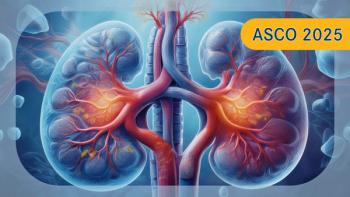
Cabozantinib plus atezolizumab or cabozantinib alone was effective regardless of prior immunotherapy or TKI treatment in second-line advanced RCC.
The DLL3-directed CAR T-cell therapy LB2102 was safe with preliminary antitumor activity in small cell lung cancer and large cell neuroendocrine carcinoma.

Sarah Sammons, MD, discusses early efficacy data with RLY-2608 plus fulvestrant in PIK3CA-mutant, hormone receptor–positive, HER2-negative breast cancer.
Neoadjuvant alectinib produced major pathologic responses, and it was tolerable and feasible in potentially resectable, stage III, ALK-positive NSCLC.
Adding induction toripalimab to chemotherapy followed by definitive chemoradiotherapy and consolidation therapy reduced risk for disease progression by 74%.
In the VERIFY study, rusfertide significantly improved clinical responses vs placebo in polycythemia vera, offering a potential new therapy.
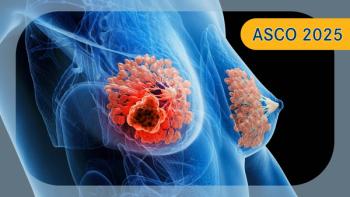
Trastuzumab deruxtecan plus pertuzumab produced a statistically significant PFS improvement in frontline HER2-positive advanced breast cancer.