

Tislelizumab plus irinotecan, paclitaxel, oxaliplatin, and 5-FU/leucovorin showcased encouraging efficacy and manageable safety in gastric/GEJ cancer.
Tislelizumab plus irinotecan, paclitaxel, oxaliplatin, and 5-FU/leucovorin showcased encouraging efficacy and manageable safety in gastric/GEJ cancer.
Frontline nivolumab plus chemotherapy elicited clinically meaningful long-term survival benefits vs chemotherapy alone in advanced gastric/GEJ cancer.
Evorpacept plus TRP produced superior ORR, DOR, and PFS outcomes vs TRP alone in patients with HER2-positive gastric or gastroesophageal junction cancer.
OS benefits with tislelizumab plus chemotherapy were comparable between early and late responders in the phase 3 RATIONALE-306 study in patients with ESCC.
Nivolumab plus chemotherapy demonstrated long-term survival benefits in advanced gastric, GEJ, or esophageal cancer in China.
Tanios S. Bekaii-Saab, MD, and Yelena Y. Janjigian, MD, preview top presentations from this year’s Gastrointestinal Cancers Symposium.
Everolimus plus lanreotide demonstrated an improved PFS compared with everolimus monotherapy in gastroenteropancreatic neuroendocrine tumors.
Adjuvant chemotherapy did not improve circulating tumor DNA clearance in patients with stage II colon cancer with baseline circulating tumor DNA.
Minimal residual disease detection by ctDNA was predictive and prognostic of disease recurrence and response to adjuvant chemotherapy in patients with CRC.
Nivolumab/ipilimumab reduced the risk of disease progression or death vs chemotherapy in previously untreated patients with metastatic colorectal cancer.
Daneng Li, MD, discusses a study utilizing of ADG126 in combination with pembrolizumab for patients with microsatellite stable colorectal cancer.
Favorable ECOG PS, lower LDH levels, and absence of BRAF and KRAS mutations at baseline were associated with long-term response to regorafenib in patients with mCRC in the real world.
Ethan B. Ludmir, MD, shares the rationale for and the outcomes derived from the EXTEND trial in oligometastatic pancreatic ductal adenocarcinoma.
Pashtoon Murtaza Kasi, MD, MS, discusses outcomes from an interim analysis of the BESPOKE CRC study and highlights the use of circulating tumor DNA for informing adjuvant chemotherapy treatment decisions for patients with stage II/III colorectal cancer.

DKN-01/bevacizumab/chemotherapy had a tolerable safety profile and showcased clinical activity in patients with microsatellite stable colorectal cancer.
Neoadjuvant botensilimab/balstilimab led to robust responses in both patients with resectable mismatch repair–proficient and –deficient colorectal cancer.

An improvement in quality-adjusted survival benefit was observed with fruquintinib/BSC vs BSC alone in patients with mCRC enrolled in the FRESCO study.
Larotrectinib led to long-lasting responses, encouraging survival, and a favorable safety profile in TRK fusion-positive gastrointestinal cancers.

Lutetium Lu 177 dotatate plus octreotide significantly improved PFS vs high-dose octreotide in patients with gastroenteropancreatic neuroendocrine tumors.
PFS was significantly improved with durvalumab plus bevacizumab and TACE vs TACE alone in patients with unresectable HCC eligible for embolization.
The use of FOLFOXIRI plus bevacizumab increased in patients with metastatic colorectal cancer from 2013 to 2022, especially in patients 50 years of age or younger.

Kohei Shitara, MD, discusses first-line nivolumab plus chemotherapy vs chemotherapy alone in gastric cancer, GEJ cancer, or esophageal adenocarcinoma.
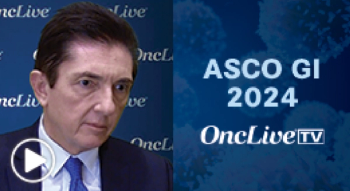
Riccardo Lencioni, MD, FSIR, EB, discusses the EMERALD-1 trial of TACE/durvalumab/bevacizumab in patients with unresectable hepatocellular carcinoma.
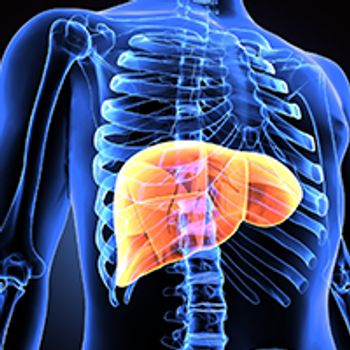
Patients with unresectable hepatocellular carcinoma treated with regorafenib experienced more frequent serious TEAEs if they had Child-Pugh B liver function.
Fostroxacitabine bralpamide plus lenvatinib displayed preliminary efficacy with a tolerable safety profile in patients with hepatocellular carcinoma.

Pembrolizumab plus lenvatinib produced survival outcomes that were consistent with previous findings from the phase 3 LEAP-002 trial along with an extended duration of response.

Neoadjuvant camrelizumab plus nab-paclitaxel and cisplatin improved pCR vs chemotherapy alone in patients with esophageal squamous cell carcinoma.
Durvalumab plus neoadjuvant FLOT improved pCR vs chemotherapy alone in patients with resectable gastric and GEJ cancers, irrespective of region.

Tiragolumab plus atezolizumab and chemotherapy produced superior survival benefit vs chemotherapy for patients with esophageal squamous cell carcinoma.
Manish A. Shah, MD, discusses 5-year outcomes from KEYNOTE-590 of first-line pembrolizumab plus chemotherapy in patients with advanced esophageal cancer.