
Targeted therapies, specifically those agents directed at mutated proteins and aberrant protein-to-protein interactions, have been shown to improve survival among patients with relapsed or refractory acute myeloid leukemia.

Your AI-Trained Oncology Knowledge Connection!
Targeted therapies, specifically those agents directed at mutated proteins and aberrant protein-to-protein interactions, have been shown to improve survival among patients with relapsed or refractory acute myeloid leukemia.

Although checkpoint inhibitors and bispecific antibodies have come to represent clinical oncology’s fourth leg of treatment—immunotherapy—there remains much to explore within lymphoma.
The emergence of novel agents, including CAR T-cell therapies and antibody-drug conjugates, plus existing options such as chemoimmunotherapy and bone-marrow transplant, have combined to raise questions about the sequencing of these treatments in patients with diffuse large B-cell lymphoma.
There is building evidence that novel combination therapies could be effective in treating early relapsed multiple myeloma.
Genomic sequencing is a critical step in informing the prognosis of patients with acute lymphoblastic leukemia and more information regarding specific subgroups of ALL, such as lineage ambiguous ALL, could pave the way for more personalized therapies for patients.

Although it is too soon to tell whether the addition of a CD20-directed antibody to novel agents in relapsed/refractory follicular lymphoma should become standard practice, it is clear that immunotherapy could represent the next paradigm shift.
With an increased understanding of disease biology, several approaches are under examination to optimize the management of patients with graft-versus-host disease.
Minimal residual disease has helped to predict relapse in numerous leukemia subtypes, with novel testing methods helping to identify the biomarker at a higher sensitivity than ever before.
The treatment landscape of Waldenström macroglobulinemia is becoming increasingly complex with second-generation BTK inhibitors; however, the combination of bendamustine and rituximab remains the frontline standard of care for this patient population.
Immune therapy has evolved rapidly in multiple myeloma, and the field is on the verge of major improvements in outcomes.
Although scientific advances in hematology and oncology have been extraordinary, the US health care system faces significant challenges in ensuring that patients receive high-quality, cost-effective care.
Several options have emerged for patients with acute myeloid leukemia who are not candidates to receive chemotherapy, with venetoclax-based regimens chief among them.

Targeted therapies have helped to improve responses in patients with relapsed chronic lymphocytic leukemia regardless of high-risk disease, although optimal sequencing and toxicity management need to be further explored to strengthen the utilization of these options.
Natural killer cells can offer several advantages over T cells for CAR therapy in that the former uses both a CAR dependent and independent mechanism for tumor eradication, has better safety, and off-the-shelf feasibility—all at a potentially lower cost.
Peter Martin, MD, discusses potential drug-drug interactions with BTK inhibitors in relapsed/refractory mantle cell lymphoma.

Rituximab plus CHOP is not a suitable frontline treatment regimen for all patients with diffuse large B-cell lymphoma, explained Andre H. Goy, MD, who specified that patients with a high-risk International Prognostic Index, elderly patients, and patients with high-risk molecular subtypes require alternative treatment.
CD19-targeted CAR T-cell therapies have yielded durable remissions in approximately half of all patients with aggressive relapsed/refractory B-cell lymphomas.
Treatment with chimeric antigen receptor T cells has induced unprecedented overall response rates and complete response rates in patients with relapsed/refractory B cell malignancies.

Since the publication of the pivotal ELIANA trial in pediatric patients with acute lymphoblastic leukemia, the field of CAR T-cell therapy has grown significantly and left providers better equipped to understand and manage treatment-related adverse effects, such as cytokine release syndrome.

Andrew Ip, MD, MS, discusses the challenges of treating patients with hematologic malignancies and COVID-19.
Carlos del Rio, MD, discusses factors to consider when selecting between available vaccines for COVID-19.
The diagnosis and management of smoldering multiple myeloma is an area of tremendous focused research and change over the past decade, with trials yielding intriguing findings that have the potential to change practice.
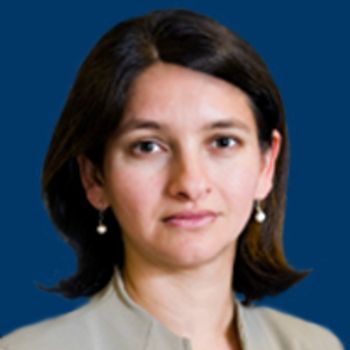
Noopur Raje, MD, discusses the investigational CAR T-cell therapies and strategies in the multiple myeloma pipeline.
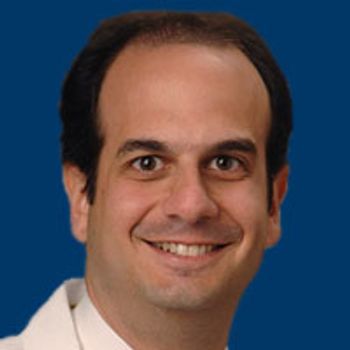
Corey S. Cutler, MD, MPH, discusses how physicians can optimize treatment management in patients with both acute and chronic graft-versus-host-disease.
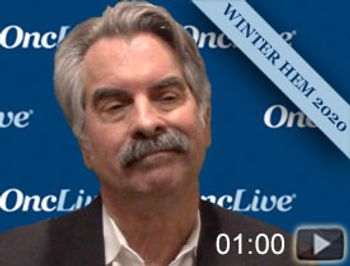
Jerald P. Radich, MD, discusses how the role of minimal residual disease (MRD) has evolved recently in clinical trials of hematologic malignancies.
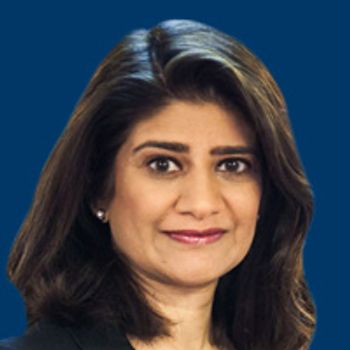
At the 24th Annual International Congress on Hematologic Malignancies®, Sonali M. Smith, MD, detailed the critical clinical trial findings currently informing treatment selection in the frontline indolent non-Hodgkin lymphoma paradigm.
A number of therapeutic options have become available in the frontline setting for patients with chronic lymphocytic leukemia, most recently the second-generation BTK inhibitor acalabrutinib.
Sonali M. Smith, MD, discusses the prognosis of patients with indolent non-Hodgkin lymphomas.
With the main toxicities associated with CAR T-cell therapy being cytokine release syndrome and neurotoxicity, a multidisciplinary approach is vital to providing inclusive care to patients receiving this type of treatment.
Jorge E. Cortes, MD, shares his experience with tyrosine kinase inhibitors as treatment of patients with chronic myeloid leukemia.