

The 2019 National Comprehensive Cancer Network guideline on the management of advanced clear cell renal cell carcinoma undergoes a major shift in risk category used to define preferred and alternative first-line treatments.
The 2019 National Comprehensive Cancer Network guideline on the management of advanced clear cell renal cell carcinoma undergoes a major shift in risk category used to define preferred and alternative first-line treatments.
​​John H. Ward, MD, discusses his preferences in multilane testing for patients with hormone receptor–positive, node-negative breast cancer.
Gary H. Lyman, MD, MPH, medical oncologist, Fred Hutchinson Cancer Research Center, discusses the differences in approving a biosimilar and the original biologic product during the 2019 NCCN Annual Conference.
Matthew A. Gubens, MD, MS, discusses an update to the NCCN Guidelines regarding patients with PD-L1 non–small cell lung cancer.
Patients with recurrent or advanced endometrial cancer demonstrated an overall response rate of almost 30% with dostarlimab treatment.

Combination use of olaparib and neratinib may represent a novel therapeutic option for chemotherapy-resistant patients with HER2-positive, homologous recombination–proficient ovarian cancer tumors.
The addition of the dendritic cell-based immunotherapy DCVAC/OvCA to standard carboplatin and gemcitabine led to a significant improvement in overall survival in patients with relapsed, platinum-sensitive, epithelial ovarian cancer.

David S. Hong, MD, deputy director of the Department of investigational Cancer Therapeutics and associate vice president of clinical research at The University of Texas MD Anderson Cancer Center, discusses the promising results of the phase II innovaTV 201 study, in which tisotumab vedotin was used to treat patients with previously treated recurrent or metastatic cervical cancer.

Karen H. Lu, MD, professor and chair in the Department of Gynecologic Oncology and Reproductive Medicine at The University of Texas MD Anderson Cancer Center discusses the challenges of risk-reducing salpingo-oophorectomy in women with an increased risk for hereditary ovarian cancer.

Treatment with neratinib led to a clinical benefit rate of 54.5% in patients with HER2-mutant cervical cancer.
Jonathan Ledermann, MD, professor of medical oncology at UCL Cancer Institute in London, discusses the growing use of PARP inhibitors in maintenance therapy for ovarian cancer in an interview during the 2019 SGO Annual Meeting.

Combination therapy with pembrolizumab, bevacizumab, and metronomic cyclophosphamide induced a 95% disease control rate and 40% overall response rate among women with recurrent ovarian cancer.
Lenvatinib in combination with weekly paclitaxel induced activity among those with recurrent endometrial and platinum-resistant epithelial ovarian cancer, resulting in a 65% overall response rate.

Emese Zsiros, MD, PhD, discusses the results of her recent phase II trial that set out to evaluate the use of pembrolizumab in combination with bevacizumab and oral metronomic cyclophosphamide in the treatment of patients with recurrent epithelial ovarian, fallopian tube, or primary peritoneal cancer.
Kathleen N. Moore, MD, associate director for clinical research, gynecologic oncologist at The Stephenson Cancer Center, The University of Oklahoma, explores the impact of the SOLO-1 trial in the field of ovarian cancer, in particular, the benefits olaparib provides and the light it shines on the importance of using genetic testing to inform treatment decisions.

Adverse events decreased among patients with high-risk ovarian cancer who received a 200- or 300-mg individualized starting dose of niraparib, based upon baseline bodyweight and platelet count, compared with a 300-mg fixed starting dose.

Prior exposure to PARP inhibitor treatment may not lead to resistance in future use with these agents in women with recurrent epithelial ovarian cancer, suggesting that repeat use could become more common.

Robert Coleman, MD, professor in the Department of Gynecologic Oncology and Reproductive Medicine, The University of Texas MD Anderson Cancer Center, discusses the effect of age on the efficacy of rucaparib (Rubraca) in patients with recurrent ovarian carcinoma.
Patients with recurrent ovarian cancer who received niraparib maintenance therapy experienced more progression-free time without experiencing symptoms or toxicity compared with placebo; the benefit was 4-fold for those with germline (g) BRCA-mutated disease and 2-fold for non-gBRCA-mutated ovarian cancer.
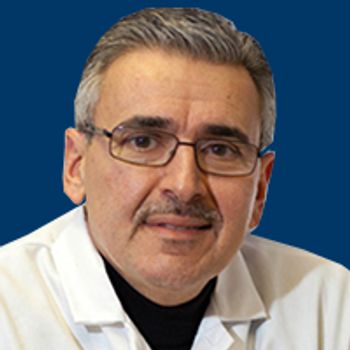
Blood-based biomarkers offer great potential for use in the management of breast and other cancers.

David M. Euhus, MD, discusses a new trio of genes entering the risk assessment equation in hereditary breast cancer.

Identifying patients with ductal carcinoma in situ who are more likely to develop invasive breast cancer remains a challenge, despite decades of research and the development of stratification methods to predict progression and recurrence.
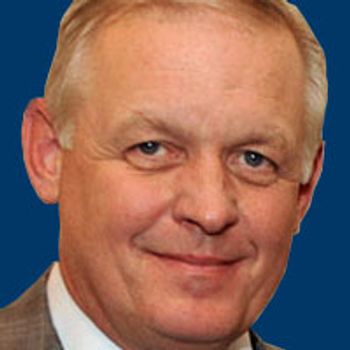
There has been much progress in the treatment of estrogen receptor-positive metastatic breast cancer over the past 40 years, and novel therapies are further expanding therapeutic options.

CtDNA will continue to gain importance in precision oncology as physicians continue to uncover the role and interplay of genomic alterations that promote tumor heterogeneity.

Although the first checkpoint inhibitor has just been approved for patients with breast cancer, findings from dozens of ongoing studies may eventually change the paradigm for large subsets of those with the malignancy.

The development of antibody-drug conjugates represents a promising strategy for patients with metastatic triple-negative breast cancer, with early clinical trial results suggesting that novel agents could eventually change the landscape for this patient population.
With tremendous advances and the accelerated approval of atezolizumab plus nab-paclitaxel for patients with unresectable locally advanced or metastatic PD-L1–positive triple-negative breast cancer, provider education in identifying associated toxicities from checkpoint inhibitor therapy is critical.
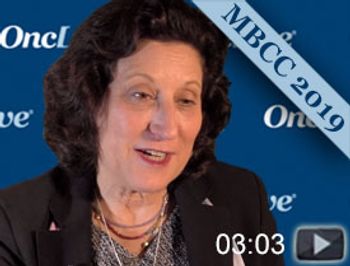
Hope S. Rugo, MD, director, Breast Oncology and Clinical Trials Education, University of California San Francisco Comprehensive Cancer Center, discusses the therapeutic advancements in the breast cancer space in the past 20 years.
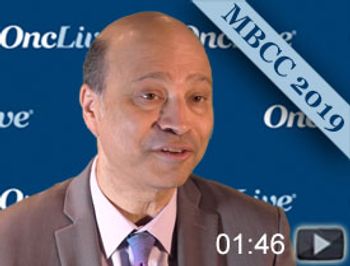
Debu Tripathy, MD, professor and chairman, Department of Breast Medical Oncology, Division of Cancer Medicine, The University of Texas MD Anderson Cancer Center, discusses combination strategies being investigated with CDK4/6 inhibitors in breast cancer.

The introduction of PARP inhibitors into the breast cancer treatment paradigm is a clinically meaningful advance for patients with germline BRCA1/2 mutations but much more research must be conducted to optimize their use.