
Maintenance treatment with the PARP inhibitor rucaparib improved median progression-free survival by 11.2 months compared with placebo for patients with BRCA-mutant platinum-sensitive ovarian cancer.

Your AI-Trained Oncology Knowledge Connection!
Maintenance treatment with the PARP inhibitor rucaparib improved median progression-free survival by 11.2 months compared with placebo for patients with BRCA-mutant platinum-sensitive ovarian cancer.
Bastian Schilling, MD, University of Wuerzburg, discusses different types of ocular melanoma and the importance of distinguishing this subtype.
Adil Daud, MD, a clinical professor, Department of Medicine at University of California, San Francisco Helen Diller Family Comprehensive Cancer Center, discusses potential combinations of immunotherapy for the treatment of patients with melanoma.

Pembrolizumab (Keytruda) provides a long-term survival benefit in both ipilimumab-naïve and ipilimumab-treated patients with advanced melanoma.
Guillem Argiles, MD, staff member, Gastrointestinal Malignancies Division, Vall d’Hebron University Hospital, discusses a carcinoembryonic antigen T-cell bispecific antibody.
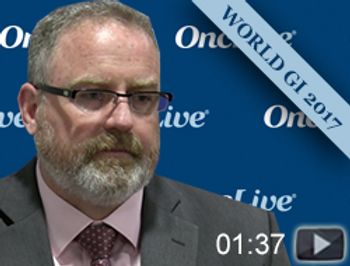
Bert O’Neil, MD, the Joseph W. and Jackie J. Cusick Professor of Oncology, professor of medicine, and director of the Phase I and Gastrointestinal Oncology Programs at Indiana University, discusses napabucasin with FOLFIRI and bevacizumab (Avastin) in colorectal cancer.

In a central evaluation for surgical treatment options in the FIRE-3 study results, investigators set out to determine the number of patients with metastatic colorectal cancer who had resectable disease during systemic first-line therapy.
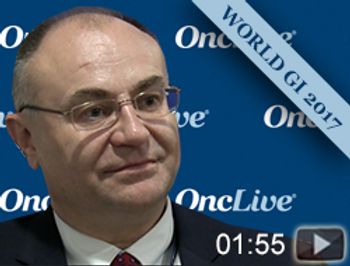
Heinz-Josef Lenz, MD, FACP, associate director for Adult Oncology and co-leader of the Gastrointestinal Cancers Program, USC Norris Comprehensive Cancer Center, discusses immunotherapy in gastrointestinal cancers.

Hans-Joachim Schmoll, MD, head, Department of Oncology and Hematology, associate professor, Internal Medicine, Hematology/ Oncology, University Hospital Halle, discusses the results of the CHARTA study in colorectal cancer.
The novel stemness inhibitor napabucasin in combination with different standard chemotherapy backbones demonstrated promising activity in metastatic pancreatic adenocarcinoma and metastatic colorectal cancer.

CEA-TCB showed a favorable safety profile and promising efficacy in patients with heavily-pretreated microsatellite stable metastatic colorectal cancer, with enhanced efficacy when combined with atezolizumab.

Immune checkpoint inhibitors against PD-1 and PD-L1 are showing promise across clinical trials for patients with Merkel cell carcinoma.

Aparna Parikh, MD, discusses the potential impact of liquid biopsies in overcoming resistance to targeted therapies in gastrointestinal cancer.

Patients with unresectable HCC continue to show statistically significant improvement in overall survival with second-line regorafenib (Stivarga) treatment.
Durable responses and improved long-term survival were demonstrated with nivolumab (Opdivo) that were not altered by the age of patients with advanced hepatocellular carcinoma across all age groups of patients participating in the CheckMate 040 trial.
Tanios Bekaii-Saab, MD, professor of Medicine, Mayo Clinic, discusses napabucasin with gemcitabine and nab-paclitaxel in pancreatic adenocarcinoma.

Aparna R. Parikh, MD, medical oncologist, Massachusetts General Hospital, discusses liquid biopsies in gastrointestinal cancers.
Adil Daud, MD, discusses combination regimens and biomarkers being explored to advance immunotherapy in the field of melanoma.

Doug Kondziolka, MD, professor and vice chair of Clinical Research, NYU Langone Medical Center, discusses therapeutic approaches for patients with melanoma who have brain metastases.

Jeffrey S. Weber, MD, PhD, a medical oncologist and deputy director of the Laura and Isaac Perlmutter Cancer Center at NYU Langone Medical Center, discusses the next steps with the PD-1 inhibitor pembrolizumab (Keytruda) as treatment for patients with melanoma.
Monotherapy with potent BRAF inhibitor dabrafenib (Tafinlar) resulted in a disease control rate of 83% in patients with BRAF-mutant melanoma and brain metastases.

Anna C. Pavlick, DO, discusses adjuvant therapy for patients with high-risk melanoma.
Robert Andtbacka, MD, associate professor in the Division of Surgial Oncology, Department of Surgery at the University of Utah School of Medicine, discusses the long-term follow-up of overall survival data from the phase III OPTiM study of taglimogene laherparepvec (T-VEC) for patients with metastatic melanoma.
Merrick I. Ross, MD, professor, Department of Surgical Oncology, Division of Surgery, The University of Texas MD Anderson Cancer Center, discusses treatment for liver metastasis in patients with melanoma.

Treatment with ipilimumab has been shown to improve overall survival; however, this efficacy often comes with toxicity.

Several clinical trials are examining the use of adjuvant PD-1 inhibition for patients with melanoma, with a potential new standard of care on the horizon for those at high risk of recurrence following resection.

Julien Taieb, MD, discusses the prognostic value of primary tumor location in colon cancer.

Jeffrey S. Weber, MD, PhD, discusses the combination of nivolumab (Opdivo) and ipilimumab (Yervoy) for the treatment of brain metastases, the tolerability of the combination of ipilimumab and talimogene laherparepvec (Imlygic; T-VEC), and what is next on the horizon for pembrolizumab (Keytruda).
Melissa A. Wilson, MD, PhD, discussed the promising results with BRAF/MEK inhibitor combinations in melanoma and what ongoing studies have the potential to alter the landscape again.
Jean Jacques Grob, MD, PhD, discusses the efficacy and tolerability of different doses of ipilimumab given in the adjuvant setting for patients with melanoma.