

According to results presented at the 2017 AACR Annual Meeting, 10% of patients showed impressive long-term survival in a phase I study of single agent anti-PD-L1 atezolizumab (Tecentriq) in patients with metastatic triple-negative breast cancer.
According to results presented at the 2017 AACR Annual Meeting, 10% of patients showed impressive long-term survival in a phase I study of single agent anti-PD-L1 atezolizumab (Tecentriq) in patients with metastatic triple-negative breast cancer.
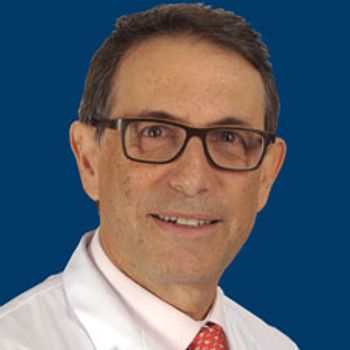
Tumor treating fields reduced the risk of death by 37% and overall survival was extended by a median of 5 months for patients with glioblastoma multiforme, in a landmark analysis of the EF-14 trial.
A dual attack on HER2 expression resulted in a 30% objective response rate in heavily pretreated patients with HER2-positive metastatic colorectal cancer.
The irreversible pan-HER tyrosine kinase inhibitor neratinib showed single-agent activity across cohorts of patients with HER2-mutant advanced cancers.

Roger Stupp, MD, professor, Neurological Surgery, and associate director, Strategic Initiatives, Robert H. Lurie Comprehensive Cancer Center, Northwestern University, discusses final results of a randomized, multi-center, phase III trial investigating tumor treating fields (TTFields) added to standard chemotherapy in newly diagnosed glioblastoma during the AACR Annual Meeting.

Sattva S. Neelapu, MD, associate professor, The University of Texas MD Anderson Cancer Center, discusses primary results of the ZUMA-1 trial investigating axicabtagene ciloleucel (KTE-C19) in patients with refractory aggressive non-Hodgkin lymphoma.
Jessica Turgon, MBA, of ECG Management Consultants says that changes in 340B Drug Pricing Program rules and the CMS physician payment formula are possible.
Tricia Strusowski, MS, RN, discusses the role of the oncology nurse navigator and how these staffers can help meet outcome and quality standards set by the CMS's OCM.
The outgoing president of the Association of Community Cancer Centers, Jennie Crews, MD, MMM, FACP reflects on her time as president and the achievements the ACCC made.

While at the annual CANCERSCAPE meeting of ACCC, Kavita Patel, MD, MS, comments on uncertainy in the healthcare environment and key policy to be aware of.
Cary Presant, MD, FACP, FASCO, City of Hope Medical Center, discusses clinical trials and value-based care.
The Republican-led Affordable Care Act repeal and replace effort has the potential to be revived, but majority leaders may not want to risk further political capital in a battle that could go against them, speakers said at this year's Association of Community Cancer Centers' CANCERSCAPE annual conference.
Wolfgang Janni, MD, PhD, University of Ulm, disucusses the management of adverse events in HER2-targeted therapies.
Giuseppe Curigliano, MD, PhD, head of the Division of Early Drug Development at European Institute of Oncology, in Milan, Italy, discusses the emergence of immunotherapy in breast cancer.
Neoadjuvant therapy in early breast cancer has evolved during the past 2 decades from use primarily in large inoperable tumors to a standard treatment option for patients with early-stage HER2-positive and triple-negative breast cancer.
Age and the molecular subtype were more closely associated with long-term outcomes compared with the use of either breast-conserving surgery or mastectomy for patients with breast cancer.

Immunotherapy will be most effective as a treatment for breast cancer when it is used to alter the tumor microenvironment, according to a careful examination of studies exploring the immune response presented by Nora Disis, MD.
The paucity of patients participating in clinical trials makes data extrapolation and application complex, calling for a need to explore health technology solutions that tap the potential of real-world data.
Inhibition of CDK4/6 results in improvements in progression-free survival in women with estrogen receptor-positive/HER2-negative metastatic breast cancer whether it is endocrine sensitive or resistant.
Andrew Kennedy, MD, speaks on the various approaches used in clinical practice to treat patients who have colorectal cancer with liver metastases.
Giuseppe Curigliano, MD, PhD, discusses recent trials of immunotherapy and chemotherapy in triple-negative breast cancer, as well as the future role of immunotherapy in the treatment of breast cancer.
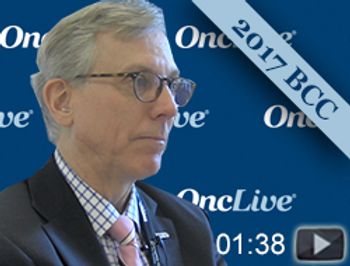
Daniel F. Hayes, MD, professor University of Michigan Comprehensive Cancer Center, discusses the use of tumor biomarker tests in breast cancer.
Brian Hemphill, MD, provides insight on some of the challenges currently being faced in gastrointestinal malignancies and how molecular profiles of tumors will dramatically change outcomes for these patients.
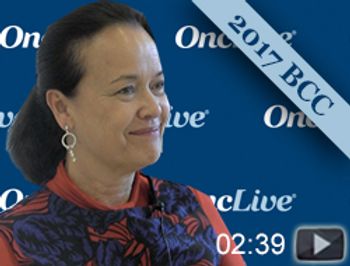
Martine J. Piccart, MD, PhD, professor, Université Libre de Bruxelles, director, Medicine Department, Institut Jules Bordet, discusses the importance of de-escalating treatment in early-stage breast cancer.
Genomic studies have made significant advancements in discovering methods to combat resistance to endocrine therapy in patients with hormone receptor (HR)–positive breast cancer over the past few years, according to Ian E. Krop, MD, PhD. Of particular interest are combination therapies blocking multiple driver pathways and resistance mechanisms.
Updated findings from the MONALEESA-2 trial demonstrated that the response to ribociclib (Kisqali) in postmenopausal women with hormone-receptor-positive/HER2-negative advanced or metastatic breast cancer was unaffected by either prior endocrine treatment or prior chemotherapy.
Bert O'Neil, MD, discusses the need for novel treatments for patients with metastatic colorectal cancer as well as why researchers need to develop a deeper understanding of tumor biology.

C. Kent Osborne, MD, discusses current strategies for overcoming resistance to HER2-targeting agents in early breast cancer today.
Johanna Bendell, MD, discusses the promising impact of immunotherapy and other emerging agents in the field of gastrointestinal cancer.
Matthew Ellis, MD, PhD, director, Smith Breast Center, Baylor College of Medicine, discusses questions regarding the impact of CDK4/6 inhibitors in breast cancer.