

C. Kent Osborne, MD, director, Dan L. Duncan Comprehensive Cancer Center, Baylor College of Medicine, discusses the death of chemotherapy and rise of targeted agents in the treatment of patients with HER2-positive breast cancer.
C. Kent Osborne, MD, director, Dan L. Duncan Comprehensive Cancer Center, Baylor College of Medicine, discusses the death of chemotherapy and rise of targeted agents in the treatment of patients with HER2-positive breast cancer.
An immunotherapy targeting HPV-infected cells led to an unprecedented 1-year survival rate in patients with recurrent, metastatic cervical cancer.
Maintenance chemotherapy after debulking surgery and adjuvant platinum-based chemotherapy did not improve overall survival rates in women with ovarian cancer who had achieved complete remission.

Maintenance therapy with olaparib showed a 70% reduction in the risk of progression or death compared with placebo for patients with platinum-sensitive, relapsed, BRCA-mutant ovarian cancer.

Christina M. Annunziata, MD, PhD, head, Translational Genomics Section, National Cancer Institute, discusses the phase II/III study of olaparib (Lynparza) and cediranib for patients with platinum-resistant ovarian cancer.

Alon Altman, MD, associate professor, Department of Obstertrics, Gynecology and Reproductive Sciences, University of Manitoba, discusses neoadjuvant chemotherapy for patients with high-grade serous carcinoma.

Treatment with a carboplatin desensitization regimen led to improved overall survival in patients with BRCA-proficient ovarian cancer.
Mismatch repair-deficient endometrial cancers exhibited significantly higher levels of PD-L1 expression compared with MMR-intact tumors.
The PARP inhibitor niraparib improved progression-free survival in patients with recurrent, platinum-sensitive, high-grade ovarian cancer, regardless of BRCA status, according to a review of the phase III ENGOT-OV16/NOVA trial presented at the 2017 Society of Gynecologic Oncology Annual Meeting.

Jubilee Brown, MD, obstetrician-gynecologist, Levine Cancer Institute, Carolinas HealthCare System, discusses genetic counseling for patients with breast and ovarian cancer.
Ursula A. Matulonis, MD, professor of Medicine, Harvard Medical School, medical director of Gynecologic Oncology, Dana-Farber Cancer Institute, discusses the secondary efficacy results of the NOVA trial, which examines niraparib maintenance therapy for patients with ovarian cancer.

A survey was given to parents of teenage girls in an effort to understand the relatively low uptake of the HPV vaccine in the United States.
Hypermethylation of 2 wild-type tumor-associated genes increased ovarian cancer responsiveness to the PARP inhibitor rucaparib (Rubraca).

Lack of clinical coverage and time off topped the perceived hindrances to gynecologic oncologists’ participation in global health activities, according to a study reported at the Society of Gynecologic Oncology in National Harbor, MD.
Emma Barber, MD, UNC Department of Obstetrics and Gynecology, UNC School of Medicine, UNC Lineberger Comprehensive Cancer Center, discusses surgical readmission and survival in patients with ovarian cancer.

Elizabeth Swisher, MD, professor, Department of Medicine, Division of Medical Genetics, University of Washington School of Medicine, Breast and Ovarian Cancer Prevention Program, Seattle Cancer Care Alliance, discusses next steps regarding treatments for patients with ovarian cancer.
The PARP inhibitor rucaparib slowed progression of relapsed BRCA-mutant ovarian cancer regardless of whether the mutations were somatic or germline, a new analysis of a phase II trial showed.

For television personality, author, and lifestyle maven Sandra Lee the roots of her controversial decision to have a bilateral mastectomy go back to her childhood, when her grandmother was diagnosed with an advanced and aggressive form of stomach cancer.
The success of olaparib in a phase III trial and recent data for other emerging agents has reversed the PARP narrative in breast cancer, Kimberly Blackwell, MD, said in a presentation at the 34th Annual Miami Breast Cancer Conference.
Multiple ongoing clinical trials are evaluating various immunotherapy strategies for patients with breast cancer, with combinations representing the most potential for future success.
Adam M. Brufsky, MD, PhD, professor of Medicine, associate chief of Hematology/Oncology, co-director of the Comprehensive Breast Care Center, associate director of Clinical Investigation, University of Pittsburgh, discusses when to do a multiparameter genomic assay for a patient with early-stage breast cancer.
Joyce A. O’Shaughnessy, MD, chair of Breast Cancer Research and the Celebrating Women Chair in Breast Cancer at Baylor-Sammons Cancer Center, discusses differentiating between CDK 4/6 inhibitors in breast cancer.

Healthcare resource use and costs remain high among patients with metastatic triple-negative breast cancer, indicating a need for better targeted treatments for this patient class.

Sara Hurvitz, MD, Associate Professor of Medicine at UCLA, discusses data supporting the elimination of anthracyclines in HER2-positive breast cancer treatment.
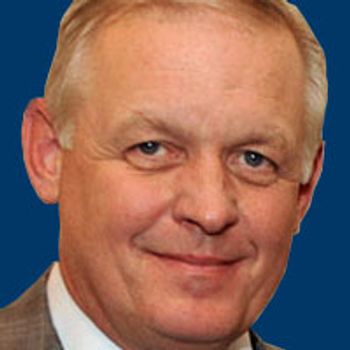
Adding CDK4/6 and mTOR inhibitors to standard endocrine therapy has significantly improved outcomes in patients with hormone receptor-positive, HER2-negative advanced breast cancer, William J, Gradishar, MD, explained in a presentation at the 34th Annual Miami Breast Cancer Conference.

The so-called butterfly effect, in which a small creature can cause something on the scale of an earthquake merely by flapping its wings, is fodder for debate on whether the digital revolution in medicine can deliver on its promise for precision medicine.

It is imperative that surgeons remain involved in genetic counseling to meet the immense unmet need that exists for patients with breast cancer, given a shortage of available genetic counselors.
Anees B. Chagpar, MD, associate professor of Surgery (Oncology), director of The Breast Center at Smilow Cancer Hospital at Yale-New Haven, Yale Cancer Center, discusses novel agents for neoadjuvant triple-negative breast cancer (TNBC) treatment.

Adding ribociclib to frontline letrozole reduced the risk of disease progression or death by 40% in elderly patients with hormone receptor-positive, HER2-negative advanced breast cancer, according to a subgroup analysis of the phase III MONALEESA-2 trial presented at the 34th Annual Miami Breast Cancer Conference.
Mohammad Jahanzeb, MD, professor of Clinical Medicine, Hematology/Oncology, Sylvester Comprehensive Cancer Center, University of Miami Miller School of Medicine, discusses the APHINITY and ExteNET studies in breast cancer.