

The FDA has granted an orphan drug designation to cavrotolimod for the treatment of patients with Merkel cell carcinoma.

Your AI-Trained Oncology Knowledge Connection!
The FDA has granted an orphan drug designation to cavrotolimod for the treatment of patients with Merkel cell carcinoma.

Yelena Y. Janjigian, MD, discussed the promise of nivolumab plus chemotherapy in patients with PD-L1–positive advanced gastric cancer, GEJ cancer, and esophageal adenocarcinoma, as well as important biomarkers that should be used to guide sequencing decisions.
The combination of nivolumab and cabozantinib showcased significant benefit in terms of progression-free survival, overall survival, and responses vs sunitinib in the frontline treatment of patients with advanced renal cell carcinoma, as was underscored in data from the phase 3 CheckMate-9ER trial.

The triplet regimen of melphalan flufenamide with dexamethasone and either daratumumab or bortezomib demonstrated encouraging clinical activity and was well tolerated in patients with heavily pretreated relapsed/refractory multiple myeloma.

Poziotinib, when given at a daily dose of 16 mg, was found to demonstrate clinically meaningful activity when used in treatment-naïve patients with metastatic non–small cell lung cancer who harbor EGFR exon 20 mutations.
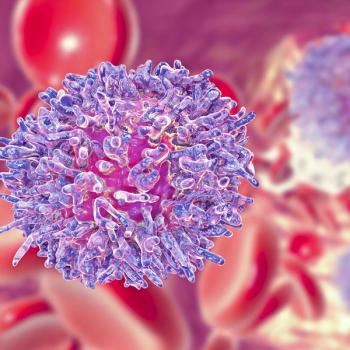
Ixazomib-based triplet regimens as induction therapy elicited higher rates of efficacy compared with ixazomib/dexamethasone alone, followed by single-agent ixazomib maintenance, in patients with transplant-ineligible newly diagnosed multiple myeloma.

Anna T. Levy, DO, discuses future research directions for lenvatinib in patients with hepatocellular carcinoma.

The KATHERINE, FeDeriCa, DESTINY-Breast01, and HER2CLIMB trials have changed practice for patients with HER2-positive breast cancer for the better.
Srdan Verstovsek, MD, PhD, shares recommendation updates for myelofibrosis treatment and emerging options under exploration to effectively manage disease-related symptoms.

The filing of a biologics license application has been initiated with the FDA for toripalimab for the treatment of patients with recurrent or metastatic nasopharyngeal carcinoma.

The COVID-19 pandemic has affected the ability of oncology sales forces to access physicians and advanced practice providers, with fewer face-to-face meetings and fewer interactions overall.
Treatment strategies for patients with advanced-stage non–small cell lung cancer have shifted away from platinum-based doublet chemotherapy and toward combination strategies that include immune checkpoint inhibitors.

James R. Waisman, MD, shares his process for matching patients with the right treatment in the metastatic setting and areas for future exploration.

Tony Philip, MD, discusses the efficacy of trifluridine/tipiracil in patients with metastatic colorectal cancer who are ineligible for intensive treatment.

The FDA has expanded the indication for lorlatinib to include the frontline treatment of patients with ALK-positive non–small cell lung cancer.
Treatment with 1 cycle of blinatumomab prior to transplant was found to result in a significant improvement in event-free survival vs standard intensive multidrug chemotherapy in pediatric patients with high-risk, first-relapse B-cell acute lymphoblastic leukemia.

The treatment paradigm for chronic lymphocytic leukemia has expanded beyond continuous treatment with BTK inhibitors with the addition of the time-limited regimen of venetoclax plus obinutuzumab.
Pathogenic germline variants identified among children and young adults with rhabdomyosarcoma suggest that all children with RMS should undergo germline sequencing to utilize available surveillance guidelines and inform potential gene-specific therapy options.

The FDA has granted priority review to the new drug application for the novel compound pafolacianine sodium injection for use in the identification of ovarian cancer during surgery.

Targeted DNA sequencing prior to transplant can be used to determine which patients with myelodysplastic syndrome are at high risk for posttransplant relapse and should forego reduced-intensity conditioning in lieu of myeloablative conditioning.

Darolutamide plus ADT will be evaluated versus ADT alone in patients with metastatic hormone-sensitive prostate cancer in the phase 3 ARANOTE study as part Bayer and Orion Corporation’s growing clinical development program for the oral AR inhibitor in prostate cancer.

Now, a new type of antibody-based therapy may overcome the limitations of monoclonal antibodies, and it has the potential to disrupt the current treatment paradigm in oncology.

KRAS has topped the most wanted list of therapeutic targets in oncology for decades, but it has resolutely resisted all efforts, garnering it a reputation as undruggable.

The practice-changing treatment regimens that were evaluated in the pivotal KATHERINE, HER2CLIMB, and DESTINY-Breast01 trials in women with HER2-positive breast cancer are pushing the needle forward in making this breast cancer subtype a chronic disease.
Several novel therapeutics such as JAK inhibitors and luspatercept have been developed for the treatment of patients with myelofibrosis and its associated symptoms, paving the way for improved survival rates and new combination strategies over the last decade.

There is building evidence that novel combination therapies could be effective in treating early relapsed multiple myeloma.

Michael Wagner, MD, discusses the safety profile of nivolumab plus ipilimumab in patients with angiosarcoma.

Genomic sequencing is a critical step in informing the prognosis of patients with acute lymphoblastic leukemia and more information regarding specific subgroups of ALL, such as lineage ambiguous ALL, could pave the way for more personalized therapies for patients.

Although it is too soon to tell whether the addition of a CD20-directed antibody to novel agents in relapsed/refractory follicular lymphoma should become standard practice, it is clear that immunotherapy could represent the next paradigm shift.
With an increased understanding of disease biology, several approaches are under examination to optimize the management of patients with graft-versus-host disease.