
The past decade has been a time of great progress in the research of Waldenström macroglobulinemia and the care of patients with the rare form of non-Hodgkin lymphoma.
The past decade has been a time of great progress in the research of Waldenström macroglobulinemia and the care of patients with the rare form of non-Hodgkin lymphoma.

Incidence of surgery refusal has increased by nearly 50% among Black and Hispanic women with potentially curable, nonmetastatic breast cancer over the past decade, according to findings from an analysis of Surveillance, Epidemiology, and End Results Program data.

Driven by his twin passions for music and science, Louis M. Staudt, MD, PhD, has made a career out of reading between the notes.

Neoadjuvant and adjuvant pertuzumab plus trastuzumab with docetaxel continued to show improvements in event-free survival, disease-free survival and overall survival vs trastuzumab/docetaxel and placebo in Asian patients with HER2-positive early or locally advanced breast cancer.

INT230-6 demonstrated direct tumor killing in soft tissue sarcoma and elicits an anti-cancer immune response within the injected tumor both alone and in combination with ipilimumab.

Anna Pavlick, DO, MBA, discusses key updates from clinical trials that continue to shape the treatment of patients with melanoma, the role of immunotherapy in the frontline setting, and the importance of toxicity management and patient support.

Lori J. Pierce, MD harbored a love for science and a general desire to know things, and she was not shy about asking questions. She displayed a gift for math early in life, a trait she and her older sister, Karen, both inherited from their father, Melvin H. Pierce.

Claire F. Verschraegen, MD, discusses how nivolumab and ipilimumab fit into the treatment paradigm, poses examples of when treatment-related adverse effects might influence which agents to use, and emphasizes the importance of considering the benefits of immunotherapy.
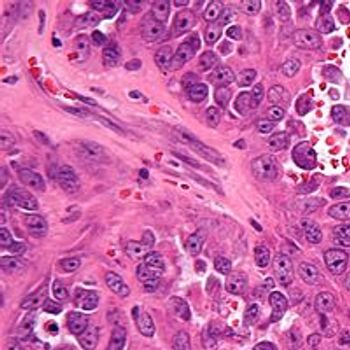
Moderately hypofractionated preoperative radiotherapy did not increase risk for major wound complication in patients with soft tissue sarcomas, according to findings from the single-arm, phase 2 trial HYPORT-STS.

Ritu Salani, MD, MBA, discusses the continued evolution of molecular profiling in endometrial cancer, advances in immunotherapy for endometrial and cervical cancer, and ongoing research in gynecologic cancers.

Jaffer A. Ajani, MD, has an unyielding drive that has resulted in breakthroughs in a deadly, but often overlooked, disease.
Investigators may have discovered a key detail about renal medullary carcinoma that could have significant ramifications for patients.

Treatment with INV-1120 was well tolerated and demonstrated preliminary signals of stable disease as a single agent in patients with advanced solid tumors.

Peter Dottino, MD, FACOG, discusses the need for more accurate early screening tests for ovarian cancer, why testing for early-stage endometrial cancer is also important, the process used to develop the screening test, and how it could be implemented into practice if it is approved by the FDA.

An unshakeable belief in the power of the immune system and a deep-seated desire to make the world a better place have guided Eric J. Small, MD, throughout his career.

Prior authorization on cancer treatments is delaying patient care, affecting outcomes, and diverting providers from patient care according to results of a survey conducted by the Association for Clinical Oncology.
Michael R. Harrison, MD, discusses the key long-term data of select doublet combinations in renal cell carcinoma, the early investigation of triplet therapy in the frontline setting, and more.
Konstantinos Leventakos, MD, PhD, discusses the emergence of immunotherapy and lurbinectedin as beneficial treatments in small cell lung cancer, where osimertinib fits into the non–small cell lung cancer treatment paradigm, and more.

During his career, David M. Gershenson, MD, has helped turn ovarian cancer treatment into an evidence-based field and built better therapies through an improved biological understanding of the disease.

Patient history and disease characteristics did not affect outcomes for patients with metastatic HER2-low breast cancer who received fam-trastuzumab deruxtecan-nxki in the DESTINY-Breast04 study.
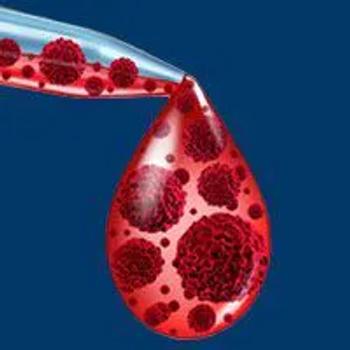
LP-284 showed superior antitumor activity compared with LP-184 independent of PTGR1 expression levels in DNA damage repair–deficient mantle cell lymphoma cell lines.
Caroline Billingsley, MD, discusses the effect of mirvetuximab soravtansine’s approval on the treatment landscape in ovarian cancer and avenues for future research with antibody-drug conjugates and immunotherapy in this space.

A teenage injury cost him a career among the stars, so John F. DiPersio, MD, PhD, became a star hematologist/oncologist instead.
Robert Lawrence Randall, MD, FACS, discussed the role of biological reconstructions as well as factors that determine whether a patient would benefit more from the reconstructions or traditional prosthetics known as endoprosthetics.
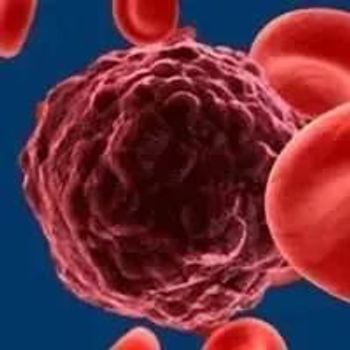
Olverembatinib demonstrated sustained efficacy and reduced toxicity with longer follow-up in patients with TKI-resistant, T315I-mutant chronic myeloid leukemia in chronic phase and accelerated phase.
Guillermo Garcia-Manero, MD, discusses the exploration of these doublet therapies and what they could mean for the high-risk myelodysplastic syndromes treatment landscape, the difficulties in making strides for patients with relapsed/refractory disease, and the top highlights in myelodysplastic syndromes from the 2022 ASH Annual Meeting.
Michelle Shiller, DO, AP/CP, MGP, discusses the evolving role of HER2 as a biomarker for the treatment of patients with breast cancer and the impact of findings from the DESTINY-Breast02, DESTINY-Breast03, and DESTINY-Breast04 trials on the HER2 testing landscape.
Press Release
Florida Cancer Specialists & Research Institute, LLC takes exception to a recent study published in the New England Journal of Medicine suggesting that colonoscopies are not as effective at preventing colorectal cancer deaths as previously thought.
Richard D. Carvajal, MD, discusses the implications of the FDA approval of tebentafusp in uveal melanoma, the possibility of exploring tebentafusp in other HLA subtypes, and other areas of intriguing research in uveal melanoma.
Japan’s Ministry of Health, Labor and Welfare has approved axicabtagene ciloleucel for the initial treatment of patients with relapsed/refractory large B-cell lymphoma, including diffuse large B-cell lymphoma, primary mediastinal large B-cell lymphoma, transformed follicular lymphoma, and high-grade B-cell lymphoma.