
All Oncology News

The FDA has deferred action on the biologics license application seeking the approval of tislelizumab as a second-line treatment in patients with unresectable or metastatic esophageal squamous cell carcinoma, citing the inability to conduct required inspections in China because of travel restrictions associated with COVID-19.
Advertisement
Brian I. Rini, MD, and Matthew Tucker, MD, sit down to discuss developing a career path and building a résumé, the value of writing review articles early in fellowship, the power of saying no, and the importance of saying yes.
The combination of ModraDoc006—a novel, oral tablet formulation of docetaxel—and ritonavir produced comparable response rates and radiographic progression-free survival to that achieved with intravenous docetaxel in patients with metastatic castration-resistant prostate cancer.
Francois-Clement Bidard, MD, PhD, highlights the benefits of elacestrant in chemotherapy-naïve patients and in those with ESR1 mutations, explains the results of a subgroup analysis done of the EMERALD trial in patients without prior chemotherapy, and voices his hopes for the future regarding other oral selective estrogen receptor degraders in development.
R. Lor Randall, MD, FACS, shares the successes achieved so far with machine learning in histopathology, explained the positive effect this technology can have on institutions, and advocated for further use of technology to aid treatment advances.
Advertisement
The National Comprehensive Cancer Network issued recommendations for providers treating children with brain cancers.
Press Release
A world-class team of researchers assembled and led by Rutgers Cancer Institute of New Jersey and its Deputy Director and Chief Scientific Officer Eileen White, PhD, has been awarded a $25 million Cancer Grand Challenges grant to tackle the condition of cancer cachexia.
Cabozantinib monotherapy maintained continued to provide a superior progression-free survival benefit to that achieved with placebo in adults with locally advanced or metastatic differentiated thyroid carcinoma, irrespective of histology, according to updated data from the phase 3 COSMIC-311 trial.
CV-01, Alpheus Medical’s novel sonodynamic therapy delivery platform, has received orphan drug and fast track designations from the FDA for the treatment of patients with recurrent glioblastoma.
The clinical learning environment for medical trainees is the foundation of medical training programs.
Findings from a phase 1b trial showed that the addition of obinutuzumab to ibrutinib produced a complete response rate that compared favorably with what has historically been observed with ibrutinib monotherapy in patients with relapsed or refractory chronic lymphocytic leukemia.
The FDA has removed the clinical hold on the phase 3 FLAMINGO-01 trial allowing the study to continue elevating the activity and safety of the HER2/neu-peptide GLSI-100 in patients with HER2/neu-positive breast cancer who are at high risk for disease recurrence or have residual disease following completion of neoadjuvant and adjuvant trastuzumab-based therapy, according to an announcement from the drug developer.
Benjamin Garmezy, MD, discussed the positive trajectory of antibody-drug conjugates and immunotherapy in urothelial carcinoma, highlighting the importance of considering individual patient eligibility for treatments like first-line chemotherapy.

The CD46-targeted antibody-drug conjugate FOR46 demonstrated encouraging evidence of antitumor activity in patients with metastatic castration-resistant prostate cancer with a safety profile that proved to be similar to other monomethyl auristatin E–based ADCs, according to data from a phase 1a/1b trial.
The FDA has accepted for review a biologics license application for vic-trastuzumab duocarmazine for the treatment of patients with HER2-positive unresectable locally advanced or metastatic breast cancer.
Vered Stearns, MD, FASCO, discusses how DESTINY-Breast04 has shifted the treatment paradigm for patients with HER2-low breast cancer, the exploration of treatment combinations being optimized in breast cancer, and the expansion of the treatment paradigm in triple-negative breast cancer.
Press Release
Florida Cancer Specialists & Research Institute has expanded access to specialized gynecologic oncology care with the addition of Board-certified gynecologic oncologist Christopher McCann, DO.

Many cancer organizations across the United States and internationally acknowledge a need for in-novative uses of social technology to improve cancer-related support and information provision.
Camidanlumab tesirine induced an overall response rate of 70.1% in heavily pretreated patients with relapsed or refractory classical Hodgkin lymphoma who previously received brentuximab vedotin and a PD-1 blockade with or without stem cell transplant.
The FDA has granted a fast track designation to abelacimab for the treatment of thrombosis associated with cancer.
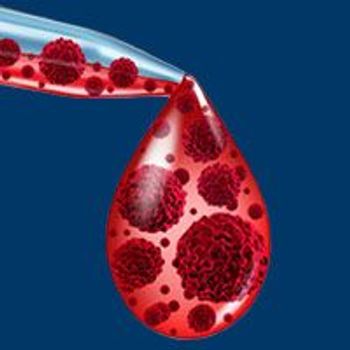
Despite receiving similar treatment, Black patients between the ages of 18 and 29 years with acute myeloid leukemia were twice as likely to die within 5 years compared with Whites.
The addition of cabozantinib to nivolumab and ipilimumab generated a significant improvement in progression-free survival vs nivolumab/ipilimumab alone as a first-line treatment for patients with previously untreated advanced intermediate- or poor-risk renal cell carcinoma, meeting the primary end point of the phase 3 COSMIC-313 trial.
A 3-month course of oxaliplatin produced disease-free survival noninferior to a 6-month course in patients with high-risk stage II and III colorectal cancer.
Ehab Atallah, MD, explains how patient characteristics influence current treatment strategies in acute myeloid leukemia, how frontline pirtobrutinib may move toward use in chronic lymphocytic leukemia, and the growing evidence favoring CAR T-cell therapy as an effective treatment option in CLL.
The phase 2 CP-MGA271-06 trial closed early following an internal review of safety data of enoblituzumab plus retifanlimab or tebotelimab as a first-line treatment for patients with recurrent or metastatic head and neck squamous cell carcinoma.
Press Release
American Oncology Network, LLC is pleased to announce that three research studies co-authored by AON physicians were presented at the American Society of Clinical Oncology 2022 Annual Meeting, held June 3-7, 2022.
Most hematology/oncology fellows will care for patients with venous thromboembolism throughout their training and long after their graduation from fellowship. Here are some practical considerations when treating a patient with an acute VTE.
Daniel J. Hausrath, MD, discusses a collaborative effort to produce a podcast for fellows that reviews the fundamentals, core concepts, and important management approaches in the field, as determined by the latest evidence and expert opinion.

Jill Gilbert, MD, urges healthcare providers to undertake the process of visible and courageous support of the truth in the medical field.
Advertisement
Advertisement
Trending on OncLive
1
Patient-Level Data Show Extended OS Advantage With DCVax-L vs External Controls in Glioblastoma
2
Zoldonrasib Combinations Show Compelling Antitumor Activity in RAS G12D–Mutant Metastatic PDAC
3
Hematologists Detail Practice-Shaping Data That Emerged at EHA 2026 (VIDEO)
4
Ensartinib Reduces Recurrence Risk After Resection in ALK-Positive NSCLC
5