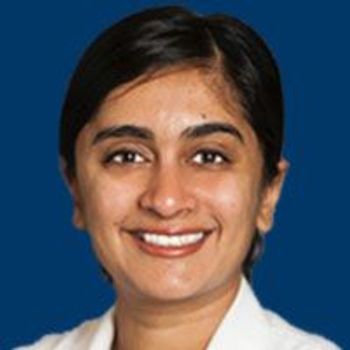
Sara A. Hurvitz, MD, reflects on key pivotal trials and recent regulatory decisions that have propelled progress in metastatic HER2-positive breast cancer.

Your AI-Trained Oncology Knowledge Connection!


Sara A. Hurvitz, MD, reflects on key pivotal trials and recent regulatory decisions that have propelled progress in metastatic HER2-positive breast cancer.

Joseph V. Simone, MD, a pioneering clinical investigator and institutional leader in pediatric oncology who was recognized with a 2017 Giants of Cancer Care® award, died January 21 at the age of 85.

All patients with active cancer, or with active, recent, or planned cancer treatment, should be considered highest priority to receive one of the coronavirus disease 2019 vaccines that have been granted emergency use authorization from the FDA.

Reinhard Dummer, MD, shares his approach for selecting between targeted approaches and immunotherapy agents in the adjuvant treatment of patients with melanoma.

January 22, 2021 - The FDA has approved the combination of nivolumab plus cabozantinib for the frontline treatment of patients with advanced renal cell carcinoma.

David Spigel, MD, discusses ongoing research with immunotherapy in early-stage lung cancer.

Kathleen A. Dorritie, MD, details the utility of minimal residual disease in multiple trials in the multiple myeloma space.

January 22, 2021 — The Japan Ministry of Health, Labour and Welfare has approved the CAR T-cell therapy axicabtagene ciloleucel for use in the treatment of adult patients with certain relapsed/refractory large B-cell lymphomas.

David Cohn, MD, discusses how to approach COVID-19 vaccination in patients with cancer.

Joseph Kim, MD, discusses the multidisciplinary management of patients with HCC.

January 21, 2021 - The FDA has granted priority review to a biologics license application for retifanlimab for the treatment of adult patients with locally advanced or metastatic squamous cell carcinoma of the anal canal who were intolerant of or who had progressed on platinum-based chemotherapy.

Tycel Phillips, MD, highlighted the key findings of the phase 2 CITADEL-204 trial.

Nabil F. Saba, MD, FACP, discusses the results of the JAVELIN Head and Neck 100 trial, as well as data from other key, recent studies in head and neck cancer.

Justin T. Matulay, MD, discusses whether there is a role for cytoreductive nephrectomy in metastatic renal cell carcinoma, as well as key data that have helped guide this paradigm.

William G. Wierda, MD, PhD, discusses the latest CAPTIVATE findings in patients with chronic lymphocytic leukemia.

Beau Toskich, MD, discusses key results that demonstrate the benefit of personalized dosimetry, and offered advice to fellow clinicians as the field moves toward adopting this radiotherapeutic modality.

The current standard of care for patients with non–small cell lung cancer does not include therapies targeting HER2, a mutation that occurs in up to 4% of cases. However, data from recent studies of antibody-drug conjugates directed at HER2 activity are generating excitement about the potential utility of ADCs in this space.

The scope of adult nonmalignant hematology can be broad and includes thrombotic and hemorrhagic disorders, transfusion medicine, hemoglobin disorders including sickle cell disease and thalassemia, anemia, thrombocytopenia, leukocytosis, leukopenia, and disorders of iron metabolism.

Andrew Spencer, MD, MBBS, FRACP, FRCPA discusses the significance of the PANORAMA 3 study in multiple myeloma.

The idea that HPV-negative cervical cancer is possible, especially in a disease that is mainly driven by HPV positivity, is not a unanimous opinion.

Timothy F. Burns, MD, PhD, dissects the role of osimertinib in EGFR-mutant NSCLC, sheds light on remaining questions in the field, and speaks to some of the most intriguing emerging agents in the space.

Sagar Lonial, MD, discussed key facets of belantamab mafodotin and potential next steps.

January 20, 2021 - The antibody-drug conjugate trastuzumab deruxtecan has been granted conditional approval in the European Union for use as a single agent in the treatment of adult patients with unresectable or metastatic HER2-positive breast cancer who have previously received 2 or more HER2-based regimens.

The FDA has granted priority review to a supplemental biologics license application for nivolumab for use as an adjuvant treatment for patients with resected esophageal or gastroesophageal junction cancer following neoadjuvant chemoradiation treatment.

Although recent benefits do not pertain to all cancers and “cure” remains a relatively uncommon event, oncologists have an increasing number of molecularly targeted and immunotherapeutic strategies to employ based on objectively meaningful clinical trial outcomes.

January 20, 2021 - The FDA has granted a priority review to a supplemental biologics license application for nivolumab in combination with a fluoropyrimidine- and platinum-containing chemotherapy for use in patients with advanced or metastatic gastric cancer, gastroesophageal junction cancer, or esophageal adenocarcinoma.

Beau Toskich, MD, discusses the potential of TheraSphere as a therapy in hepatocellular carcinoma, the importance of utilizing a multidisciplinary approach among novel radiation oncology agents, and his hope for a future prospective clinical trial evaluating Y-90.

Jakub Svoboda, MD, discusses the results of the ECHELON-2 trial and explained where clinical research is headed in peripheral T-cell lymphoma.

Katie Keane, MD, highlights the evolving role of stereotactic body radiation therapy in the treatment of patients with stage I lung cancer, the utilization of immunotherapy with chemoradiation in stage III disease, and research evaluating radiation in those with oligometastatic disease.

January 19, 2021 - Imetelstat exhibited dose-dependent inhibition of the telomerase target, as evaluated by reductions in telomerase activity, human reverse transcriptase levels, and telomere length, in patients with relapsed/refractory myelofibrosis who were enrolled in the phase 2 IMbark trial.