
Amol K. Narang, MD, discusses recent advances made in the treatment of pancreatic cancer and explained how radiation oncology can be used to provide further clinical benefit to this patient population.
Amol K. Narang, MD, discusses recent advances made in the treatment of pancreatic cancer and explained how radiation oncology can be used to provide further clinical benefit to this patient population.
The FDA has approved the combination of ibrutinib and obinutuzumab for the first-line treatment of patients with chronic lymphocytic leukemia or small lymphocytic lymphoma.

Ajai Chari, MD, discusses novel treatment approaches for patients with heavily pretreated multiple myeloma.

Paula Klein, MD, discusses the research surrounding extended adjuvant therapy in early-stage hormone receptor-positive breast cancer.

Ursula A. Matulonis, MD, highlights available and emerging treatment options and strategies for patients with recurrent ovarian cancer.
Tanya B. Dorff, MD, discusses landmark approvals in nonmetastatic castration-resistant prostate cancer and anticipated developments in the space.

Dana-Farber Cancer Institute researchers are Grand Challenge winners for a project that aims to discover how certain microbes inside the body lead to colorectal cancer and influence a patient’s response to treatment.

Stephen C. Malamud, MD, reflects on the intriguing and practice-changing data presented at the 2018 SABCS.

The European Commission has approved an expanded indication for single-agent rucaparib as a maintenance therapy in adult patients with platinum-sensitive, relapsed high-grade epithelial ovarian, fallopian tube, or primary peritoneal cancer who are in complete or partial response to platinum-based chemotherapy, regardless of BRCA status.
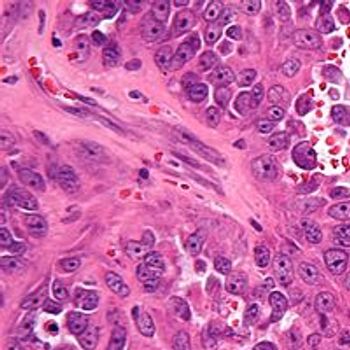
The FDA and European Medicines Agency have recommended that no new patients with advanced soft tissue sarcoma should be treated with the combination of olaratumab plus doxorubicin.

The FDA has placed a partial clinical hold on the phase III AIM2CERV trial evaluating the use of axalimogene filolisbac in patients with high-risk locally advanced cervical cancer.

Bristol-Myers Squibb has withdrawn its supplemental biologics license application for the combination of nivolumab (Opdivo) and ipilimumab (Yervoy) for the frontline treatment of patients with advanced non–small cell lung cancer with tumor mutational burden ≥10 mutations per megabase.

Ian W. Flinn, MD, PhD, discusses the potential impact of duvelisib on patients with chronic lymphocytic leukemia.

Panagiotis A. Konstantinopoulos, MD, discusses the status of immunotherapy in ovarian cancer and focuses on numerous combinations under investigation.

Meghna Trivedi, MD, highlights 3 classes of agents that are showing promise in patients with metastatic triple-negative breast cancer.

Richard T. Maziarz, MD, discusses the updated findings from JULIET and their clinical implications for patients with diffuse large B-cell lymphoma.
The FDA has cleared a direct-to-consumer genetic test for a risk report on MUTYH-associated polyposis, a hereditary colorectal cancer syndrome.

Janakiraman Subramanian, MD, discusses ongoing advances and remaining challenges in the field of lung cancer.
Tanios Bekaii-Saab, MD, discusses ways to further develop precision medicine within the treatment of patients with gastrointestinal cancers.
Cristina Gasparetto, MD, discusses the combination of daratumumab, selinexor, and dexamethasone in patients with multiple myeloma who have previously received ≥3 lines of therapy, which include an immunomodulatory agent and a proteasome inhibitor.
A supplemental Biologics License Application (sBLA) has been initiated with the FDA for daratumumab (Darzalex) for use in combination with lenalidomide (Revlimid) and dexamethasone (DRd) for the treatment of certain patients with multiple myeloma.
Brandon Weckbaugh, MD, sheds light on emerging biomarkers in non–small cell lung cancer.

The European Commission has approved blinatumomab for the treatment of adult patients with B-cell precursor acute lymphoblastic leukemia who are in remission but still have minimal residual disease of at least 0.1%.
The FDA has granted umbralisib (TGR-1202) a breakthrough therapy designation for the treatment of adult patients with marginal zone lymphoma who have received 1 prior anti-CD20 regimen.

The frontline combination of ibrutinib (Imbruvica) and nab-paclitaxel (Abraxane)/gemcitabine did not show a statistically significant benefit in progression-free or overall survival versus placebo plus nab-paclitaxel/gemcitabine in patients with metastatic pancreatic cancer.

Michael A. Choti, MD, highlights ongoing developments in the field of pancreatic cancer.

Maria-Victoria Mateos, MD, PhD, discusses the updated findings from the ALCYONE trial in patients with newly diagnosed multiple myeloma.
Robert M. Rifkin, MD, highlights the results of a trial evaluating the safety of split-dosing administration of daratumumab in patients with multiple myeloma.
The FDA has granted an approval to SB3 (Ontruzant; trastuzumab-dttb), a trastuzumab biosimilar, for the treatment of patients with HER2-overexpressing breast cancer or metastatic gastric or gastroesophageal junction adenocarcinoma.
Olaratumab in combination with doxorubicin missed the phase III ANNOUNCE trial’s primary endpoint of overall survival and did not confirm a clinical benefit for patients with advanced or metastatic soft tissue sarcoma compared with standard doxorubicin.