

Treatment with atezolizumab and neoadjuvant chemotherapy followed by adjuvant atezolizumab did not improve EFS in triple-negative breast cancer.

Your AI-Trained Oncology Knowledge Connection!
Treatment with atezolizumab and neoadjuvant chemotherapy followed by adjuvant atezolizumab did not improve EFS in triple-negative breast cancer.

Treatment with preoperative niraparib plus dostarlimab generated responses among patients with BRCA-mutant, ER-positive, HER2-negative breast cancer

Neoadjuvant camrelizumab paired with chemotherapy significantly improved pCR over chemotherapy alone in early or locally advanced TNBC.

Bora Lim, MD, of The University of Texas MD Anderson Cancer, and Stephanie Graff, MD, of Brown University Health, sit down with Chandler Park, MD, FACP, to discuss the latest abstracts in breast cancer presented during the 2024 San Antonio Breast Cancer Symposium.
Mariya Rozenblit, MD, discusses how genomic alterations and TMB influence the efficacy of immune checkpoint inhibitors in HR+ metastatic breast cancer.
Maxwell Lloyd, MD, discusses a real-world study of elacestrant outcomes based on prior treatment and ESR1 mutation status in HR+ breast cancer.

Palbociclib plus anti-HER2 and endocrine therapy improved progression-free survival in hormone receptor–positive, HER2-positive metastatic breast cancer.
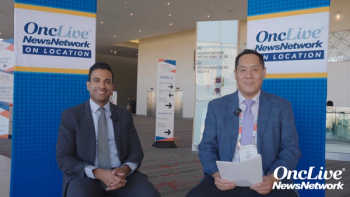
Sara Hurvitz, MD, of Fred Hutch Cancer Center, and Neil Iyengar, MD, of Memorial Sloan Kettering Cancer Center, sit down with Chandler Park, MD, FACP, to discuss the latest abstracts in breast cancer presented during the 2024 San Antonio Breast Cancer Symposium.

Tamoxifen reduced the risk of invasive ipsilateral breast recurrence in patients with good-risk ductal carcinoma in situ.

Retrospective data showed there was no OS difference between 3 frontline CDK4/6 inhibitor combos in HR-positive breast cancer.
Patients with luminal B and HER2E breast cancer subtypes may have a greater PFS benefit with ribociclib plus endocrine therapy vs combination chemotherapy.
Azka Ali, MD, discusses findings from the S0221 trial of alternative adjuvant anthracycline and taxane dosing schedules in high-risk, early breast cancer.

Jame Abraham, MD, of Cleveland Clinic, and Rena D. Callahan, MD, of UCLA, sit down with Chandler Park, MD, FACP, to discuss the latest abstracts in breast cancer presented during the 2024 San Antonio Breast Cancer Symposium.
Imlunestrant with or without abemaciclib improved PFS in select patients with ER-positive, HER2-negative advanced breast cancer after endocrine therapy.
Neoadjuvant patritumab deruxtecan with or without letrozole produced pathologic complete responses in high-risk, HR-positive/HER2-negative breast cancer.

SHR-A1811 monotherapy demonstrated high clinical activity and was well tolerated in patients with HER2-positive breast cancer.
Adjuvant olaparib maintained an efficacy benefit vs placebo in patients with BRCA1/2 mutation–positive, HER2-negative high-risk breast cancer.
Elacestrant plus abemaciclib demonstrated clinically important efficacy in ER-positive/HER2-negative advanced or metastatic breast cancer.
Hope S. Rugo, MD, FASCO, discusses updated safety findings from the ELEVATE trial of elacestrant-based combinations in ER+/HER2– metastatic breast cancer.
Risk-reducing surgery improved survival outcomes in younger patients with breast cancer and a germline BRCA mutation.
T-DXd improved PFS vs treatment of physician’s choice in hormone receptor-positive, HER2-low/-ultralow metastatic breast cancer.

Elacestrant was partnered with multiple targeted agents across varying dose levels and schedules for patients with estrogen receptor–positive advanced breast cancer.

Virginia Kaklamani, MD, DSc, discusses an analysis of ESR1 allelic frequencies in elacestrant-exposed ER+/HER2– metastatic ESR1-mutated breast cancer.

Reshma Jagsi, MD, DPhil, highlights key takeaways from the Lancet Breast Cancer Commission Report and the necessary steps forward emphasized in the report.
Aditya Bardia, MD, MPH, FASCO, discusses the efficacy of T-DXd in HER2-low/ultralow metastatic breast cancer by disease progression on prior therapy.
Felipe Batalini, MD, details how targeting PIK3CA is evolving in breast cancer as new allosteric inhibitors have emerged and showed promising safety/efficacy.

Vered Stearns, MD, discusses the role of carboplatin in early-stage triple-negative breast cancer according to results from the phase 3 PEARLY trial.

Francisco J. Esteva, MD, PhD, discusses how NGS sequencing, PIK3CA-targeted therapies, and ADCs are reshaping treatment in HR+/HER2– breast cancer.

Kevin Kalinsky, MD, MS, discusses outcomes of the phase 3 postMONARCH study in hormone receptor–positive, HER2-negative advanced breast cancer.
In case you missed any, read a recap of every episode of OncLive On Air that aired in November 2024.