
Oncology Business Management
Latest News
Advertisement
Latest Videos





























































Advertisement
More News

Healthcare spending is one of the largest expenses for a company and, more and more, employers are using population-based Big Data to ensure their employees have coverage tailored to their needs at a reasonable cost.
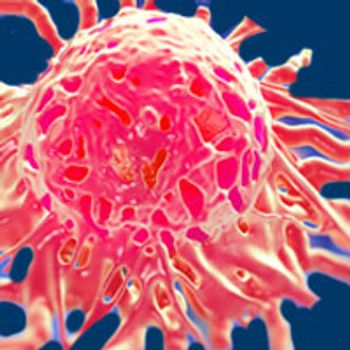
Immuno-oncology drugs can improve the level of care in many respects, but they bring a host of problems related to implementation that demands a new set of strategies.
The primary goal of a cancer diagnosis is to end up with the best possible outcome, and there are always several highways of care, or bundles, to choose from.
The Republican push to repeal the Affordable Care Act has sent anxiety levels soaring among oncologists and their patients, due largely to the great uncertainty about how exactly Congress will proceed.
With ambitious goals to improve outcomes and lower the cost of care, CMS has placed a lot of faith in its Oncology Care Model, an alternative payment model.
The FDA has granted a priority review to a supplemental Biologics License Application for pembrolizumab for the treatment of patients with locally advanced or metastatic urothelial cancer who progress following platinum-containing chemotherapy, according to Merck, the manufacturer of the PD-1 inhibitor.
Tara Sanft, MD, assistant professor of Medicine, medical director of Adult Survivorship for Yale Cancer Center Survivorship Clinic, discusses sequencing of treatments for patients with HER2-positive breast cancer.
"Uncertainty" is a routine dilemma when discussing a prognosis with a patient with cancer and his or her family. The prognosis is, at best, a statistical probability—assuming the available objective data are somewhat representative of the individual patient.

The 340B Drug Pricing Program, designed to provide support for out-patient drug purchases, severely lacks federal oversight, said BRG Healthcare, the business advisory group, in a report sponsored by the Alliance for Integrity and Reform of 340B (AIR340B).
Several organizations are developing alternative payment models they hope CMS will adopt as ways to encourage oncologists to deliver care at a lower cost while improving its quality. If approved, these proposals could become customized alternatives to the agency’s Oncology Care Model.

Compared with other specialists, medical oncologists are not often the target of malpractice litigation. Even so, they still get sued.
The Community Oncology Alliance got most of its 2016 Christmas list. CVS Caremark dropped its plan to cut physician-owned dispensaries out of Medicare Part D oral drug distribution, CMS eased off the gas pedal on the Medicare Access and CHIP Reauthorization Act, and the Medicare Part B Drug Payment Model has been discontinued for now.
Guru Sonpavde, MD, discusses challenges with sequencing in advanced renal cell carcinoma and his vision for the field going forward.

Cota, a New York-based precision informatics company, has developed what it says will be a significant aid for oncology practices working to conform to the expectations of CMS’s Oncology Care Model, which is designed to encourage physicians to strive for better patient outcomes and lower costs.
Saad Z. Usmani, MD, Department of Hematologic Oncology and Blood Disorders, Levine Cancer Institute/Carolinas HealthCare System, discusses the importance of the CASTOR and POLLUX trials for the treatment of patients with multiple myeloma.

The ambitious goals of the Cancer Moonshot initiative, now incorporated into the recently enacted 21st Century Cures Act, are generating excitement among oncology leaders.
The FDA has granted a priority review to a supplemental new drug application for the use of the PD-L1 inhibitor atezolizumab in cisplatin-ineligible patients with locally advanced or metastatic urothelial carcinoma as a frontline therapy or following progression occurring ≥12 months after neoadjuvant or adjuvant chemotherapy.
Watson for Oncology is the name of the new iteration from IBM. It achieved 90% concordance with tumor boards at the Manipal Comprehensive Cancer Center in Bengaluru, India, according to results presented at the 2016 San Antonio Breast Cancer Symposium.
The FDA has lifted its clinical hold on trials exploring pacritinib, according to CTI BioPharma, the developer of the JAK2/FLT3 inhibitor.
The FDA has granted a priority review to a supplemental new drug application for the use of regorafenib as a second-line treatment for patients with unresectable hepatocellular carcinoma.
Advertisement
Advertisement
Trending on OncLive
1
FDA Approves Nogapendekin Alfa Inbakicept Plus BCG for High-Grade, Papillary-Only BCG-Unresponsive NMIBC
2
SurVaxM Cancer Vaccine Shows Clinically Meaningful OS Signal in Newly Diagnosed Glioblastoma
3
VS-7375 Elicits Responses in KRAS G12D–Mutated Pancreatic Cancer
4
FDA Receives NDA Resubmission for Rivoceranib Plus Camrelizumab in Frontline Unresectable or Metastatic HCC
5