



Oncology Business Management
Latest News
June 8th 2017
By Meir Rinde
The number of accountable care organizations across the country has grown rapidly in the last 5 years, creating opportunities and challenges for oncology practices as they seek to benefit from the organizations’ referral networks, shared-savings programs, and care-improvement efforts.
Advertisement
Latest Videos






























































Advertisement
More News
The FDA has granted a priority review designation to nivolumab (Opdivo) for use as a treatment for patients with hepatocellular carcinoma following prior sorafenib (Nexavar).
Adam M. Brufsky, MD, PhD, discusses neratinib, overcoming resistance to HER2-targeted therapy, and the impact of newer agents in HER2-positive breast cancer.

Ahead of this year's meeting, researchers are increasingly interested in the state of communication between patients and doctors on immunotherapy.
Clara N. Lambert and the Association of Community Cancer Centers have created an online course called Financial Advocacy Boot Camp, which is designed to give experienced and novice financial navigators a review of essential knowledge for finding patient funds.

More Stage I cancers were diagnosed after the passage of the Affordable Care Act within five screenable disease types than were diagnosed before ACA implementation.
The FDA has granted a priority review designation to copanlisib as a treatment for patients with relapsed/refractory follicular lymphoma who have received at 2 least prior therapies, according to Bayer, the manufacturer of the PI3K dual-isoform inhibitor.

Radiation therapy remains fertile for continued technological innovation that can improve patient outcomes, but of the newest technologies may be practical for only the largest institutions.

Atezolizumab missed the phase III IMvigor211 trial’s primary endpoint of improving overall survival in the second-line setting for patients with locally advanced or metastatic urothelial carcinoma.

Terra Universal, an environmental solutions company based in Fullerton, California, came to a point recently where it was no longer willing to sell and design clean-room setups for oncology practices unless potential clients first sat down with a consultant who could give them reliable guidance on what they needed.

Researchers have successfully performed autonomous retroflexion of a robotic capsule during colonoscopy in a subject animal, according to data presented during Digestive Disease Week 2017 at McCormick Place in Chicago.
The research presented at AACR focused on the fundamentals of cell biology, cell aging, and cell death; how the immune system recognizes and kills cancer cells; and how, in turn, cancer cells avoid immune system detection.
Practices that meet the goals for improvement in savings and outcomes will be eligible for performance incentive payments.
As recently as the late 1990s, a practice could charge enough for chemotherapy drugs that it could easily afford to treat patients who had Medicare coverage and no additional insurance. Today, that is often no longer the case.

House Republicans have passed a revised version of the American Health Care Act by a vote of 217 to 213, without any Democratic support, and despite strenuous opposition from the healthcare community.

Under the new Quality Payment Program, most providers, including community oncologists, are expected to fall under Merit-based Incentive Payment System for the 2017 performance year. With careful analysis and planning, community oncology practices can choose measures that are a good fit and hold the most opportunity for revenue enhancement.
The rollout of the Oncology Care Model from CMS has proven to be a challenging road, specifically involving technological challenges, as practices have scrambled to find seamless solutions to bridging old electronic health records with new "patches" designed for the OCM.
The FDA has granted an accelerated approval to the PD-L1 inhibitor durvalumab (Imfinzi) for the treatment of patients with locally advanced or metastatic urothelial carcinoma who have disease progression during or following platinum-containing chemotherapy or who have disease progression within 12 months of neoadjuvant or adjuvant treatment with platinum-containing chemotherapy.

With the increase of oral medications in oncology, adherence has become a significant issue since patients take the drugs home with them, and whether or not they stick to a regimen is hidden from the provider's view.
The FDA has granted brigatinib (Alunbrig) an accelerated approval as a treatment for patients with metastatic ALK-positive non–small cell lung cancer who are resistant to prior crizotinib.
Leah Ralph discusses the ACCC’s position on the Afforadable Care Act repeal bill, the Medicare Payment Advisory Commission’s Part B cost control proposals, and the possibility for comprehensive reform on the 340B Drug Discount Program.
Howard A. “Skip” Burris III, MD, detailed the benefits of performing next-generation sequencing tests on patients with cancer at the 2017 Community Oncology Conference.
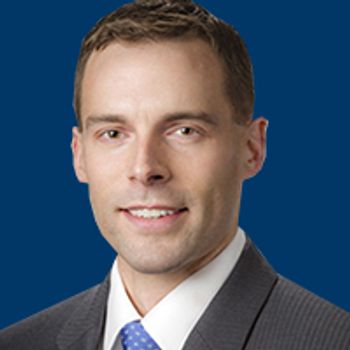
Josh Cox, PharmD, moderated a panel discussion on legislative initiatives to combat the rising power of Pharmacy Benefit Managers at the 2017 Community Oncology Conference. In the talk, he touched on the difficulties of monitoring therapy for patients receiving their drugs from outside pharmacies as well as murkiness off drug pricing and cash flow within the PBM systems.

The FDA has granted a breakthrough therapy designation to lorlatinib for use in patients with ALK-positive metastatic NSCLC who have previously received 1 or more ALK inhibitors, according to Pfizer, the company developing the next-generation ALK/ROS1 TKI.
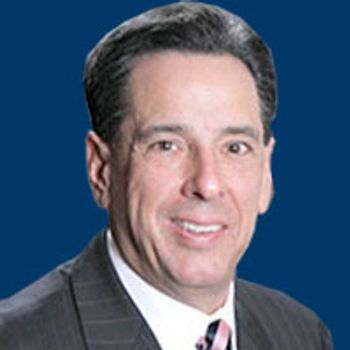
The real impetus for fueling the Cancer Moonshot is coming from community oncology practices, not large research institutions, according to the Community Oncology Alliance.
The FDA has granted an accelerated approval to atezolizumab as a frontline treatment for cisplatin-ineligible patients with locally advanced or metastatic urothelial carcinoma.
Advertisement
Advertisement
Trending on OncLive
1
FDA Approves Nogapendekin Alfa Inbakicept Plus BCG for High-Grade, Papillary-Only BCG-Unresponsive NMIBC
2
SurVaxM Cancer Vaccine Shows Clinically Meaningful OS Signal in Newly Diagnosed Glioblastoma
3
VS-7375 Elicits Responses in KRAS G12D–Mutated Pancreatic Cancer
4
FDA Receives NDA Resubmission for Rivoceranib Plus Camrelizumab in Frontline Unresectable or Metastatic HCC
5