




Oncology Business Management
Latest News

Advertisement
Latest Videos






































































Advertisement
More News

The FDA has issued a complete response letter to Advanced Accelerator Applications informing the company that its new drug application for Lutathera as a treatment for patients with gastroenteropancreatic neuroendocrine tumors would need to be resubmitted.

The FDA has approved the marketing of AeroForm, a new system for soft tissue expansion in 2-stage breast reconstruction following mastectomy, and in the treatment of underdeveloped breasts and soft tissue deformities.

JCAR017 has received an FDA breakthrough therapy designation for the treatment of patients with relapsed/refractory, aggressive large B-cell non-Hodgkin lymphoma.

The FDA has granted a priority review to a new drug application for the PARP 1/2 inhibitor niraparib for use as a maintenance therapy in patients with recurrent epithelial ovarian, fallopian tube, or primary peritoneal cancer who have responded to platinum-based chemotherapy.

President Barack Obama signed the 21st Century Cures Act into law today, earmarking $6.3 billion over 10 years for advancements in precision medicine development, brain research, heroin and prescription drug abuse prevention, and mental health.

It was 15 years ago that Jeffrey Brenner, MD, hypothesized that patients with the highest costs in the Camden, New Jersey, healthcare system received the worst care.

The FDA has granted a priority review to a biologics license application for the PD-L1 inhibitor durvalumab for the treatment of patients with locally advanced or metastatic urothelial carcinoma whose disease has progressed on standard platinum‑based chemotherapy.
The sweeping, $6.3 billion 21st Century Cures Act, designed to create a 10-year pool of money for precision medicine development and social health initiatives, gained overwhelming Senate approval Wednesday and goes next to President Obama, who has said he will sign the bill.

Value-based reforms from CMS have been received like extra work at the end of a long hard day. It hasn’t helped that making the leap to patient-centered care has involved grappling with a new set of quality metrics and wringing higher levels of performance out of electronic health reporting systems.
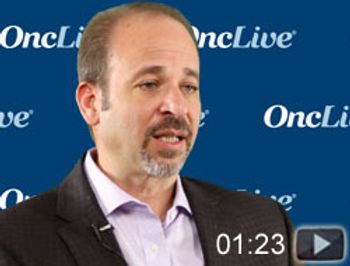
As insurers and the federal government look for ways to reduce costs in oncology, the division of care between large, academic institutions and smaller providers is undergoing a process of change, says Seth Berk, MD, chair of the Financial Audit Committee for Regional Cancer Care Associates (RCCA) and a Mount Holly, New Jersey, specialist in internal medicine, hematology and oncology.

Viewed by some as a boon for precision medicine, an Alzheimer’s cure, brain research, and opioid abuse prevention, but also seen as weakening the FDA’s regulatory power, the $6.3 billion 21st Century Cures Act passed overwhelmingly in the House Wednesday by a vote of 392-26.

The FDA has granted a priority review to a supplemental biologics license application for pembrolizumab for use as a treatment for patients with refractory classical Hodgkin lymphoma or those who have relapsed after ≥3 lines of therapy,

One of the basic tenets of science is the concept that all accepted “truths” are subject to objective testing and, through this process, can be shown to be false.
The FDA has granted a full approval and label update to ponatinib for patients with chronic phase, accelerated phase, or blast phase chronic myeloid leukemia (CML) or Philadelphia chromosome-positive acute lymphoblastic leukemia (Ph+ ALL) for whom no other tyrosine kinase inhibitor therapy is indicated, as well as for patients with T315I-positive CML or T315I-positive Ph+ ALL.

The FDA has granted a priority review to a supplemental biologics license application for pembrolizumab for previously treated patients with advanced microsatellite instability-high cancer.
We all know that healthcare is at a crossroads: to the left, there is rationed care, and to the right, you have economic insolvency, if we remain on our current course.

The change of administrations in Washington, DC may undermine the future of a proposal to revise Medicare Part B drug compensation, a plan that has been widely criticized in the oncological community because of the potential reduction in profit margins it entails.
Those responsible for developing and implementing governmental health policy have an extremely difficult job. Not only do they have to attempt to satisfy often highly unrealistic expectations of legislators for overall goals and timelines, but they also are frequently asked to accomplish a task with woefully inadequate funding.

Biomarkers play a key role in the optimization of treatments for patients with prostate cancer. According to Mark Stein, MD, they can even serve as clinical endpoints in trials.

Identifying biomarkers to determine who should receive chemotherapy, targeted agents, and immunotherapy is just one of several obstacles the prostate cancer community is currently facing.

A number of clinical trials are seeking to identify beneficial therapeutic outcomes in patients with prostate cancer who are resistant to androgen receptor–targeted agents.

An expert panel has issued a set of guidelines for patients with gastroesophageal adenocarcinoma, recommending that they be tested for HER2 status before initiation of targeted therapy.

The FDA has issued a complete response letter to Spectrum Pharmaceuticals informing the company that its new drug application for apaziquone in bladder cancer would not be approved.

The expression of PD-L1 has been at the forefront of biomarker development for PD-1/PD-L1 inhibitors, but there is much uncertainty surrounding its use and other biomarkers are needed.
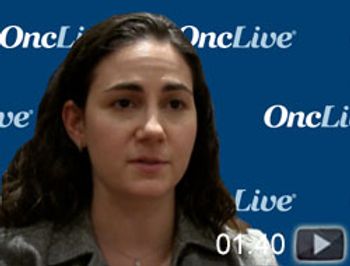
Sarah B. Goldberg, MD, MPH, assistant professor of Medicine, Yale Cancer Center, discusses the use of PD-L1 as a biomarker in treating patients with lung cancer.
Advertisement
Advertisement
Trending on OncLive
1
FDA Approves Nogapendekin Alfa Inbakicept Plus BCG for High-Grade, Papillary-Only BCG-Unresponsive NMIBC
2
SurVaxM Cancer Vaccine Shows Clinically Meaningful OS Signal in Newly Diagnosed Glioblastoma
3
VS-7375 Elicits Responses in KRAS G12D–Mutated Pancreatic Cancer
4
FDA Receives NDA Resubmission for Rivoceranib Plus Camrelizumab in Frontline Unresectable or Metastatic HCC
5