




Gastrointestinal Cancer
Latest News


Adjuvant Oxaliplatin Added to Fluoropyridine Improves Survival in Stage III MSI-High Colon Cancer
By Wayne Kuznar
Advertisement
Latest Videos






















































Advertisement
More News

Myriam Chalabi, MD, highlights the importance of testing for microsatellite instability and mismatch repair deficiency in colorectal cancer.

The field of HER2-positive gastrointestinal malignancies witnessed a surge of data in 2020 regarding investigational agents, such as the antibody-drug conjugate fam-trastuzumab deruxtecan-nxki, that could play a pivotal role in transforming treatment selection in the coming years.
Although rates of hepatocellular carcinoma incidence started to plateau in 2013, many cases continue to be diagnosed at more advanced stages, especially in patients without liver disease.

Aman Chauhan, MD, discusses future directions with Lutathera in gastroenteropancreatic neuroendocrine tumors.

Elena Gabriela Chiorean, MD, discusses the role of genetic testing in pancreatic cancer.

Yelena Y. Janjigian, MD, discusses the expanding treatment armamentarium in HER2-positive gastric cancer.

Reema A. Patel, MD, discusses the results of a subgroup analysis from the NAPOLI-1 trial in pancreatic cancer.

January 7, 2021 - Patients with pancreatic ductal adenocarcinoma who were treated with a 920 mg dose of SM-88 were less likely to experience a change in tumor texture and were found to have more favorable outcomes, according to results from a phase 2 dose-escalation trial.

Tanios S. Bekaii-Saab, MD, FACP, discusses incorporating potential mechanisms of resistance into treatment selection in hepatocellular carcinoma.

January 6th, 2021 - The addition of vemurafenib to irinotecan and cetuximab led to a significant improvement in progression-free survival versus irinotecan and cetuximab alone in patients with BRAF V600E–mutated metastatic colorectal cancer.

Nathan Bahary, MD, PhD, discusses the benefits of ivosidenib in patients with intrahepatic cholangiocarcinoma whose tumors harbor IDH1 mutations.

December 30, 2020 - The China National Medical Products Administration has approved surufatinib for the treatment of patients with non-pancreatic neuroendocrine tumors.

December 30, 2020 - The phase 1/2 GOBLET trial will investigate the use of pelareorep in combination with atezolizumab in patients with metastatic colorectal and advanced or metastatic pancreatic and anal cancers.
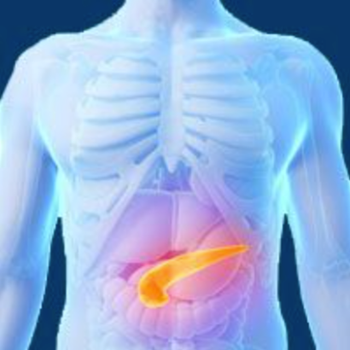
The filing of a new drug application has been initiated with the FDA for surufatinib for the treatment of patients with pancreatic and non-pancreatic neuroendocrine tumors.

Faculty from a recent Institutional Perspectives in Cancer webinar on gastrointestinal cancer hosted by the University of Kentucky discuss the current paradigms in hepatocellular carcinoma, colorectal cancer, and pancreatic cancer.
December 23, 2020 - The FDA has granted an orphan drug designation to the mismatched, double-stranded RNA molecule rintatolimod for the treatment of patients with pancreatic cancer.

Joseph Kim, MD, on the utility of atezolizumab plus bevacizumab in patients with hepatocellular carcinoma.

Reema A. Patel, MD, discusses ongoing research efforts in pancreatic cancer.

Reema A. Patel, MD, discusses findings from the NAPOLI-1 trial in pancreatic cancer.

Pashtoon M. Kasi, MD, MS, discusses findings from the CRC-MRD Consortia in colorectal cancer.

Nathan Bahary, MD, PhD, discusses the role of pemigatinib in biliary tract cancers.
December 17, 2020 - The FDA has granted priority review to a new supplemental biologics license application for pembrolizumab in combination with platinum- and fluoropyrimidine-based chemotherapy as a first-line treatment in patients with locally advanced unresectable or metastatic esophageal and gastroesophageal junction cancer.

Timothy Price, MBBS, DHthSc, FRACP, discusses the rationale to evaluate sotorasib in gastrointestinal cancers.

December 16, 2020 - The combination of motixafortide plus pembrolizumab and chemotherapy was found to result in a substantial improvement in overall survival, progression-free survival, and overall response rate when used as a second-line treatment in patients with stage IV pancreatic ductal adenocarcinoma.

Michael J. Cavnar, MD, discusses surgical differences between right- and left-sided tumors in colorectal cancer.
Advertisement
Advertisement
Trending on OncLive
1
Epcoritamab Plus R-CHOP Meets PFS End Point in Newly Diagnosed DLBCL
2
‘Our Impact Will Be Broad and Transformative’: Wells Messersmith, MD, Takes the Reins at CU Anschutz Cancer Center
3
FDA Approves Pirtobrutinib for Previously Untreated CLL/SLL
4
Berzosertib Plus Carboplatin Fails to Improve Responses in Pretreated mCRPC
5