




Gastrointestinal Cancer
Latest News
Advertisement
Latest Videos

























































Advertisement
More News

February 19, 2021 - Multitarget stool DNA test Cologuard could present a potential noninvasive screening method for colorectal cancer, as it has demonstrated high specificity among average-risk patients aged 45 to 49 years.

Reema A. Patel, MD, discusses the potential for nanoliposomal irinotecan in pancreatic cancer and other emerging approaches under exploration.

Kabir Mody, MD discusses new directions with yttrium-90 glass microspheres in hepatocellular carcinoma as demonstrated in the retrospective LEGACY study.

February 17, 2021 – Pamrevlumab, a first-in-class inhibitor of connective tissue growth factor activity, is being evaluated in combination with gemcitabine and nab-paclitaxel (Abraxane) in a phase 3 trial for patients with unresectable locally advanced pancreatic cancer, a population in need of new options.

Finding a reliable biomarker for minimal residual disease assessment is needed and circulating tumor DNA has shown incredible promise in colon cancer.

Dr. Schilsky highlights key milestones in his career with ASCO, Dr. Gralow speaks to the short- and long-term goals she plans to accomplish in her new role at ASCO, and both speak to their thoughts on the future of cancer care.
February 15, 2021 - Zanidatamab demonstrated promising antitumor activity with favorable tolerability in patients with HER2-expressing gastroesophageal adenocarcinoma that has progressed following previous therapies, including HER2-targeted agents.

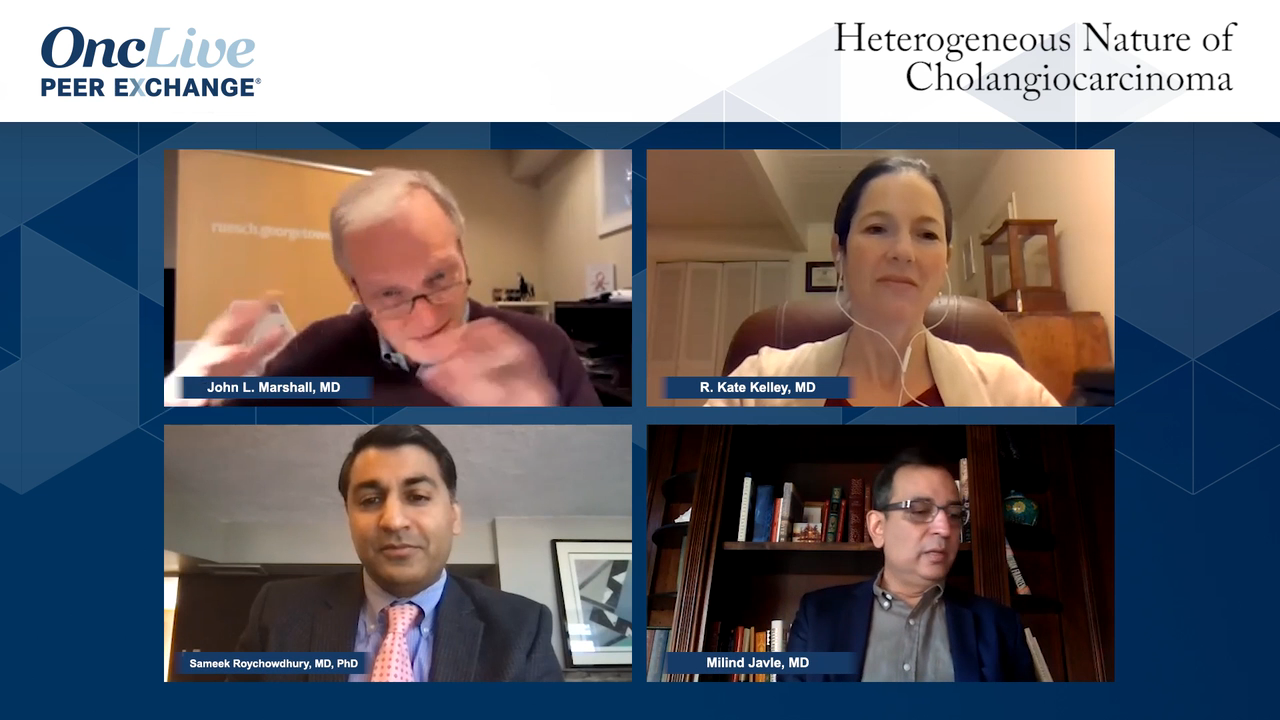
John Marshall, MD, and his wife, Liza, recount the challenging journey of Liza's triple-negative breast cancer (TNBC) diagnosis and how John's career as a gastrointestinal oncologist played into the caregiving process. The interview comes ahead of the release of their book, Off Our Chests, which goes further in depth with their experience.
Fam-trastuzumab deruxtecan-nxki is under study alone and in combination for the treatment of patients with HER2-overexpressing locally advanced, unresectable or metastatic gastric or gastroesophageal junction adenocarcinoma in the ongoing phase 1b/2 DESTINY-Gastric03 trial.

Axel Grothey, MD, discusses potential combination strategies with fam-trastuzumab deruxtecan-nxki in gastrointestinal malignancies.
Dennis J. Slamon, MD, PhD, discusses how his passion for medicine stemmed from a high school biology class, the struggle to develop trastuzumab as a viable drug in HER2-positive breast cancer, and the movie about his research that he didn’t want to see made.
Yttrium-90 glass microspheres, a personalized radiotherapeutic cancer treatment, induced an overall response rate of 72.2% per blinded independent central review as neoadjuvant or stand-alone treatment in 143 evaluable patients with unresectable hepatocellular carcinoma.

Experts in CRC discuss questions and management of mCRC.
John Marshall, MD, and Axel Grothey, MD, discuss how molecular testing results guide treatment decisions in patients with mCRC.

February 3, 2021 - The Drive-By Flu-Fecal Immunochemical Test program not only provides safe and socially distanced colorectal cancer screening opportunities during the coronavirus disease 2019 pandemic, but also may help to address screening declines in diverse communities.

Kohei Shitara, MD, discusses the rationale to analyze the effects of prior therapy on outcomes with TAS-102 in patients with metastatic gastric/gastroesophageal junction cancer.
February 2, 2021 - ASCO has chosen molecular profiling driving progress in gastointestinal cancers as its Advance of the Year.

Kristen K. Ciombor, MD, MSCI, discusses sequencing treatment options for patients with locally advanced rectal cancer.
Experts in mCRC review data on TAS-102 and discuss how best to sequence therapies in the third or fourth line.

Axel Grothey, MD, and John Marshall, MD, discuss safety results from the ReDOS study of regorafenib in patients with mCRC.
John Marshall, MD, reviews efficacy data from the ReDOS study of regorafenib in patients with mCRC.

Experts in metastatic colorectal cancer review therapeutic options after progression for patients with mCRC.

BCLC B intermediate stage hepatocellular carcinoma, defined as patients with unresectable, liver-limited disease and preserved liver function, encompasses a broad range of patients with variable tumor size, number, and location.
Experts in metastatic colorectal cancer discuss when and in which patients to use a chemotherapy-free treatment interval.
Axel Grothey, MD, and John Marshall, MD, discuss strategies for optimizing first-line treatment in metastatic colorectal cancer and the role of adjuvant therapy.
Advertisement
Advertisement
Trending on OncLive
1
Epcoritamab Plus R-CHOP Meets PFS End Point in Newly Diagnosed DLBCL
2
‘Our Impact Will Be Broad and Transformative’: Wells Messersmith, MD, Takes the Reins at CU Anschutz Cancer Center
3
FDA Approves Pirtobrutinib for Previously Untreated CLL/SLL
4
Berzosertib Plus Carboplatin Fails to Improve Responses in Pretreated mCRPC
5