


Gastrointestinal Cancer
Latest News
Advertisement
Latest Videos






















































Advertisement
More News
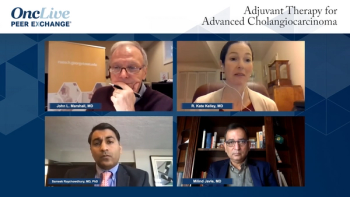
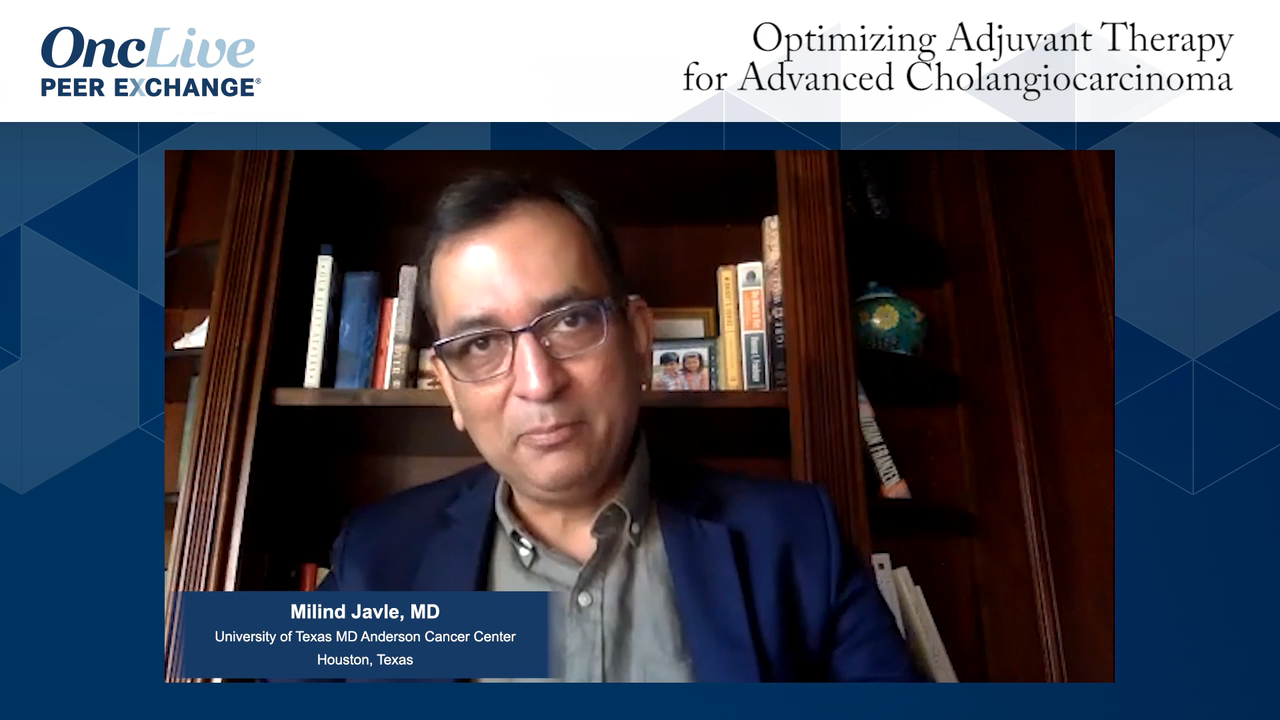
Current treatment approaches for advanced cholangiocarcinoma, despite current gaps that can be considered in the adjuvant setting, as highlighted by GI oncologists.

Key updates to the National Comprehensive Cancer Network guidelines for gastric and esophageal cancers include the incorporation of immune checkpoint inhibitors spanning settings in patients with gastroesophageal cancer, the inclusion of fam-trastuzumab deruxtecan-nxki for those with HER2-positive gastric cancer, and the addition of recommended ramucirumab combinations for use in second- or later-line settings.

Anjana Pillai, MD, discusses recent advances made in the HCC treatment paradigm, as well as what the conference will offer to healthcare providers working in the field.

Riad Salem, MD, discusses the FDA approval of TheraSphere™ Yttrium-90 Glass Microsphere in March 2021 for the treatment of patients with hepatocellular carcinoma.
Experts in the field of HCC consider second and third lines of therapy after a patient’s disease state progresses after frontline atezolizumab-bevacizumab.
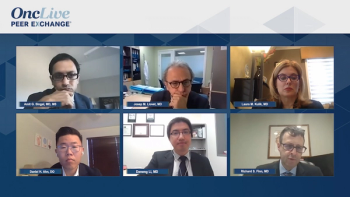
Laura M. Kulik, MD, leads a discussion about personal experiences using atezolizumab-bevacizumab and whether clinical trial data reflect real-world experience.

The FDA has approved TheraSphere™ Yttrium-90 Glass Microspheres for the treatment of patients with hepatocellular carcinoma.

Richard S. Finn, MD, discusses the data with pembrolizumab and nivolumab that support their utility in hepatocellular carcinoma.

A major barrier to routine genomic profiling of tumors in patients with biliary tract cancer is the lack of adequate tumor tissue in the biopsy samples; the analysis of circulating tumor DNA present in the plasma, is emerging as a promising alternative.
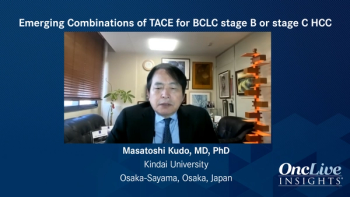
Masatoshi Kudo, MD, PhD, reviews data from the LEAP-012 and TACTICS trials for intermediate stage hepatocellular carcinoma.
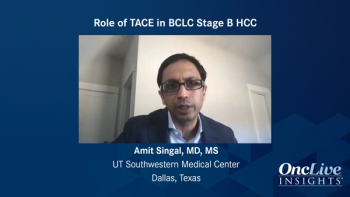
Amit Singal, MD, MS, and Masatoshi Kudo, MD, PhD, comment on the role of TACE (transarterial chemoembolization) in early line settings for the management of BCLC (Barcelona Clinic Liver Cancer) stage B hepatocellular carcinoma and whether systemic therapy has the potential to replace TACE.

Richard S. Finn, MD, discusses treatment considerations for patients with hepatocellular carcinoma.

Cathy Eng, MD, FACP, FASCO, discusses the potential of fam-trastuzumab deruxtecan-nxki in patients with HER2-positive metastatic colorectal cancer.

Single-agent bintrafusp alfa demonstrated efficacy, durability, and an acceptable toxicity profile when used in patients with locally advanced or metastatic biliary tract cancer who have progressed on or are intolerant of frontline platinum-based chemotherapy.

Anjana Pillai, MD, discusses sequential treatment in hepatocellular carcinoma.

Syed Kazmi, MD, discusses emerging biomarkers that could help guide treatment decisions in patients with colorectal cancer.
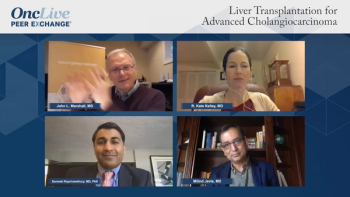
Scenarios for which liver transplantation may be appropriate in advanced cholangiocarcinoma.
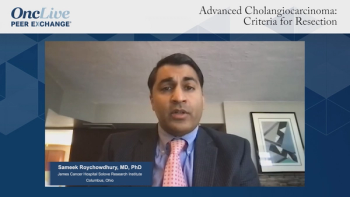
Panelists discuss types of scans and other testing results that can be used to help identify patients with an advanced bile duct cancer who are eligible for surgical resection.

Julie K. Heimbach, MD, discusses the criteria for liver transplantation in patients with hepatocellular carcinoma.

Tony Philip, MD, discusses advances made in the treatment of patients with colorectal cancer.

John L. Marshall, MD, has made it his mission to improve the lives of patients with GI cancers through innovative research, personalized medicine, and focused advocacy.
Daniel Lin, MD, MS, discusses pivotal trials examining important targeted agents for patients with cholangiocarcinoma and the importance of comprehensive genomic testing to guide treatment decisions.

Six indications for immune checkpoint inhibitors granted under the FDA’s accelerated approval process that later failed confirmatory clinical trials are being reassessed as the agency continues an industry-wide evaluation of the pathway.
A discussion about the recent data from trials that looked at atezolizumab-bevacizumab for the treatment of advanced HCC, and its role as the new standard of care.
Experts discuss recent data surrounding emerging combinations of TACE plus systemic therapies for patients with BCLC stage B or C HCC.
Advertisement
Advertisement
Trending on OncLive
1
Epcoritamab Plus R-CHOP Meets PFS End Point in Newly Diagnosed DLBCL
2
‘Our Impact Will Be Broad and Transformative’: Wells Messersmith, MD, Takes the Reins at CU Anschutz Cancer Center
3
FDA Approves Pirtobrutinib for Previously Untreated CLL/SLL
4
Berzosertib Plus Carboplatin Fails to Improve Responses in Pretreated mCRPC
5