
Immuno-Oncology
Latest News
Advertisement
Latest Videos






























































Advertisement
More News
David I. Quinn, MD, MBBS, associate professor of Medicine, medical director of USC Norris Cancer Hospital, on combinations of targeted therapies for patients with renal cell carcinoma (RCC).
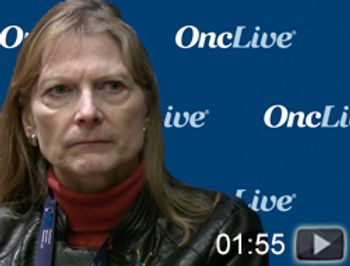
Susan F. Slovin, MD, PhD, medical oncologist, Memorial Sloan Kettering Cancer Center, discusses potential immunotherapy agents for patients with prostate cancer.

According to findings from a single-arm phase II trial, treatment with the PD-1 inhibitor nivolumab (Opdivo) resulted in an overall response rate of 24.3% in previously treated patients with squamous cell carcinoma of the anal canal.
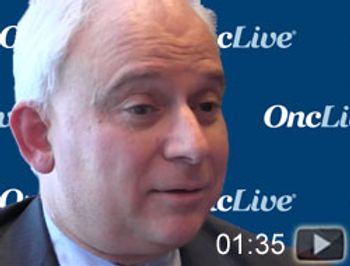
Daniel Costin, MD, hematology and oncology, White Plains Hospital, discusses the potential with immunotherapy agents in the frontline setting as treatment for patients with non–small cell lung cancer (NSCLC).
Axitinib was a promising newcomer in the renal cell carcinoma field when it was introduced as a second-line therapy 5 years ago. Now it is being displaced by newer therapies, a development that may serve as a harbinger for the evolution of treatment patterns in other tumor types with a bounty of novel agents.
Pembrolizumab has shown durable, clinically significant responses in patients with locally advanced head and neck cancer who are refractory to platinum-based chemotherapy and cetuximab, according to results from the single-arm, phase II KEYNOTE-055 study.
John V. Heymach, MD, PhD, chairman, Department of Thoracic/Head and Neck Medical Oncology, The University of Texas MD Anderson Cancer Center, discusses the CheckMate-026 trial in lung cancer.

Padmanee Sharma, MD, PhD, discusses the significance of the VISTA immune-checkpoint pathway in prostate cancer, and her proposed novel immunotherapy approach for patients with these tumors.
Jedd D. Wolchok, MD, PhD, chief, Melanoma and Immunotherapeutics Service, Memorial Sloan Kettering Cancer Center, discusses weighing the overall survival (OS) benefit with the increased risk of toxicities seen with the combination of nivolumab (Opdivo) and ipilimumab (Yervoy) in treatment-naïve patients with advanced melanoma.
Adding the IDO inhibitor indoximod to pembrolizumab led to an overall response rate of 52% in patients with advanced melanoma, according to findings from a phase II trial reported at the 2017 AACR Annual Meeting.
Adding a formulation of the Coxsackievirus A21 (CAVATAK®) to ipilimumab (Yervoy) yielded an overall response rate of 50% and was well-tolerated in immunotherapy-naïve and pretreated patients with advanced melanoma.
Julie R. Brahmer, MD, associate professor of Oncology, Bloomberg Kimmel Institute for Cancer Immunotherapy at Johns Hopkins, discusses 5-year follow-up data from the CA209-003 study of nivolumab in previously treated advanced non-small cell lung cancer (NSCLC).
Jason J. Luke, MD, assistant professor of Medicine, The University of Chicago Medicine, discusses the controversy surrounding the combination of nivolumab (Opdivo) and ipilimumab (Yervoy) in treatment-naïve patients with advanced melanoma, which was explored in the CheckMate-067 trial, during the AACR Annual Meeting.
Long-term survival in patients with metastatic non–small cell lung cancer who received the immune checkpoint inhibitor nivolumab (Opdivo) has proven to be much higher than expected, with 16% of these patients surviving after 5 years, equivalent to about 4 times what would be expected with chemotherapy.

The PD-1 and CTLA-4 inhibitor combination of nivolumab (Opdivo) and ipilimumab (Yervoy) was associated with a 12% reduction in the risk of death versus nivolumab monotherapy in patients with treatment-naïve advanced melanoma.
Treatment with the PD-L1 inhibitor avelumab induced an objective response rate of 33% in patients with advanced Merkel cell carcinoma in the phase II JAVELIN Merkel 200 study, including 2 additional complete responses since the primary analysis.
According to results presented at the 2017 AACR Annual Meeting, 10% of patients showed impressive long-term survival in a phase I study of single agent anti-PD-L1 atezolizumab (Tecentriq) in patients with metastatic triple-negative breast cancer.
Mark B. Stoopler, MD, discusses ongoing developments in immunotherapy and his vision for the future of non-small cell lung cancer treatment.

Kiran K. Turaga, MD, associate professor of surgery, vice chief, section of general surgery and surgical oncology, director of the Surgical GI Cancer Program and the Regional Therapeutics Program at The University of Chicago Medicine, discusses whether patients vie for immunotherapy versus surgery as treatment for their melanoma.
Evan Y. Yu, MD, discusses the current treatment options for patients with metastatic urothelial carcinoma, the unmet needs that still exist in this space, and the possibilities for the future treatment landscape.
Advertisement
Advertisement
Trending on OncLive
1
FDA Approves Tucatinib Plus Trastuzumab/Pertuzumab as First-Line Maintenance in Advanced HER2+ Breast Cancer
2
FDA Grants Breakthrough Device Designation to Natera’s Multi-Cancer Early Detection Assay
3
VIR-5500 Receives FDA Fast Track Designation in mCRPC
4
FDA Approves Atezolizumab Plus Chemo for Stage III dMMR Colon Cancer
5