

Immuno-Oncology
Latest News
Advertisement
Latest Videos































































Advertisement
More News
David Spigel, MD, chief scientific officer, director, Lung Cancer Research Program, principal investigator, Sarah Cannon Research Institute, discusses the results of cohort G from the KEYNOTE-021 trial, which explored pembrolizumab (Keytruda) combined with pemetrexed/carboplatin as a frontline treatment for patients with nonsquamous non–small cell lung cancer (NSCLC).
Sundar Jagannath, MD, director of the Multiple Myeloma program and professor of medicine at the Tisch Cancer Institute, Mount Sinai Cancer Center, discusses the potential impact of immunotherapy in multiple myeloma.
Jared Weiss, MD, offers his expert insight into the actual impact of the immunotherapy advances in lung cancer.

The EMA’s Committee for Medicinal Products for Human Use has recommended approval of pembrolizumab for the treatment of adult patients with relapsed or refractory classical Hodgkin lymphoma who have progressed following autologous stem cell transplant and brentuximab vedotin, or who are transplant-ineligible and have failed brentuximab vedotin.
The EMA’s Committee for Medicinal Products for Human Use has recommended approval of nivolumab for the treatment of patients with squamous cell cancer of the head and neck following progression on platinum-based therapy.

Tanguy Seiwert, MD, discussed advances and next steps with immunotherapy, as well as the overall challenges and goals for treating patients with head and neck cancer.
Michael A. Thompson, MD, PhD, medical director, precision medicine, Vince Lombardi Cancer Clinic, Aurora Health Care, discusses the future of treatment in multiple myeloma.
Tanguy I. Seiwert, MD, assistant professor of Medicine, University of Chicago Medicine, gives advice to community oncologists on administering immunotherapy to patients with head and neck cancer.
The FDA has granted an accelerated approval to the PD-L1 inhibitor avelumab (Bavencio) for the treatment of adults and pediatric patients 12 years and older with metastatic Merkel cell carcinoma, including those who have not received prior chemotherapy.

Ragini Kudchadkar, MD, assistant professor, Department of Hematology and Medical Oncology, associate director, Hematology and Medical Oncology Fellowship Program-Clinical/Service, Emory University School of Medicine, discusses the FDA approval of avelumab for the treatment of patients with Merkel cell carcinoma.

Susan F. Slovin, MD, PhD, discusses the current state of immunotherapy in prostate cancer.
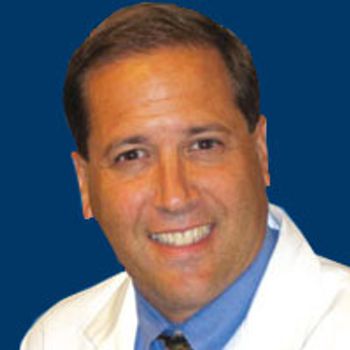
Immune checkpoint inhibitors in triple-negative breast cancer are showing promise, but there must be future research to determine whether these agents can make a difference in this challenging malignancy.

Thomas F. Gajewski, MD, PhD, discusses how the combination of PD-1 and IDO inhibitors could change the standard of care for patients with melanoma, and highlights other emerging targets on the horizon.
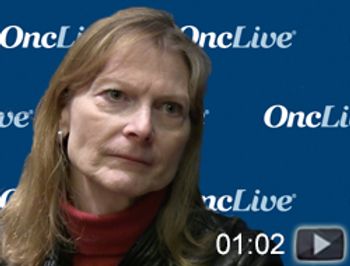
Susan F. Slovin, MD, PhD, medical oncologist, Memorial Sloan Kettering Cancer Center, discusses the current role of immunotherapy in patients with advanced prostate cancer.
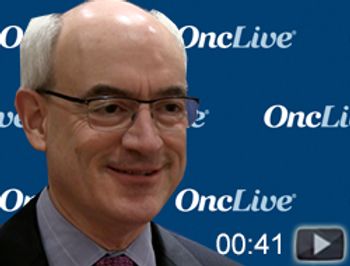
Everett Vokes, MD, John E. Ultmann Professor of Medicine and Radiation Oncology, physician-in-chief, University of Chicago Medical Center, chair, Department of Medicine, University of Chicago Medicine, discusses biomarkers for immunotherapy in head and neck cancer.
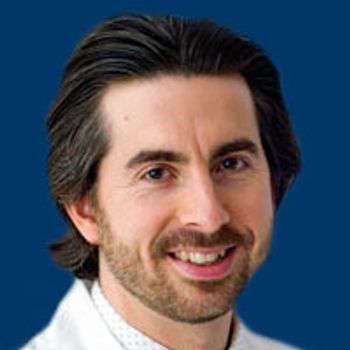
Jason J. Luke, MD, discusses adjuvant therapy for patients with melanoma, as well as the future of targeted agents and immunotherapy.

Breelyn Wilky, MD, an associate professor of Medicine, Sylvester Comprehensive Cancer Care, University of Miami Health System, discusses the status of a phase II trial investigating concurrent axitinib (Inlyta) and pembrolizumab (Keytruda) in patients with advanced alveolar soft part sarcoma and other soft tissue sarcomas.
As the number of tumor types with approved PD-1/PD-L1 pathway inhibitors continues to expand, bladder cancer has become a robust area of development.
Jason J. Luke, MD, assistant professor of Medicine, The University of Chicago Medicine, discusses some of the ongoing adjuvant therapies in development for patients with melanoma. Luke shared this insight during the 2017 OncLive State of the Science Summit on Melanoma and Immuno-Oncology.
Investigators are looking into a novel immunotherapy combination that pairs the first-in-class IDO1 inhibitor epacadostat (INCB024360) with the checkpoint blockade agent pembrolizumab (Keytruda) in patients with unresectable or metastatic melanoma.
Giuseppe Curigliano, MD, PhD, head of the Division of Early Drug Development at European Institute of Oncology, in Milan, Italy, discusses the emergence of immunotherapy in breast cancer.

Immunotherapy will be most effective as a treatment for breast cancer when it is used to alter the tumor microenvironment, according to a careful examination of studies exploring the immune response presented by Nora Disis, MD.

Giuseppe Curigliano, MD, PhD, discusses recent trials of immunotherapy and chemotherapy in triple-negative breast cancer, as well as the future role of immunotherapy in the treatment of breast cancer.

Advertisement
Advertisement
Trending on OncLive
1
FDA Approves Tucatinib Plus Trastuzumab/Pertuzumab as First-Line Maintenance in Advanced HER2+ Breast Cancer
2
FDA Grants Breakthrough Device Designation to Natera’s Multi-Cancer Early Detection Assay
3
VIR-5500 Receives FDA Fast Track Designation in mCRPC
4
FDA Approves Atezolizumab Plus Chemo for Stage III dMMR Colon Cancer
5