
Immuno-Oncology
Latest News
Advertisement
Latest Videos




































































Advertisement
More News



Arlene O. Siefker-Radtke, MD, discusses the exciting advances in the bladder cancer field, why researchers should move past PD-L1 as a biomarker, and what combinations can be expected to move through the pipeline next.
Nancy B. Gordon, MD, assistant professor, Department of Pediatrics, The University of Texas MD Anderson Center, discusses next steps for immunotherapy research in the field of osteosarcoma.

David J. Straus, MD, internist and hematologic oncologist, Memorial Sloan Kettering Cancer Center, discusses the FDA approval of pembrolizumab (Keytruda) as a treatment for patients with Hodgkin lymphoma.
The FDA has granted an accelerated approval to pembrolizumab (Keytruda) for the treatment of adult and pediatric patients with classical Hodgkin lymphoma (cHL) who are refractory or have relapsed after 3 or more lines of therapy.

Paul G. Corn, MD, PhD, discusses recent advances in prostate cancer and the potential for immunotherapy and PARP inhibitors in the field.

Daniel H. Ahn, DO, internist, Mayo Clinic, discusses advances in neoadjuvant therapies for patients with gastric cancer during the 2017 OncLive State of the Science Summit on Gastrointestinal Malignancies.
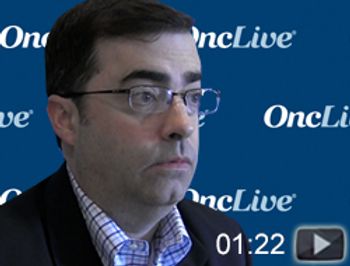
David F. McDermott, MD, Beth Israel Deaconess Medical Center, discusses the future of immunotherapies in the treatment of patients with kidney cancer.

Elizabeth Swisher, MD, professor, Department of Medicine, Division of Medical Genetics, University of Washington School of Medicine, Breast and Ovarian Cancer Prevention Program, Seattle Cancer Care Alliance, discusses next steps regarding treatments for patients with ovarian cancer.
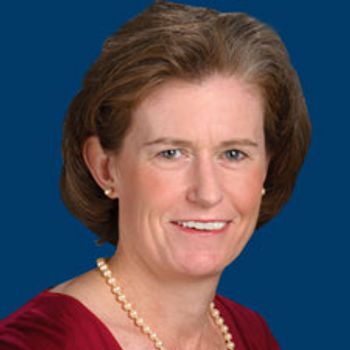
Multiple ongoing clinical trials are evaluating various immunotherapy strategies for patients with breast cancer, with combinations representing the most potential for future success.

Vassiliki A. Papadimitrakopoulou, MD, discusses recent developments with immunotherapy in non­-small cell lung cancer and the continued significance of EGFR and ALK inhibitors in the field.

Salah-Eddin Al-Batran, MD, medical oncologist and director at the Institute of Clinical Cancer Research—Frankfurt, Germany, discusses the future of treatment in gastric cancer.
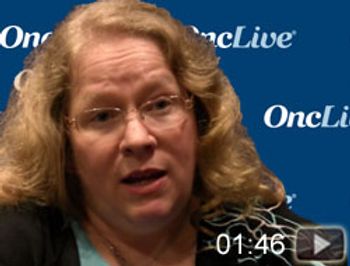
Arlene O. Siefker-Radtke, MD, associate professor, Department of Genitourinary Medical Oncology, Division of Cancer Medicine, The University of Texas MD Anderson Cancer Center, clinical co-leader, Bladder SPORE Executive Committee, discusses why researchers and physicians should reconsider the utility of PD-L1 as a biomarker for patients with bladder cancer.
A supplemental biologics license application for pembrolizumab (Keytruda) for previously treated patients with advanced microsatellite instability-high cancer remains under review by the FDA.

The combination of eribulin and pembrolizumab demonstrated promising objective response rates, including a complete response, for patients with metastatic triple-negative breast cancer.

Ian Chau, MD, consultant medical oncologist, Royal Marsden Hospital, discusses the CheckMate 577 study in resected lower esophageal or gastroesophageal junction (GEJ) cancer.

Sagar Lonial, MD, professor and chair, Department of Hematology & Medical Oncology, Emory University School of Medicine, chief medical officer, Winship Cancer Institute of Emory University, discusses updates in multiple myeloma.
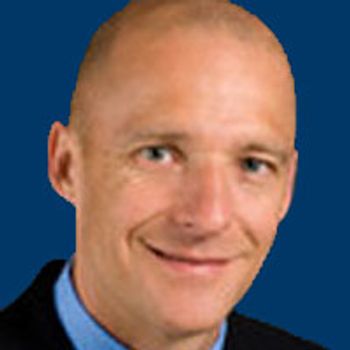
Eric Jonasch, MD, speaks on the evolving choices for patients with renal cell carcinoma in the first- and second-line settings, as well as the remaining challenges in the field.

Dmitriy Zamarin, MD, PhD, discusses the current state of immunotherapy in gynecologic cancers and necessary next steps for advancement in these diseases.
Advertisement
Advertisement
Trending on OncLive
1
FDA Approves Tucatinib Plus Trastuzumab/Pertuzumab as First-Line Maintenance in Advanced HER2+ Breast Cancer
2
FDA Grants Breakthrough Device Designation to Natera’s Multi-Cancer Early Detection Assay
3
VIR-5500 Receives FDA Fast Track Designation in mCRPC
4
FDA Approves Atezolizumab Plus Chemo for Stage III dMMR Colon Cancer
5