


Immuno-Oncology
Latest News
Advertisement
Latest Videos






























































Advertisement
More News
Joshua Sabari, MD, medical oncology fellow, Memorial Sloan Kettering Cancer Center, discusses the future that immunotherapy has in the field of small cell lung cancer (SCLC).
William L. Redmond, PhD, discusses the early development and characterization of OX40 agonists.

Hans J. Hammers, MD, PhD, discusses early promising data for HyperAcute Renal immunotherapy in renal cell carcinoma and the overall potential for vaccines in the field.
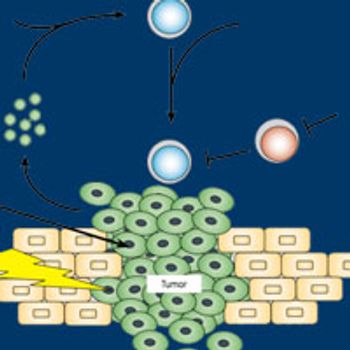
Promising reports of preclinical and early clinical data in 2016 are poised to further boost the development of rational combinations of OX40 agonists with checkpoint immunotherapies, surgical resection, radiotherapy, and even the potential for 3-drug cocktails.
Hans J. Hammers, MD, PhD, associate professor, Internal Medicine, UT Southwestern Medical Center, discusses immunotherapy in renal cell carcinoma (RCC).

The FDA has granted a priority review to a biologics license application for avelumab for the treatment of patients with locally advanced or metastatic urothelial carcinoma whose disease has progressed after platinum-based therapy.
Evidence continues to build for the long-term efficacy of PD-1-targeting immunotherapies in melanoma, including fresh data indicating when patients can stop taking the drugs and still maintain a response.
Andrea Apolo, MD, discusses positive early trials exploring various regimens of nivolumab (Opdivo), ipilimumab (Yervoy), and avelumab in bladder cancer.
Daniel P. Petrylak, MD, professor of Medicine (Medical Oncology) and Urology, co-director, Signal Transduction Research Program, Yale School of Medicine, discusses the updates of a study of atezolizumab in patients with metastatic urothelial carcinoma (mUC).
Nitin Jain, MD, assistant professor, Department of Leukemia, The University of Texas MD Anderson Cancer Center, discusses PD-1 expression in patients with chronic lymphocytic leukemia (CLL) who were treated with the combination of nivolumab (Opdivo) and ibrutinib (Imbruvica).
Treatment with pembrolizumab could elicit long-term survival rates of 21% to 25% for previously-treated patients with PD-L1–positive non–small cell lung cancer compared with 3% to 4% for docetaxel.

Charles G. Drake, MD, PhD, director of Genitourinary Oncology, NewYork-Presbyterian/Columbia University Medical Center and co-director of Columbia’s Cancer Immunotherapy Programs, discusses the potential of combinations between immunotherapy and conventional therapies in genitourinary cancers.
David McDermott, MD, discusses the results and the significance of the IMmotion 150 trial in metastatic renal cell carcinoma.
David F. McDermott, MD, Beth Israel Deaconess Medical Center, discusses the recent IMmotion150 trial in Renal Cell Carcinoma (RCC).
New guidelines involving the immunotherapies nivolumab (Opdivo) and interleukin-2 inhibitors have been issued by The Society for Immunotherapy of Cancer to help practicing clinicians manage patients with renal cell carcinoma.
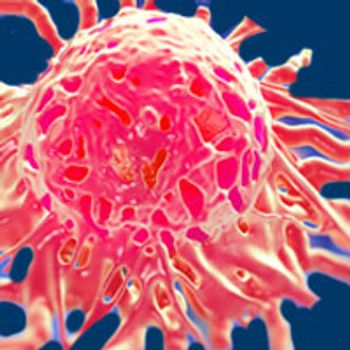
Immuno-oncology drugs can improve the level of care in many respects, but they bring a host of problems related to implementation that demands a new set of strategies.

At the 2017 Genitourinary Cancers Symposium, Nicholas J. Vogelzang, MD, discussed diagnostic practices and emerging therapies in the field of bladder cancer.
The combination of cabozantinib and nivolumab, with or without ipilimumab, proved safe and active in advanced genitourinary cancers, particularly urothelial cancer.

Patients with PD-L1-positive metastatic renal cell carcinoma had a reduction in the risk of progression or death when treated in frontline with the combination of atezolizumab and bevacizumab instead of sunitinib, according to results of a randomized trial.

Tanguy I. Seiwert, MD, assistant professor of Medicine, University of Chicago Medicine, discusses ongoing clinical trials in the field of head and neck cancer.
Eric Smith, MD, PhD, a medical oncologist at Memorial Sloan Kettering Cancer Center, discusses the potential of immunotherapy in the treatment landscape of multiple myeloma.
Eric Smith, MD, PhD, discusses recently reported phase II data combining elotuzumab (Empliciti) with lenalidomide (Revlimid) and dexamethasone.

Matthew I. Milowsky, MD, discusses advances with checkpoint inhibitors in the treatment paradigm for urothelial cancer.

Five of 8 patients with metastatic urothelial cancer benefited from the combination of ipilimumab and nivolumab after having no response to single-agent nivolumab.
Combining the PD-1 inhibitor pembrolizumab with chemotherapy induced objective responses in one-third of patients with previously treated metastatic urothelial carcinoma.
Advertisement
Advertisement
Trending on OncLive
1
FDA Approves Tucatinib Plus Trastuzumab/Pertuzumab as First-Line Maintenance in Advanced HER2+ Breast Cancer
2
FDA Grants Breakthrough Device Designation to Natera’s Multi-Cancer Early Detection Assay
3
VIR-5500 Receives FDA Fast Track Designation in mCRPC
4
FDA Approves Atezolizumab Plus Chemo for Stage III dMMR Colon Cancer
5