


Lung Cancer
Latest News
Advertisement
Latest Videos


































































Advertisement
More News

Gregory J. Riely, MD, PhD, and Benjamin Besse, MD, discuss data for NVL-655 in ALK-positive NSCLC and other ALK-positive solid tumors.
Gregory J. Riely, MD, PhD, and Benjamin Besse, MD, discuss testing for ALK-positive and ROS1-positive non–small cell lung cancer.

Noman Ashraf, MD, discusses the evolving treatment landscape in non–small cell lung cancer following numerous regulatory approvals in the space.
Noman Ashraf, MD, discusses data with T-DXd in HER2-mutated and -overexpressing lung cancer populations and next steps with ADC combination therapies.
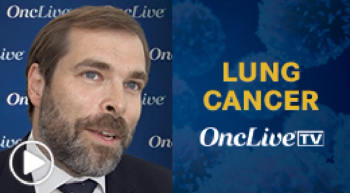
Nicolas Girard, MD, discusses finding from the LUMINOSITY trial in c-Met protein–overexpressing, EGFR wild-type, non–small cell lung cancer.

Zolbetuximab wins approval for CLDN18.2-positive gastric/GEJ cancer, TTFields joins the NSCLC armamentarium, and more of this week's top news in oncology.

Hidehito Horinouchi, MD, PhD, discusses safety data from the ALINA trial of adjuvant alectinib in ALK-positive non–small cell lung cancer.
Drs Park and Patil delve into the evolving SCLC treatment paradigm by examining data from recent studies and focus on treatment developments for patients with ALK-positive NSCLC.

Adding savolitinib to osimertinib produced clinically meaningful responses in EGFR-mutant, MET-overexpressed NSCLC following progression on osimertinib.
The FDA has approved Optune Lua for concurrent use with PD-1/PD-L1 inhibitors or docetaxel in metastatic non–small cell lung cancer.

Lurbinectedin plus atezolizumab produced significant OS and PFS benefits as frontline maintenance for extensive-stage small cell lung cancer.

China’s CDE has granted breakthrough therapy designation to first-line sunvozertinib for EGFR exon 20 insertion mutation–positive NSCLC.
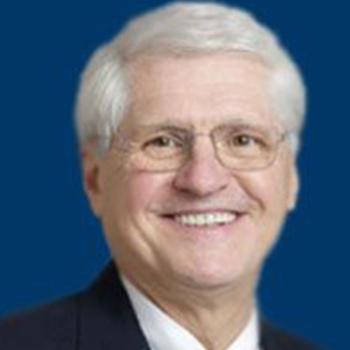
Combination therapies with neoadjuvant ICIs and chemotherapy followed by an adjuvant ICI are here to stay in resectable non–small cell lung cancer.
Sally Lau, MD, discusses the addition of tarlatamab to a PD-L1 inhibitor as first-line maintenance therapy for extensive-stage small cell lung cancer.
Andrea Wolf, MD, MPH, discusses challenges experienced when conducting randomized trials to assess the role of surgery in mesothelioma management.

A next generation sequencing–based companion diagnostic has received marketing approval in China for sunvozertinib in EGFR exon 20–positive NSCLC.
Jacob Sands, MD, discusses updated efficacy findings with tarlatamab treatment in previously treated patients with small cell lung cancer.

Eric Kumar Singhi, MD, discusses the current therapeutic landscape and unmet needs in small cell and non–small cell lung cancer.
John V. Heymach, MD, PhD, and Marina Chiara Garassino, MD, detail the 11-0 ODAC vote that new trial designs for perioperative regimens in resectable NSCLC should include within-trial assessment of each treatment phase's contribution.

Marina Chiara Garassino, MD, discusses the predictive utility of a TROP2 computational pathway biomarker for outcomes with Dato-DXd in pretreated NSCLC.
Nicolas Girard, MD, discusses the safety of nivolumab plus relatlimab and chemotherapy for untreated stage IV or recurrent non–small cell lung cancer.
Martin Dietrich, MD, PhD, discusses updated efficacy findings from the 18-month follow-up of the phase 2 VISION trial.

Isabel Preeshagul, DO, MBS, discusses ongoing efforts to expand treatment options for patients with extensive- or limited-stage small cell lung cancer.

Isabel Preeshagul, DO, MBS, and colleagues share updates from across the lung cancer space as discussed in a recent State of the Science Summit.

Atezolizumab administered concurrently with chemoradiation failed to improve OS and PFS outcomes compared with standard chemoradiation alone in LS-SCLC.
Advertisement
Advertisement
Trending on OncLive
1
FDA Approves Tucatinib Plus Trastuzumab/Pertuzumab as First-Line Maintenance in Advanced HER2+ Breast Cancer
2
Iberdomide Plus Daratumumab/Dexamethasone Yields Significant PFS Benefit in R/R Myeloma
3
FDA Approves Atezolizumab Plus Chemo for Stage III dMMR Colon Cancer
4
VIR-5500 Receives FDA Fast Track Designation in mCRPC
5