






Lung Cancer
Latest News
Advertisement
Latest Videos
































































Advertisement
More News

Nicolas Girard, MD, discusses PROs from the LUMINOSITY trial of Teliso-V in patients with c-Met protein–overexpressing, EGFR wild-type, nonsquamous NSCLC.

Treatment with Deltacel was safe and showed antitumor activity at 10 months in a patient with stage IV metastatic non–small cell lung cancer.

The FDA’s ODAC votes against the risk:benefit profile of frontline PD-1 inhibitors in select tumor types, osimertinib gains approval for select NSCLC, and more this week from OncLive.

Shirish M. Gadgeel, MD, on long-term follow-up data from MARIPOSA for amivantamab plus lazertinib in first-line EGFR-mutated non–small cell lung cancer.

Jacob Sands, MD, discusses consolidation therapy durvalumab as a new standard of care in limited-stage small cell lung cancer.
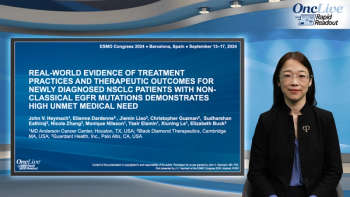
Real World Evidence of Treatment Practices and Therapeutic Outcomes for Newly Diagnosed NSCLC Patients With Non-Classical EGFR Mutations Demonstrates High Unmet Medical Need
Published: | Updated:
Dr. Xiuning Le highlights real-world data on therapeutic outcomes for newly diagnosed NSCLC patients with non-classical EGFR mutations, emphasizing the need for improved treatments, at ESMO Congress 2024.
The FDA approved osimertinib for EGFR-mutated, locally advanced, unresectable, non–small cell lung cancer after chemoradiation.

Charu Aggarwal, MD, MPH, FASCO, on data for CAN-2409 plus valacyclovir with continued immune checkpoint inhibitors in advanced non–small cell lung cancer.

BDTX-1535 yielded durable clinical activity in patients with relapsed/refractory, EGFR-mutant NSCLC harboring resistance mutations.

The CHMP has recommended the European approval of serplulimab for the first-line treatment of extensive-stage small cell lung cancer.
Adjuvant ribociclib receives FDA approval for HR+ breast cancer, AMG 193 elicits responses in MTAP-deleted solid tumors, and more this week from OncLive.

Fox Chase Cancer Center Researchers Examine Perceptions of Smoking Stigma Among African American/Black Populations
Published: | Updated:
In research published in Nicotine & Tobacco Research, lead author Charnita Zeigler-Johnson, PhD, MPH, Associate Director of Community Outreach and Engagement, studied the prevalence of smoking stigma among the African American/Black community.
The FDA has approved amivantamab plus chemotherapy for locally advanced or metastatic NSCLC harboring select EGFR mutations after an EGFR TKI.
Experts across the lung cancer treatment space impart their key takeaways from research shared at the 2024 IASLC World Conference on Lung Cancer.
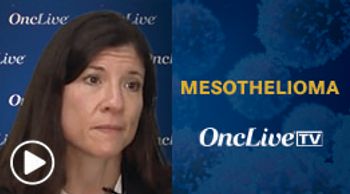
Andrea Wolf, MD, MPH, discusses challenges in conducting randomized controlled trials to assess the role of surgery in the treatment of mesothelioma.
The FDA has approved frontline pembrolizumab plus chemotherapy for use in unresectable advanced or metastatic malignant pleural mesothelioma.
Shirish M. Gadgeel, MD, discusses long-term follow-up data from the MARIPOSA study for patients with EGFR-positive advanced non–small cell lung cancer.

Nagashree Seetharamu, MD, MBBS, discusses currently utilized platforms and workflows for molecular testing in lung cancer at Northwell Health.

The HERTHENA-Lung02 trial met its primary end point of improved PFS with patritumab deruxtecan in pretreated EGFR-mutated non–small cell lung cancer.

Durvalumab plus monalizumab and durvalumab plus ceralasertib showed promising long-term benefits in advanced NSCLC.

Sanjay Popat, BSc, MBBS, FRCP, PhD, discusses OS data with amivantamab plus chemotherapy in EGFR-mutated, advanced NSCLC after progression on osimertinib.

Perioperative nivolumab extended event-free survival vs placebo in patients with resectable non–small cell lung cancer.

TORL-1-23 was safe and active in heavily pretreated, Claudin-6–positive advanced solid tumors, including platinum-resistant ovarian cancer.

The benefits of adagrasib over docetaxel were seen regardless of baseline brain metastases, according to findings presented at ESMO.

Zipalertinib demonstrates safety and efficacy in heavily pretreated patients with NSCLC EGFR exon 20 insertion mutations who progressed on or after amivantamab.
Advertisement
Advertisement
Trending on OncLive
1
FDA Approves Tucatinib Plus Trastuzumab/Pertuzumab as First-Line Maintenance in Advanced HER2+ Breast Cancer
2
Iberdomide Plus Daratumumab/Dexamethasone Yields Significant PFS Benefit in R/R Myeloma
3
FDA Approves Atezolizumab Plus Chemo for Stage III dMMR Colon Cancer
4
VIR-5500 Receives FDA Fast Track Designation in mCRPC
5