

The combination of olaparib and pembrolizumab continued to demonstrate antitumor activity in patients with metastatic castration-resistant prostate cancer who previously received docetaxel.

Your AI-Trained Oncology Knowledge Connection!
The combination of olaparib and pembrolizumab continued to demonstrate antitumor activity in patients with metastatic castration-resistant prostate cancer who previously received docetaxel.

Steven Kaplan, MD, discusses real-world surgical retreatment rates in patients with lower urinary tract symptoms/benign prostatic hyperplasia.
Darolutamide was linked with a reduction in locally invasive procedures, delayed time to deterioration in health-related quality of life related to urinary and bowel symptoms in patients with nonmetastatic castration-resistant prostate cancer.
Enzalutamide plus androgen-deprivation therapy produced clinical benefit over ADT alone in patients with metastatic hormone-sensitive prostate cancer, regardless of prior antiandrogen therapy and its pretreatment duration.

Fredrik Schjesvold, MD, PhD, discusses key takeaways from the phase 3 OCEAN trial that was done in patients with relapsed/refractory multiple myeloma.

Melphalan flufenamide (melflufen) plus dexamethasone demonstrated an improvement in progression-free survival vs pomalidomide/dexamethasone in patients with transplant-naïve relapsed/refractory multiple myeloma.

Nadofaragene firadenovec, a novel intravesical gene therapy for patients with bacillus Calmette-Guérin unresponsive non–muscle invasive bladder cancer, demonstrated sustained durability according to findings from 2 cohorts of a phase 3 study.

Relugolix failed to significantly delay onset of castration resistance compared with standard of care leuprolide in men with advanced prostate cancer.

The combination of durvalumab and Vicineum was found to be well tolerated and to elicit complete responses in patients with Bacillus-Calmette Guérin–unresponsive non–muscle invasive bladder cancer.
Treatment with neoadjuvant lutetium prostate-specific membrane antigen followed by radical prostatectomy exhibited a favorable safety profile in patients with locally advanced high-risk prostate cancer.

Existing racial and socioeconomic disparities among patients with T-cell non-Hodgkin lymphoma continue to lead to obstacles with access for newly available treatment options.

The JAK1/JAK2 inhibitor ruxolitinib has several clinical uses in the treatment of patients with polycythemia vera and plays an especially important role in adult patients who have had an inadequate response to hydroxyurea.
Frontline sequential therapy with crizotinib followed by alectinib demonstrated survival benefits for patients with ALK-positive non–small cell lung cancer who develop resistance to, or become intolerant of crizotinib.

Minimal residual disease–based consolidation therapy comprised of daratumumab, carfilzomib, lenalidomide, and dexamethasone was found to induce quick responses and unprecedented rates of MRD negativity in patients with newly diagnosed multiple myeloma.
TAR-200 plus cetrelimab may offer a superior treatment option for patients with muscle-invasive bladder cancer, and to answer this questions, investigators have initiated the randomized, phase 3 SunRISe-2 trial.

Primary tumor response to nivolumab plus ipilimumab observed results of a Japanese study indicates a changing role for the timing of cytoreductive nephrectomy for patients with advanced renal cell carcinoma.fr

Ruben A. Mesa, MD, discusses the impact of molecular biology on therapeutic development in myelofibrosis.

Alexey V. Danilov, MD, PhD, discusses the need to identify novel pathways for targeted therapy in chronic lymphocytic leukemia.

Larry Anderson, MD, PhD, discusses outcomes with idecabtagene vicleucel in patients with relapsed/refractory multiple myeloma, as demonstrated in the phase 2 KarMMa trial.

Bacille Calmette-Guérin (BCG) plus N-803 yielded promising responses and an encouraging safety profile in patients with BCG-unresponsive, non-muscle invasive bladder cancer carcinoma in situ.

Brad S. Kahl, MD, discusses the potential utility of BTK inhibitor–based combinations in the frontline setting of mantle cell lymphoma.

Patients with nonmetastatic castration-resistant prostate cancer demonstrated high adherence rates and favorable prostate-specific antigen response to apalutamide according to real-world evidence presented at the 2021 American Urological Association Annual Meeting.
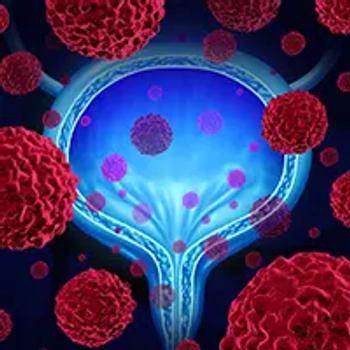
Antibody titers and fold changes may prove to be a prognostic marker for the efficacy of nadofaragene firadenovec for the treatment of patients with bacillus Calmette-Guérun unresponsive non-muscle invasive bladder cancer.

Atezolizumab plus carboplatin and pemetrexed yielded a favorable safety and efficacy profile in patients with advanced non-squamous non-small cell lung cancer with untreated brain metastases.

Elranatamab elicited encouraging responses with a manageable toxicity profile when used alone or in combination with lenalidomide in patients with relapsed/refractory multiple myeloma, with efficacy observed even in those who received prior BCMA-directed therapy or who were triple-class refractory, according to data from the phase 1 MagnetisMM-1 trial.

CAR T-cell products targeting CD19 are eliciting clinical activity in patients with indolent non-Hodgkin lymphoma, as seen in the ZUMA-5, SCHOLAR-5, and ELARA trials, but longer follow-up will showcase the true potential of this treatment in this subpopulation.
Treatment with fixed-duration rituximab plus the chemotherapy bendamustine was associated with more favorable outcomes than the triplet of dexamethasone, rituximab, and cyclophosphamide, as well as bortezomib, dexamethasone, and rituximab in patients with treatment-naïve Waldenström macroglobulinemia.

A single dose of ciltacabtagene autoleucel continued to elicit early, deep, and durable responses and showcase a manageable safety profile in heavily pretreated patients with multiple myeloma.

The CAR T-cell therapy ciltacabtagene autoleucel has emerged as a potentially durable treatment strategy for patients with relapsed/refractory multiple myeloma who have progressed on 1 to 3 prior lines of treatment and are refractory to lenalidomide.

Idecabtagene vicleucel continued to elicit frequent, deep, and durable responses among patients with heavily pretreated relapsed/refractory multiple myeloma irrespective of whether patients received 3 or at least 4 prior therapies.