
The combination of PD-1 or PD-L1 inhibitors with existing frontline therapies could represent a superior approach for some treatment-naïve patients with renal cell carcinoma.
The combination of PD-1 or PD-L1 inhibitors with existing frontline therapies could represent a superior approach for some treatment-naïve patients with renal cell carcinoma.
Stemming from the wave of checkpoint inhibitor approvals, multiple trials have begun evaluating immunotherapies in combination with other agents for the treatment of patients with advanced bladder cancer.
Elizabeth Plimack, MD, director of Genitourinary Clinical Research at Fox Chase Cancer Center, discusses checkpoint inhibitors in the frontline setting of bladder cancer.
David F. McDermott, MD, director of the Biologic Therapy Program at Beth Israel Deaconess Medical Center, discusses the combination of nivolumab (Opdivo) and ipilimumab (Yervoy) in renal cell carcinoma (RCC).
Elizabeth Plimack, MD, discusses the impact of the immunotherapy approvals in the first- and second-line setting for bladder cancer and the future of combinations for these patients.
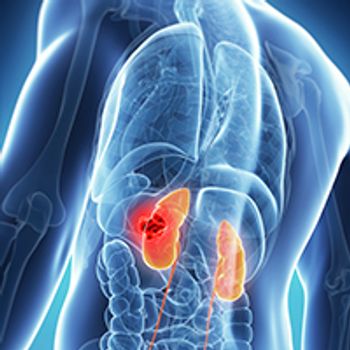
Patients with high-risk renal cell carcinoma who harbor early systemic dissemination with very poor survival prognosis may derive some benefit from adjuvant therapy.

Maria De Santis, MD, discusses the findings of KEYNOTE-045 and the future of immunotherapy in the treatment landscape of bladder cancer.
Umberto Capitanio, MD, FEBU, department of Urology, San Raffaele Scientific Institute, University Vita-Salute San Raffaele, discusses adjuvant therapy for patients with high-risk kidney cancer without metastases.
Thomas Powles, MD, Barts Cancer Institute, discusses the impact of immunotherapy on the treatment landscape of kidney cancer.
Andrea Necchi, MD, discusses the evolution of bladder cancer therapies, the challenge with the currently available agents, and the next steps and clinical trials being conducted in the field.
Four molecular subtypes of clear-cell renal cell carcinoma were prognostic for outcomes after metastasectomy, with striking differences seen in overall survival and disease-free survival between each of the groups.
Kerstin Junker, MD, associate professor, Department of Urology, Universit
Malcom Mason, MD, Cancer Research Wales Professor of Clinical Oncology at Cardiff University, discusses the significance of the PROTECT study in prostate cancer during the 2017 EMUC Congress.

Log LDH was the strongest predictor for overall survival with radium-223 for men with metastatic castration resistant prostate cancer.
An extension in overall survival seen with the combination of nivolumab and ipilimumab has completely changed the standard of care for patients with metastatic renal cell carcinoma.

Alessandro Volpe, MD, University of Eastern Piedmont Hospital, Maggiore Della Carita Hospital, Novara, Italy, discusses the management of locally advanced kidney cancer.
A wealth of new clinical trial data for immune checkpoint inhibitors has recently been reported for the treatment of patients with metastatic muscle-invasive urothelial carcinoma.
The addition of incomplete metastasectomy to systemic therapy improved median overall survival by 3 months in patients with metastatic renal cell carcinoma.

Use of the novel prostate imaging reporting and data system enhanced the ability to determine prostate cancer stage versus standard multiparametric MRI alone, offering advantages for deciding the extent of resection needed during an endoscopic radical prostatectomy.
Andrea Necchi, MD, a medical oncologist at the Fondazione IRCCS Istituto Nazionale dei Tumori in Milan, discusses the impact of PD-1 inhibition in bladder cancer as well as the promise with combination strategies.
Maurie Markman, MD, president of medicine and science, Cancer Treatment Centers of America, editor-in-chief, OncologyLive, discusses endpoints in clinical trials for ovarian cancer.
Johanna C. Bendell, MD, medical oncologist, Sarah Cannon Research Institute, discusses the future of regorafenib (Stivarga) for patients with colorectal cancer (CRC).
Christopher Sweeney, MBBS, physician, Dana-Farber Cancer Institute, compares treatment with abiraterone verus docetaxel in patients with prostate cancer.
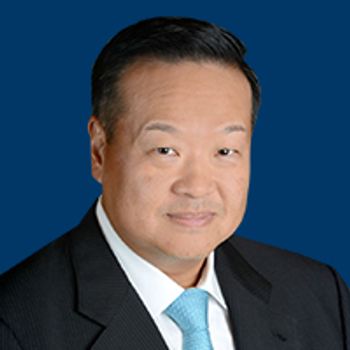
It has been a “renaissance” in the non–small cell lung cancer landscape with the rapid evolution of targeted treatment for patients with EGFR-mutation–positive disease, says Edward S. Kim, MD.
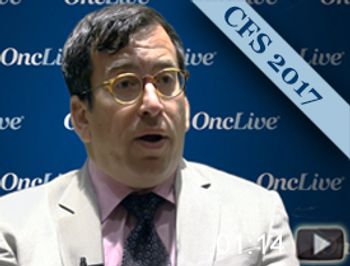
Edward B. Garon, MD, director of Thoracic Oncology at the Jonsson Comprehensive Cancer Center at UCLA, discusses the possibility of administering PD1 or PD-L1 blockades as a third-line or salvage therapy for patients with advanced lung cancer.

The approach to first-line treatment of advanced non-small cell lung cancer (NSCLC) has been evolving rapidly, particularly with respect to patients with lung adenocarcinoma.

Immunotherapy is being positioned as an earlier therapeutic option for patients with high levels of microsatellite instability or mismatch repair deficiency, regardless of their tumor location, expert says.
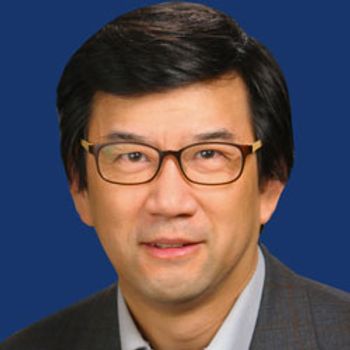
A variety of adoptive T-cell therapy strategies have shown promise in clinical studies with recent FDA approvals granted to CAR-modified T-cell therapies, representing the potential for future combination strategies.
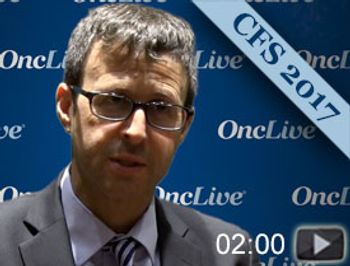
Richard S. Finn, MD, assistant professor of medicine, Department of Medicine, Division of Hematology/Oncology, Geffen School of Medicine, University of California, Los Angeles, discusses the significant advances with CDK4/6 inhibitors in the field of hormone receptor (HR)-positive breast cancer.

PARP inhibitors offer exciting opportunities to improve outcomes for patients with ovarian cancer and hopefully will be moved to the front-line setting if the evidence warrants it, said Susana M. Campos, MD.