

To continue making progress in lung cancer treatment, investigators must keep pushing the science in new directions even as immunotherapy becomes more available in earlier lines.

Your AI-Trained Oncology Knowledge Connection!
To continue making progress in lung cancer treatment, investigators must keep pushing the science in new directions even as immunotherapy becomes more available in earlier lines.
Marc S. Hoffman, MD, explains how to select the appropriate CAR T-cell therapy for each patient, and the barriers patients with R/R LBCL face in receiving CAR T-cell therapy, despite its high efficacy rate.
Experts discuss data on a novel form of CAR T-cell therapy, rapcabtagene autoleucel, for the second-line treatment of R/R LBCL with a faster manufacturing process.

As more agents are evaluated either in addition to or following PD-1/PD-L1 inhibitors, more information may be learned about how best to leverage alternate biomarkers, according to Marina C. Garassino, MD.

FDA approvals in recent years have started to carve out a role for immunotherapy in the frontline treatment of patients with small cell lung cancer.
Loretta J. Nastoupil, MD, reviews data from the ZUMA-7 trial investigating the use of axicabtagene ciloleucel as a second-line therapy for large b-cell lymphoma.
Drs Loretta J. Nastoupil and Marc S Hoffman explain the available treatment options for relapsed/refractory diffuse large B-cell lymphoma and what to consider when selecting a therapy in the second-line setting.
Marc S. Hoffman, MD, provides an overview of recent updates in the treatment of relapsed/refractory diffuse large B-cell lymphoma.

The high concordance rate between gastric and breast cancer HER2 scoring algorithms suggest that either may be used in the metastatic colorectal cancer setting.

The addition of mFOLFOX6 or FOLFIRI to the combination of encorafenib and cetuximab elicited encouraging antitumor activity and safety in patients with BRAF V600E-mutant metastatic colorectal cancer.

A novel Burning Rock patient-specific prognostic and potential therapeutic marker tracking approach demonstrated improved sensitivity in detecting circulating tumor DNA and identifying molecular residual disease compared with other approaches in patients with colorectal cancer following surgery.

Circulating tumor DNA could serve as an ideal biomarker to assess early response in patients with advanced colorectal cancer due to its short half-life compared with other tumor biomarkers, and it could enable the use of adaptive clinical study designs in the future.

Scott Kopetz, MD, PhD, FACP, discusses the safety lead-in data from the phase 3 BREAKWATER trial in patients with BRBRAF V600E–mutant metastatic colorectal cancer.
Zev A. Wainberg, MD, discusses the evaluation of liposomal irinotecan plus 5-fluorouracil leucovorin, and oxaliplatin vs nab-paclitaxel plus gemcitabine in the phase 3 NAPOLI 3 trial in patients with metastatic pancreatic ductal adenocarcinoma.
Both veliparib plus total neoadjuvant therapy and pembrolizumab plus total neoadjuvant therapy failed to improve short-term outcomes in unselected patients with locally advanced rectal cancer.

Third-line bevacizumab plus trifluridine/tipiracil demonstrated a survival and disease control benefit vs trifluridine/tipiracil alone in patients with refractory metastatic colorectal cancer and all clinically relevant subgroups.

Newer frontline therapies demonstrated a real-world improvement in survival and responses compared with sorafenib in patients with hepatocellular carcinoma.
Josep Tabernero, MD, PhD, discusses findings from the phase 3 SUNLIGHT trial investigating the combination of bevacizumab plus trifluridine/tipiracil vs TAS-102 alone in patients with refractory metastatic colorectal cancer.
Laura Dawson, MD, FRCPC, discusses results from the phase 3 NRG/RTOG 1112 trial of stereotactic body radiation therapy plus sorafenib compared with sorafenib alone in patients with locally advanced hepatocellular carcinoma.

The combination of SEA-CD40, gemcitabine, nab-paclitaxel, and pembrolizumab demonstrated early evidence of efficacy in patients with metastatic pancreatic ductal adenocarcinoma, according to updated results from the phase 1 SGNS40-001 study.

Treatment with or without bevacizumab added to atezolizumab plus cisplatin/gemcitabine demonstrated a modest clinical benefit for patients with advanced biliary tract cancer.

Tislelizumab monotherapy resulted in favorable health-related quality of life outcomes compared with sorafenib as frontline treatment for patients with unresectable hepatocellular carcinoma.

The addition of stereotactic body radiation therapy to sorafenib led to an improvement in overall survival, progression-free survival, and time to disease progression compared with sorafenib alone in patients with locally advanced, hepatocellular carcinoma.

The addition of nab-paclitaxel to gemcitabine and cisplatin did not result in a statistically significant improvement in overall survival over gemcitabine/cisplatin alone in patients with newly diagnosed, advanced biliary tract cancers.

First-line treatment with the combination of liposomal irinotecan plus 5-fluorouracil, leucovorin, and oxaliplatin produced a clinically meaningful and statistically significant improvement in overall survival and progression-free survival vs nab-paclitaxel plus gemcitabine in patients with metastatic pancreatic ductal adenocarcinoma, according to results from the phase 3 NAPOLI 3 trial.
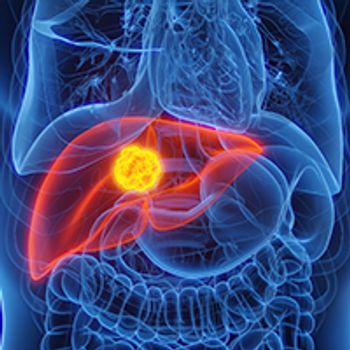
Blank-microsphere transarterial chemoembolization plus low-dose lenvatinib and sequential microwave ablation elicited responses and a tolerable safety profile in patients with large hepatocellular carcinoma.

Findings from the phase 2 CISLC-12 study show favorable safety and efficacy signals for patients with unresectable hepatocellular carcinoma treated with the combination of envafolimab, lenvatinib, and transarterial chemoembolization.
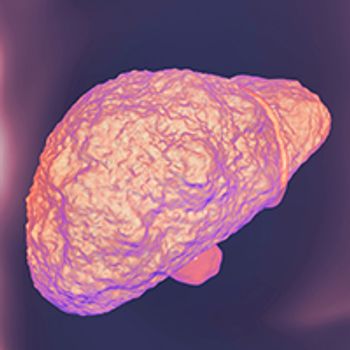
The presence of anti-drug antibodies appeared to have no effect on efficacy or safety of durvalumab monotherapy or the STRIDE combination of durvalumab plus tremelimumab in patients with unresectable hepatocellular carcinoma.
In the first-line treatment of patients with advanced hepatocellular carcinoma, a combination of pembrolizumab plus lenvatinib yielded similar health-related quality of life scores as lenvatinib plus placebo, according to a HRQOL analysis of the phase 3 LEAP-002 study.

Second-line lenvatinib may produce a survival benefit in patients with advanced hepatocellular carcinoma who have progressed on immunotherapy.