


Immuno-Oncology
Latest News
Advertisement
Latest Videos






























































Advertisement
More News
Peter Black, MD, senior research scientist, Vancouver Prostate Center, associate professor, Department of Urologic Sciences, University of British Columbia, discusses sequencing of immunotherapy for patients with bladder cancer.
Leena Gandhi, MD, PhD, associate professor, Department of Medicine, director, Thoracic Medical Oncology Program, discusses the findings of cohort G of the KEYNOTE-021 trial that explored the combination of pembrolizumab (Keytruda) with carboplatin and pemetrexed for patients with advanced nonsquamous non-small cell lung cancer (NSCLC).

Christophe Massard, MD, PhD, discusses the latest developments with durvalumab (Imfinzi) in urothelial carcinoma.
Jean-Pascal Machiels, MD, head of the Department of Medical Oncology, Cliniques Universitaires Sain-Luc, discusses toxicities with pembrolizumab (Keytruda) in combination with chemoradiation for patients with head and neck cancer.
Michael Birrer, MD, PhD, UAB Comprehensive Cancer Center in Alabama, discusses checkpoint inhibitors for patients with endometrial cancer.
Matthew D. Hellmann, MD, Memorial Sloan Kettering Cancer Center, discusses the CheckMate-032 study investigating nivolumab (Opdivo) with or without ipilimumab (Yervoy) for patients with small cell lung cancer (SCLC).
Luis A. Diaz, MD, head of the division of Solid Tumor Oncology at Memorial Sloan Kettering Cancer Center, discusses the impact of pembrolizumab (Keytruda) in patients with colorectal cancer (CRC).
Robert Ferris, MD, PhD, vice chair for Clinical Operations, associate director for Translational Research, and co-leader of the Cancer Immunology Program at the University of Pittsburgh Cancer Institute, discusses immunotherapy in patients with locally advanced head and neck cancer.
Daniel P. Petrylak, MD, discusses the KEYNOTE-045 results and the next steps with pembrolizumab (Keytruda) in urothelial carcinoma.

Combining pembrolizumab with rituximab induced a high response rate in patients with relapsed follicular lymphoma.
Michael B. Atkins, MD, deputy director, Georgetown-Lombardi Comprehensive Cancer Center, professor of oncology and medicine, Georgetown University School of Medicine, discusses the IMmotion150 trial in renal cell carcinoma.
Simon Chowdhury, MD, consultant medical oncologist specializing in urological cancer, Sarah Cannon Research Institute, United Kingdom, discusses the combination of pembrolizumab (Keytruda) and pazopanib (Votrient) in patients with renal cell carcinoma (RCC).
Lisa H. Butterfield, PhD, professor of medicine, surgery, and immunology, director, University of Pittsburgh Immunologic Monitoring and Cellular Products Laboratory, University of Pittsburgh, president of the Society for Immunotherapy of Cancer, discusses a clinical trial exploring the PD-1 inhibitor pembrolizumab (Keytruda) in multiple subtypes of sarcoma.

Neil L. Berinstein, MD, professor, University of Toronto, Sunnybrook Health Sciences Centre, discusses combination treatments for patients with high-risk or recurrent follicular lymphoma.

High levels of response were observed with nivolumab (Opdivo), regardless of previous treatment with brentuximab vedotin (Adcetris), in patients with relapsed/refractory Hodgkin lymphoma after autologous stem-cell transplant.
Loretta J. Nastoupil, MD, associate professor, Department of Lymphoma/Myeloma, Division of Cancer Medicine, The University of Texas MD Anderson Cancer Center, discusses high response rates with prembrolizumab (Keytruda) in combination with rituximab (Rituxan) in patients with relapsed follicular lymphoma.
Jean-Pascal Machiels, MD, head of the Department of Medical Oncology, Cliniques Universitaires Sain-Luc, discusses an ongoing clinical trial of pembrolizumab (Keytruda) combined with chemoradiation in patients with locally advanced head and neck squamous cell carcinoma (HNSCC).
Brian I. Rini, MD, professor of medicine, Cleveland Clinic, discusses a phase I study of pembrolizumab (Keytruda) plus axitinib (Inlyta) in patients with renal cell carcinoma (RCC).
Nancy Y. Lee, MD, vice chair, Department of Radiation Oncology, Memorial Sloan Kettering Cancer Center, discusses the impact of immunotherapy in head and neck cancer.
Charles S. Fuchs, MD, MPH, director, Yale Cancer Center, physician-in-chief, Smilow Cancer Hospital, 2017 Giant of Cancer Care in Gastrointestinal Cancer, discusses immunotherapy in gastric cancer.
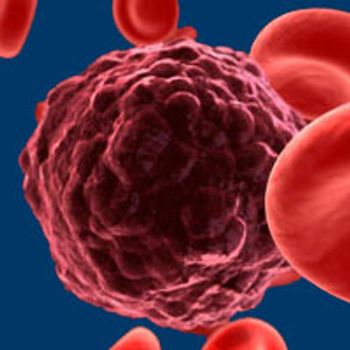
Merck announced that it is postponing enrollment in the phase III KEYNOTE-183 and KEYNOTE-185 trials because of deaths in patients with multiple myeloma assigned to pembrolizumab (Keytruda), the company's blockbuster anti-PD-1 therapy.
Andrea Apolo, MD, medical oncologist, chief of the bladder cancer section of the Genitourinary Malignancies Branch, National Cancer Institute, discusses immunotherapy combinations with cabozantinib (Cometriq) in genitourinary tumors.
Daniel P. Petrylak, MD, professor of Medicine (Medical Oncology) and Urology, co-director, Signal Transduction Research Program, Yale Cancer Center, 2017 Giant of Cancer Care in Genitourinary Cancer, discusses the KEYNOTE-045 trial investigating pembrolizumab (Keytruda) versus physician’s choice of chemotherapy for patients with urothelial carcinoma.
Toni K. Choueiri, MD, clinical director, Lank Center for Genitourinary Oncology, director, Kidney Cancer Center, senior physician, Dana-Farber Cancer Institute, discusses phase I results of axitinib (Inlyta) plus avelumab (Bavencio) for the treatment of patients with metastatic renal cell carcinoma (RCC).
Combining the PD-L1 inhibitor avelumab (Bavencio) with the VEGF inhibitor axitinib (Inlyta) as a frontline regimen induced a response rate of 58.2% in patients with advanced renal cell carcinoma, according to findings from the phase Ib JAVELIN Renal 100 trial presented at the 2017 ASCO Annual Meeting.
Advertisement
Advertisement
Trending on OncLive
1
FDA Approves Tucatinib Plus Trastuzumab/Pertuzumab as First-Line Maintenance in Advanced HER2+ Breast Cancer
2
FDA Grants Breakthrough Device Designation to Natera’s Multi-Cancer Early Detection Assay
3
VIR-5500 Receives FDA Fast Track Designation in mCRPC
4
Iberdomide Plus Daratumumab/Dexamethasone Yields Significant PFS Benefit in R/R Myeloma
5