





Ovarian Cancer
Latest News
Advertisement
Latest Videos






























































Advertisement
More News
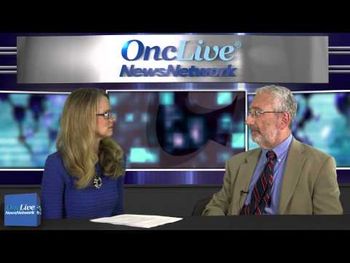
Jonathan Ledermann, BSc, MD, FRCP, Professor of Medical Oncology in the UCL Cancer Institute, University College London, discusses health-related quality of life during olaparib maintenance therapy in patients with platinum-sensitive relapsed serous ovarian cancer and a BRCA mutation.

More than one-third of patients with breast or ovarian cancer or a family history of those diseases who also saw a genetic counselor did not pursue genetic testing for BRCA 1 or BRCA 2 mutations.

The PARP inhibitor veliparib exhibits antitumor activity and is safe and tolerable on a continuous dosing schedule when used for the treatment of patients with BRCA-positive and BRCA-wild type tumors.

For many years, we in the medical and research communities have tried to use proteins and DNA fragments as disease markers to find cancer early.
Sean C. Dowdy, MD, discusses the association of molecular subtypes and responses to bevacizumab in ovarian cancer.

The FDA has assigned a priority review designation to bevacizumab (Avastin) in combination with chemotherapy for patients with recurrent platinum-resistant ovarian cancer.
David Hyman, MD, medical oncologist, Memorial Sloan Kettering Cancer Center, discusses a phase I study of the selective angiopoietin-2 inhibitor MEDI3617 alone and in combination with carboplatin/paclitaxel, paclitaxel, or bevacizumab in patients with advanced solid tumors.

Every patient with a rare but aggressive form of ovarian cancer had tumors with the same type of mutations, suggesting a causative role for the mutations.

The FDA's Oncologic Drugs Advisory Committee voted 11-2 against the accelerated approval of the PARP inhibitor olaparib as a maintenance therapy for women with platinum-sensitive relapsed ovarian cancer with germline BRCA mutations.

Genetic testing limited to BRCA1/2 mutations would have missed 29% of mutations that carry hereditary risk of ovarian cancer, a study using next-generation sequencing showed.

One-quarter of patients with relapsed or refractory BRCA-mutant ovarian cancer attained major objective responses to treatment with the investigational PARP inhibitor veliparib.
Jyoti D. Patel, MD, discusses a phase II trial that looked at olaparib in combination with cediranib versus olaparib alone in recurrent platinum-sensitive ovarian cancer.
Sean Dowdy, MD, a Mayo Clinic gynecologic oncologist discusses a study showing molecular sequencing could identify ovarian cancer patients who are most likely to benefit from treatment with bevacizumab (Avastin), a Mayo Clinic-led study has found.

At the recent National Comprehensive Cancer Network (NCCN) 19th Annual Conference, experts discussed this year's updates to the NCCN Clinical Practice Guidelines in Oncology. The meeting also included reviews of NCCN Task Force reports on issues in supportive care. We asked eleven NCCN panel members to select the most significant updates and insights presented at the conference.

Combining the oral targeted agents olaparib and cediranib resulted in a near-doubling of median progression-free survival (PFS) among women with recurrent ovarian cancer in a phase II study highlighted Saturday during the 2014 American Society of Clinical Oncology (ASCO) Annual Meeting.

A prospective study found that women with irregular menstrual cycles have a 2.4-fold increased risk of dying from ovarian cancer compared to women with normal menstrual cycles

Ellen T. Matloff, MS, CGC, director, Yale Cancer Genetic Counseling Program at the Yale School of Medicine/Yale Cancer Center, discusses the proper age for a carrier of the BRCA1 or BRCA2 mutation to undergo oophorectomy.

Genetic counseling-including testing and risk assessment-is one of the most rapidly growing areas of oncology and has become the standard of care for patients with a personal and family history of breast, ovary, or colon cancer.

For the first time, physicians have a clearer understanding of the optimum age for prophylactic oophorectomy in patients with BRCA mutations who want to reduce their risk of ovarian, fallopian tube, and breast cancer.
Bradley Monk, MD, gynecologic oncologist, University of Arizona Cancer Center Phoenix Branch, on clinical trial endpoints and the approval of agents for ovarian cancer.

The renaissance in immunology is already affecting treatment paradigms for a variety of gynecologic cancers, and the impact is only likely to expand.
Advertisement
Advertisement
Trending on OncLive
1
Dr Cercek on the FDA Approval of Dostarlimab for dMMR/MSI-H Locally Advanced Rectal Cancer
2
Vilamakitug Meets OS Threshold in Phase 1/2 Refractory mCRC Trial
3
Weigh Benefit Against Burden: Defining Lurbinectedin’s Role in a Shifting Small Cell Lung Cancer Landscape
4
Dr Warren on the Goal of the 4WARD Trial Evaluating Mavorixafor in Chronic Neutropenia
5