




Prostate Cancer
Latest News
Advertisement
Latest Videos


















































Advertisement
More News

Thomas J. Polascik, MD, a urologic oncologist at Duke University, discusses efforts that are being made to harmonize genetic testing guidelines in prostate cancer.

A New Drug Application has been submitted to the FDA for single-agent relugolix for use as a treatment for men with advanced prostate cancer.

Chris Parker, MD, discusses the rationale for the phase III RADICALS-RT trial in prostate cancer.
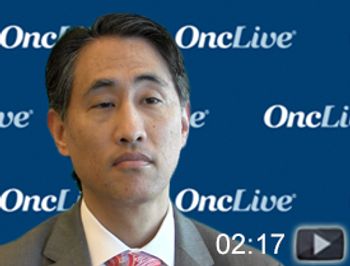
Scott T. Tagawa, MD, MS, Richard A. Stratton Associate Professor in Hematology and Oncology, associate professor of clinical medicine and urology at Weill Cornell Medicine, and associate attending physician, Weill Cornell Medical Center/NewYork-Presbyterian Hospital, discusses ongoing research with 225Ac-J591 in metastatic castration-resistant prostate cancer.

David Morris, MD, FACS, discusses overall survival data with apalutamide in prostate cancer.
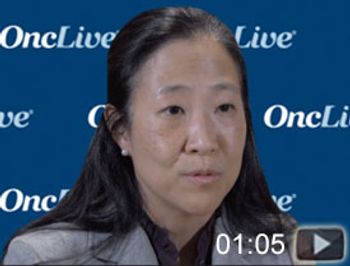
Clara Hwang, MD, discusses the utility of antiandrogens in patients with metastatic prostate cancer.

Obese men with nonmetastatic prostate cancer have higher cardiovascular disease–related mortality and all-cause mortality, and potentially increased prostate cancer–specific mortality.

Neeraj Agarwal, MD, discusses the implications of the PFS2 data from the TITAN trial in metastatic castration-sensitive prostate cancer.

Scott T. Tagawa, MD, MS, discusses the results of the phase I dose-escalation trial, the advantages of using an alpha emitter and a monoclonal antibody, and the possibility of combining the modality with other classes of agents in prostate cancer.
Scott T. Tagawa, MD, MS, discusses the utility of beta and alpha emitters in targeting PSMA in prostate cancer.

Andrew J. Armstrong, MD, discusses the utility of pamiparib and other PARP inhibitors in prostate cancer.

Emmanuel S. Antonarakis, MBBCh, discusses the design of a randomized phase II study of sipuleucel-T with or without radium-223 dichloride in men with asymptomatic bone-metastatic castrate-resistant prostate cancer.

Neeraj Agarwal, MD, discusses data from a posthoc analysis of the phase III TITAN trial in patients with metastatic castration-sensitive prostate cancer.

Rana R. McKay, MD, discusses the utility of radium-223 in metastatic castration-resistant prostate cancer.

Himisha Beltran, MD, discusses the utility of liquid biopsies versus tissues biopsies in castration-resistant neuroendocrine prostate cancer.

William K. Oh, MD, discusses the role of radiopharmaceuticals in metastatic castration-resistant prostate cancer.

Petros Grivas, MD, PhD, discusses potential combination regimens with cabazitaxel in prostate cancer.

Wolfgang Fendler, MD, discusses the rationale for creating the 68Ga-PSMA-11 PET in prostate cancer.
A subset of patients with metastatic castration-resistant prostate cancer who have low tumor mutational burden may benefit from checkpoint inhibition with ipilimumab if the tumor has a high density of CD8-positive T cells and increased interferon-interferon gamma signaling.

Leonard G. Gomella, MD, professor, chair of the Department of Urology, and director of the Sidney Kimmel Cancer Center Network, of Thomas Jefferson University Hospital, discusses the potential impact of targeted therapy approvals on the use of genetic testing in prostate cancer.

Nonmetastatic castration-resistant prostate cancer is a more recently defined clinical state of prostate cancer, for which several approved drugs are now available.

The use of PARP inhibitors against DNA damage repair alterations in prostate cancer is the first display of the potential for widespread precision medicine in the field.
Advertisement
Advertisement
Trending on OncLive
1
Savolitinib Plus Osimertinib NDA Submitted to FDA for MET-Driven, EGFR-Mutated NSCLC After EGFR TKI
2
Daraxonrasib Approval Signals a New Era for RAS-Targeted Therapy in Pancreatic Cancer
3
Cilta-Cel Shows Long-Term Treatment-Free Remissions in Lenalidomide-Refractory Myeloma
4
Calculating the Real Cost of False Positive Findings in Cancer Screening
5