
The European Commission has approved darolutamide for the treatment of patients with nonmetastatic castration-resistant prostate cancer who are at high risk for developing metastatic disease.

Your AI-Trained Oncology Knowledge Connection!
The European Commission has approved darolutamide for the treatment of patients with nonmetastatic castration-resistant prostate cancer who are at high risk for developing metastatic disease.
Carlos R. Bachier, MD, discusses the use of CAR T-cell therapy in the outpatient setting. He also shared insight on the evolving paradigm of graft-versus-host disease.
Bradley McGregor, MD, discusses the CheckMate-9ER trial in metastatic renal cell carcinoma, as well as the need for future studies in histologies beyond clear cell renal cell carcinoma.

While the risk of prostate cancer varies by family history, it is strongly associated with early onset of disease.

The FDA has approved durvalumab for the first-line treatment of adult patients with extensive-stage small cell lung cancer for use in combination with standard-of-care chemotherapy, which includes etoposide plus either carboplatin or cisplatin.

Giorgio Vittorio Scagliotti, MD, PhD, discusses the state of the healthcare system in Italy amongst the COVID-19 outbreak, techniques being implemented to "flatten the curve," and his outlook on the future after the pandemic.
Results from the pivotal phase III BELIEVE trial, which supported the FDA approval of luspatercept-aamt for the treatment of anemia in adult patients with beta thalassemia who require regular red blood cell transfusions, have been published in the New England Journal of Medicine.
Stereotactic ablative radiation reduced disease progression compared with observation in patients with oligometastatic prostate cancer.
As the number of confirmed cases of COVID-19 continues to grow, oncologists from all over the world are working together to stay informed on the latest developments, participate in pivotal research efforts, develop potentially life-saving medications, and share personal experiences faced in practice to ultimately improve patient care.
A new drug application has been submitted to the Taiwan Food and Drug Administration for avapritinib for the treatment of adult patients with unresectable or metastatic gastrointestinal stromal tumor harboring PDGFRA exon 18 mutations, including PDGFRA D842V mutations, according to CStone Pharmaceuticals, a partner of Blueprint Medicines.
Tania Jain, MBBS, discusses blood count recovery in patients with hematology malignancies who receive CAR T-cell therapy.
The European Medicines Agency’s Committee for Medicinal Products for Human Use has recommended isatuximab in combination with pomalidomide and dexamethasone for the treatment of adult patients with relapsed/refractory multiple myeloma who have received ≥2 prior therapies.
Sameer Desai, MD, discusses his experience in the hematology field and how CAR T-cell therapy has evolved and its potential integration into community centers.
Brian I. Rini, MD, highlights the Uromigos podcast efforts to educate other oncologists on how COVID-19 will shift their practice, as well as adapting to changing procedures in clinic to continue delivering optimal care for patients with cancer during the pandemic.
An independent panel determined that the investigational agent VB-111 met the interim prespecified efficacy criterion in the phase III OVAL study in patients with platinum-resistant ovarian cancer, and that the trial should continue without modification.

Faculty voice their opinion on the clinical utility of trastuzumab deruxtecan in patients with metastatic HER2-positive breast cancer.
Daniel P. Petrylak, MD, discusses the current treatment landscape of metastatic urothelial carcinoma and exciting strategies in the pipeline.
Jason D. Wright, MD, discusses the findings of this trial and how practice can shift to decrease the gap between African-American and white patients with endometrial cancer.
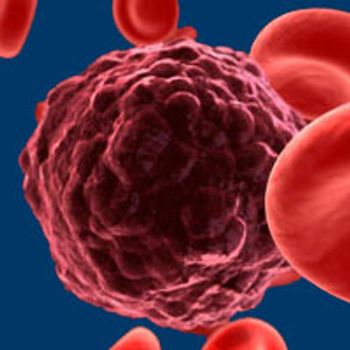
Melflufen in continued to show strong clinical activity in patients with triple-class refractory multiple myeloma, according to final topline results from the pivotal phase II HORIZON study.
Joshua Brody, MD, discusses research with in-situ vaccination in non-Hodgkin lymphoma and strategies being developed to overcome acquired resistance.
Petros Grivas, MD, discusses the repercussions of the COVID-19 pandemic on oncology practice patterns and the importance of contributing to the COVID-19 and Cancer Consortium Registry.
Craig Sauter, MD, discusses results of a retrospective, real-world review of patients with hematologic malignancies who developed cytopenia post-CAR T-cell therapy.

Omid Hamid, MD, discusses ongoing efforts to quell the COVID-19 pandemic, the benefits of telemedicine, and promising research being done to combat the virus.
Moderate hypofractionated intensity-modulated radiation therapy did not show biochemical and/or clinical disease failure rate superiority compared with conventionally fractioned IMRT for men with intermediate- and high-risk prostate adenocarcinoma.
The FDA has granted a Fast Track Designation to IPI-549 for use in combination with nivolumab for the treatment of patients with advanced urothelial cancer, according to Infinity Pharmaceuticals, Inc., the manufacturer of the PI3K-gamma inhibitor.
R. Lor Randall, MD, FACS, discusses the occurrence, treatment, and prevention methods of pathologic fractures in patients with soft tissue sarcomas.

The Japanese Ministry of Health, Labor, and Welfare has approved trastuzumab deruxtecan for the treatment of patients with HER2-positive unresectable or recurrent breast cancer who have had prior chemotherapy.
Wolfgang Fendler, MD, highlights the potential impact 68Ga-PSMA-11 PET imaging may have on the treatment of patients with biochemically recurrent prostate cancer.

Tepotinib (Tepmetko) has been approved in Japan for the treatment of patients with non–small cell lung cancer harboring MET exon 14 skipping alterations.
Toni K. Choueiri, MD, highlights the changes he has observed in clinical practice amidst the COVID-19 pandemic and the unified approach being taken at Dana-Farber Cancer Institute.