

Press Release
The US Oncology Network announced that Regional Cancer Care Associates entered into a strategic relationship with The Network effective April 1, 2023
Press Release
The US Oncology Network announced that Regional Cancer Care Associates entered into a strategic relationship with The Network effective April 1, 2023
The FDA has accepted for review a supplemental biologics license application for pembrolizumab plus fluoropyrimidine- and platinum-containing chemotherapy for the first-line treatment of patients with locally advanced unresectable or metastatic gastric or gastroesophageal junction adenocarcinoma.

Despite a high-profile clinical disappointment, the TIGIT immune checkpoint remains an important target for anticancer therapy, with research programs testing novel agents moving forward in non–small cell lung cancer and a range of other tumor types.

Several landmark trials have led to FDA approval milestones across all breast cancer subtypes in the past 5 years, each continuing to change the navigation of treatment approaches in clinical practice.

Marilyn Huang, MD, contextualizes findings within the endometrial cancer treatment landscape and emphasizes the unanswered questions regarding optimal therapies for patients with mismatch repair–proficient disease.
Although grief never leaves us, we learn how to cope. And as we become seasoned oncologists, I hope we can not only empathize with our patients, but learn to manage this storm of emotions, so that ultimately, we can touch so many more lives in the future.

Neoadjuvant pembrolizumab plus gemcitabine with or without cisplatin led to high rates of downstaging to non–muscle invasive urothelial cancer in patients with muscle-invasive urothelial cancer, meeting the primary end points for both cohorts of the phase 1b/2 HCRN GU14-188 trial.

Press Release
Fox Chase Cancer Center and Temple Health are kicking off National Donate Life Month with a Be The Match virtual event.

The Scottish Medicines Consortium has accepted fam-trastuzumab deruxtecan-nxki as a treatment option for adult patients with HER2-positive unresectable or metastatic breast cancer who have received 1 prior anti–HER2-based therapy.

Maintenance therapy with senaparib improved progression-free survival vs placebo for patients with stage III/IV ovarian carcinoma, fallopian tube cancer, or primary peritoneal cancer who achieved a complete or partial response to first-line platinum-based chemotherapy, meeting the primary end point of the phase 3 FLAMES trial.
With an overall 5-year survival rate of under 15% in patients with metastatic colorectal cancer, investigators have sought to parse mutational analyses to increase gains.
Ramez N. Eskander, MD, highlights the potential implications of the NRG GY018 trial as well as safety and efficacy results from the trial.

The sequential combination of THIO plus cemiplimab did not lead to any dose-limiting toxicities or significant treatment-related adverse effects in patients with advanced non–small cell lung cancer.

Cynthia X. Ma, MD, PhD, discusses updates in triple-negative breast cancer treatment, recent data on HER2-targeted agents in metastatic and early-stage HER2-positive breast cancer, and the role of CDK4/6 inhibitors and oral selective estrogen receptor degraders in hormone receptor–positive disease.
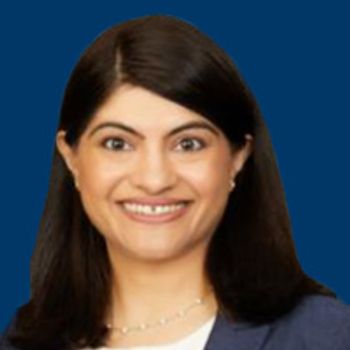
Surbhi Sidana, MD, discusses the real-world safety and efficacy of ide-cel in patients with multiple myeloma and renal impairment, and emphasizes the importance of including this population in future clinical trials examining novel therapies in this disease.
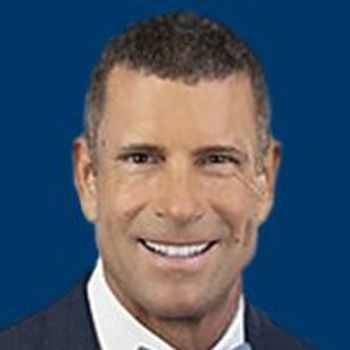
R. Lor Randall, MD, FACS, expands on data from a phase 3 trial evaluating the addition of ganitumab to standard-of-care, interval-compressed chemotherapy, the implications of these results, and how the study could help inform future trials exploring other targeted therapies for the treatment of patients with metastatic Ewing sarcoma.
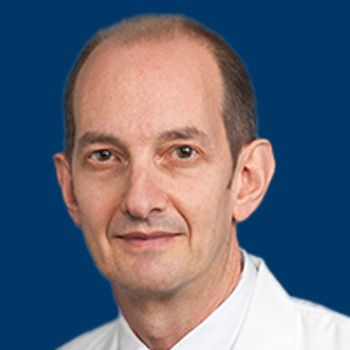
Press Release
Stefan C. Grant, MD, JD, MBA, will serve as the next Chief of the Section of Hematology and Medical Oncology in the John W. Deming Department of Medicine at Tulane University School of Medicine.

The FDA has placed a partial clinical hold on a phase 1 trial investigating MT-0169 in patients with relapsed/refractory multiple myeloma or non-Hodgkin lymphoma.

Priscilla K. Brastianos, MD, explains the differences between low-grade meningiomas and aggressive high-grade tumors.

Recent events threaten to seriously diminish the well-established and generally positively viewed role of both scientific and clinical expertise in health-related public policy.

Adding patient-specific comorbidities improved the prognostic effect of risk prediction models for patients with primary or secondary myelofibrosis, according to findings from an assessment of data collected in Vanderbilt’s Synthetic Derivative and BioVU Biobank comprehensive electronic health record.
The FDA has granted an orphan drug designation to osemitamab for the treatment of patients with pancreatic cancer, marking the second ODD for the agent following its initial designation in 2021 for use in those with gastric and gastroesophageal junction cancer.

The combination of BXCL701 and pembrolizumab produced durable responses in patients with platinum-resistant small cell neuroendocrine carcinoma metastatic castration-resistant prostate cancer, according to data from a phase 2a trial presented at the 2023 Genitourinary Cancers Symposium.
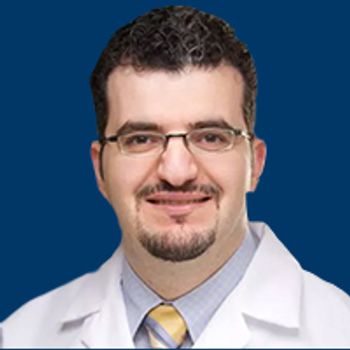
The combination of durvalumab and guadecitabine generated early signs of clinical activity and tolerability in patients with advanced clear cell renal cell carcinoma, particularly those with no prior exposure to checkpoint inhibitors.

Antoni Vilaseca, MD, PhD, explains the unique mechanism of the TAR-210 erdafitinib delivery system and expands on the key objectives, trial design, and patient characteristics of a phase 1 trial evaluating TAR-210 in patients with recurrent NMIBC or MIBC harboring select FGFR mutations or fusions.

Researchers at the Indiana University Melvin and Bren Simon Comprehensive Cancer Center are addressing the low colorectal cancer screening rates in rural Indiana communities with a five-year, $3.3 million grant from the National Cancer Institute.

Janeesh Sekkath Veedu, MBBS, discusses the need for research comparing outcomes with surgery-based treatment vs CRT and immunotherapy in stage IIIA NSCLC, shares findings from a NCDB analysis, and emphasizes the importance of continuing this research as updated data become available.
Jennifer M. Matro, MD, discusses the real-world implications and uptake of the HER2CLIMB regimen, other trials investigating tucatinib-based regimens in HER2-positive metastatic breast cancer, and how approaches differ between early-stage and metastatic hormone receptor–positive/HER2-negative breast cancer.

Oliver Dorigo, MD, PhD, explains how MVP-S leverages the DPX platform to produce persistent anti-survivin immune infiltration, highlights the antitumor activity and safety observed with the combination when given to patients with recurrent ovarian cancer, and describes additional research efforts underway.
The use of next-generation sequencing demonstrated that the most prevalent genomic alterations in patients with endometrioid ovarian carcinoma include ARID1A, PIK3CA, PTEN, CTNNB1, KRAS, and P53.