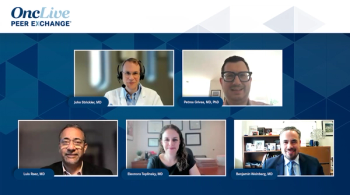
Dr. Weinberg envisions increasing ctDNA incorporation into adjuvant decision-making, anticipating that Circulate North America results will provide comfort for de-escalating ctDNA-negative patients while escalating ctDNA-positive patients.

John Strickler, MD is a Professor of Medicine in the Division of Medical Oncology, where he is Co-Leader for the Precision Cancer Department at Duke University's School of Medicine.
Dr. Weinberg envisions increasing ctDNA incorporation into adjuvant decision-making, anticipating that Circulate North America results will provide comfort for de-escalating ctDNA-negative patients while escalating ctDNA-positive patients.
Dr. Raez addresses choosing between tumor-informed and tumor-naïve platforms, noting no formal prospective comparison exists.
Dr. Weinberg addresses where evidence is strongest versus where the field risks getting ahead of itself.
Dr. Teplinsky, reflecting on commonalities across tumor types, notes that although the discussion focused on early-stage breast cancer, increasing ctDNA use exists in metastatic disease to identify treatment-emergent mutations guiding therapy selection, representing a different application context.
Dr. Raez discusses IASLC 2025 data, now published in the Journal of Thoracic Oncology, representing important progress for lung cancer's MRD research, which has historically lagged behind gastrointestinal and genitourinary cancers.
Dr. Weinberg addresses practical workflows for ctDNA-positive, imaging-negative patients, noting no current standard of care exists despite NCCN guidelines addressing elevated CEA management.
Dr. Weinberg discusses 2 major observational datasets informing colorectal cancer ctDNA practice.
Dr. Teplinsky discusses the evolving breast cancer surveillance paradigm, noting historical data showing routine imaging surveillance doesn't impact outcomes, though this data predates modern imaging technology.
Dr. Grivas confirms ctDNA integration into multidisciplinary tumor boards is increasing, describing his bladder cancer multidisciplinary clinic involving urology, medical oncology, radiation oncology, and pathology/radiology review focused on localized muscle-invasive bladder cancer.
Dr. Weinberg explains the treatment on molecular recurrence (TOMR) concept, drawing parallels to biochemical relapse monitoring in prostate cancer. In colorectal cancer, patients with positive ctDNA after completing curative-intent surgery and adjuvant chemotherapy will experience radiographic recurrence at a median of approximately 5.5 months, representing a population potentially amenable to curative intervention through escalated imaging to identify oligometastatic disease suitable for metastasectomy, or enrollment in novel drug development trials.
Dr. Teplinsky addresses where ctDNA and MRD testing fit within the patient care continuum, noting that value isn't uniform across disease stages or tumor types. The strongest signal currently exists in the post-treatment surveillance setting, where tumor-informed assays can identify patients at higher recurrence risk before disease becomes visible on imaging.
Dr. John Strickler introduces the program on circulating tumor DNA (ctDNA) and minimal residual disease (MRD) testing across solid tumors, joined by Dr. Eleonora Teplinsky (breast and gynecologic oncology, Valley Health System), Dr. Ben Weinberg (gastrointestinal oncology, Georgetown University), Dr. Petros Grivas (genitourinary oncology, Fred Hutchinson Cancer Center), and Dr. Luis Raez (thoracic oncology, Memorial Healthcare System).
John H. Strickler, MD, details the impetus for evaluating the novel c-Met–directed ADC Temab-A in refractory metastatic colorectal cancer.
John H. Strickler, MD, discusses the preliminary efficacy of sotorasib in combination with multiple agents across tumor types harboring KRAS G12C mutations.

John H. Strickler, MD, details the rationale for evaluating telisotuzumab adizutecan in advanced gastric/GEJ cancer.

John H. Strickler, MD, discusses the rationale for developing telisotuzumab adizutecan in MET gene–amplified advanced gastric cancer.
Dr Strickler discusses the challenges of targeting RAS alterations in pancreatic cancer and efforts to improve pancreatic cancer screening rates.

John H. Strickler, MD, discusses the role of biomarker testing in metastatic pancreatic cancer.
John H. Strickler, MD, discusses the efficacy and safety of telisotuzumab adizutecan in patients with MET gene–amplified gastric/GEJ cancer.
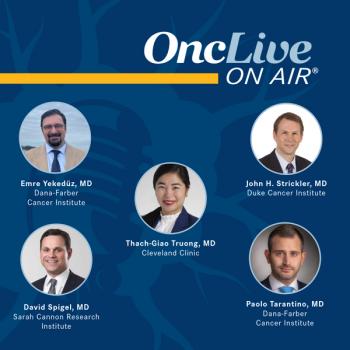
Experts from across oncology specialties discuss the abstracts and presentations they are most looking forward to seeing at the 2024 ESMO Congress.

John H. Strickler, MD, discusses the significance of fruquintinib for patients with metastatic colorectal cancer who have exhausted standard therapies.

The panel concludes with perspectives on the future of treatment for patients with colorectal cancer, including unmet needs in the disease space.
Clinical insights on the roles of various members within a multidisciplinary team involved in the care of patients with colorectal cancer.
Experts on colorectal cancer discuss the treatment decision-making process, highlighting the safety profiles of fruquintinib and regorafenib.
Michael Leung, PharmD, presents the case of a 57-year-old man with cecal colon adenocarcinoma and provides his initial thoughts, particularly on adverse event management.
Focusing on the treatment of patients receiving regorafenib, the panel details the management of common adverse events, prophylaxis strategies, and the roles of members within a multidisciplinary team.
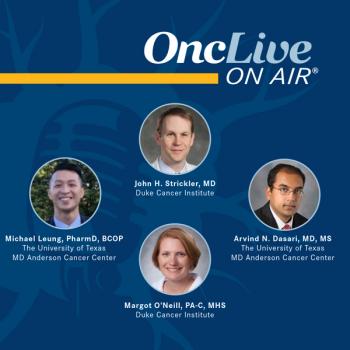
Strickler, Leung, Dasari, and O'Neill discuss adverse effect monitoring and management with standard agents for patients with colorectal cancer.

John H. Strickler, MD, discusses the significance of the FDA approval of tucatinib plus trastuzumab in metastatic colorectal cancer.
John H. Strickler, MD, discusses the benefit of combining tucatinib with trastuzumab in HER2-positive metastatic colorectal cancer.
John H. Strickler, MD, discusses the importance of investigating targeted therapies in HER2-positive metastatic colorectal cancer.
September 11th 2024
December 5th 2018
December 21st 2018
January 4th 2019