
Karen Pinilla Alba, MD, discusses the safety findings stages 1 and 2 of the phase II/III PARTNER trial in triple negative and/or germline BRCA-mutated breast cancer.

Your AI-Trained Oncology Knowledge Connection!
Karen Pinilla Alba, MD, discusses the safety findings stages 1 and 2 of the phase II/III PARTNER trial in triple negative and/or germline BRCA-mutated breast cancer.

A durvalumab-based neoadjuvant regimen induced an impressive pathologic complete response rate in patients with triple-negative breast cancer.
Nancy Lin, MD, discusses the impact of neratinib on development and progression of central nervous system metastases in patients with HER2-positive metastatic breast cancer.
Pierfranco Conte, MD, discusses the findings of the OlympiAD trial in BRCA-mutated HER2-negative metastatic breast cancer.

Accelerated partial breast irradiation using intensity-modulated radiotherapy is not significantly different from whole breast irradiation in preventing recurrence in patients with low-risk early breast cancer.

Olaparib continued to show a numerical overall survival (OS) benefit with a favorable hazard ratio for OS versus chemotherapy in patients with BRCA-positive, HER2-negative metastatic breast cancer, according to an extended, exploratory follow-up analysis of the phase III OlympiAD trial.

A pathologic complete response to HER2-directed neoadjuvant therapy reduced the risk of recurrence in early HER2-positive breast cancer but did not eliminate it, supporting the common practice of continued anti-HER2 therapy.

Atezolizumab (Tecentriq) in combination with carboplatin and nab-paclitaxel (Abraxane) did not lead to a statistically significant increase in pathologic complete response (pCR) rate compared with carboplatin/nab-paclitaxel alone in patients with early high-risk and locally advanced triple-negative breast cancer,

Maintenance durvalumab may improve outcomes versus chemotherapy in patients with triple-negative breast cancer or those with PD-L1–positive breast cancer across several subtypes, according to exploratory analyses from the phase II randomized SAFIR02-IMMUNO trial presented at the 2019 San Antonio Breast Cancer Symposium.

The aromatase inhibitor anastrozole maintained a preventive effect for postmenopausal women at high risk for breast cancer nearly 12 years after discontinuing treatment.

Patients with triple-negative breast cancer have greater rates of pathologic complete responses when pembrolizumab is added to neoadjuvant and adjuvant chemotherapy. Furthermore, these benefits are observed across patient subgroups, most notably in those patients with stage III and/or node-positive disease.

Real-world data for frontline palbociclib indicate that the positive progression-free survival data observed with the CDK4/6 inhibitor in the pivotal PALOMA-2 trial would likely translate to an overall survival benefit in patients with HR-positive/HER2-negative metastatic breast cancer

Rashmi K. Murthy, MD, MBE, discusses results of the HER2CLIMB trial in previously treated HER2-positive breast cancer.
Sara A. Hurvitz, MD, associate professor of medicine and medical oncologist, University of California Los Angeles, discusses the use of antibody-drug conjugates in HER2-positive breast cancer.

The first reported data for adjuvant ado-trastuzumab emtansine in early HER2-positive breast cancer showed high rates of disease control in a randomized trial designed to compare toxicities with trastuzumab and paclitaxel.

Margetuximab continued to show a clear progression-free survival benefit and a trend toward an overall survival benefit versus trastuzumab (Herceptin) when either agent was combined with chemotherapy in patients with HER2-positive metastatic breast cancer who had received prior anti-HER2 therapies.

Adjuvant pertuzumab (Perjeta) with trastuzumab (Herceptin) plus chemotherapy showed a 0.9% improvement in overall survival and continued to reduce the risk of disease recurrence in patients with HER2-positive early breast cancer.

Adding tucatinib to trastuzumab (Herceptin) and capecitabine (Xeloda) reduced the risk of death by 34% in heavily pretreated patients with unresectable locally advanced or metastatic HER2-positive breast cancer.
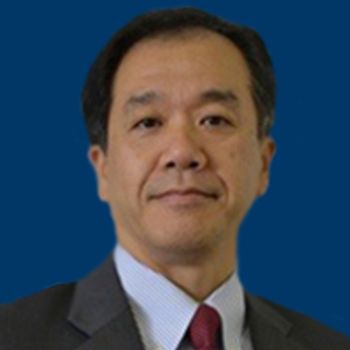
Adding the novel oral fluoropyrimidine derivative S-1 to adjuvant endocrine therapy significantly improved invasive disease-free survival for Japanese patients with HR-positive, HER2-negative breast cancer.

Trastuzumab deruxtecan (T-DXd; DS-8201) induced a confirmed objective response rate of almost 61% and a durable benefit in heavily pretreated patients with advanced HER2-positive breast cancer.

More than three times as many patients with transplant-ineligible newly diagnosed multiple myeloma remained alive and progression free after >3 years when they received daratumumab (Darzalex) in addition to standard first-line therapy.

The CAR T cell therapy bb21217 demonstrated high very good partial response or better rates in patients with heavily pretreated relapsed/refractory multiple myeloma.

A majority of adult patients with β-thalassemia who require regular red blood cell transfusions experienced clinically meaningful and durable transfusion burden reduction associated with luspatercept (Reblozyl).

REGN1979 demonstrated antitumor activity with an acceptable safety profile in heavily pretreated patients with relapsed/refractory B-cell non-Hodgkin lymphoma.

The addition of CP-0610 to ruxolitinib (Jakafi) in JAK inhibitor-naïve patients with myelofibrosis induced splenic and symptomatic responses as early as 12 weeks.

The CAR T-cell therapy tisagenlecleucel (Kymriah) showed similar real-world efficacy and safety findings to that of the JULIET trial in the treatment of adult patients with relapsed/refractory diffuse large B-cell lymphoma.

Adding an anti-CD38 antibody to a 3-drug chemotherapy-free regimen led to deeper and more frequent responses in patients with transplant-eligible, newly diagnosed multiple myeloma.
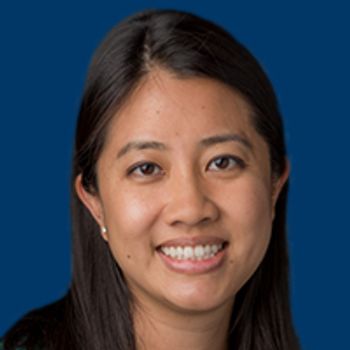
Navitoclax plus ruxolitinib (Jakafi) showed clinically meaningful spleen responses and improvements in symptoms for patients with primary or secondary myelofibrosis, following the development of resistance to frontline ruxolitinib.
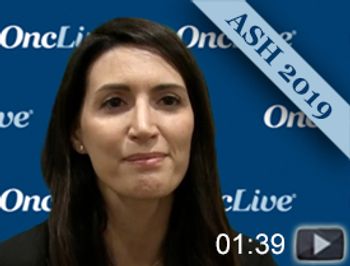
Ilaria Iacobucci, PhD, staff scientist, St. Jude Children’s Research Hospital, discusses the use of integrated transcriptomic and genomic sequencing in identifying prognostic constellations of driver mutations in acute myeloid leukemia and myelodysplastic syndromes.

Patrick Brown, MD, chair of NCCN Guidelines for Adult and Pediatric ALL, and director of the Pediatric Leukemia Program at Sidney Kimmel Comprehensive Cancer Center, discusses the results of the randomized phase III Children’s Oncology Group Study AALL1331 trial of blinatumomab (Blincyto) versus chemotherapy as post-reinduction therapy in high- and intermediate-risk children and young adults with B-acute lymphoblastic leukemia in first relapse.