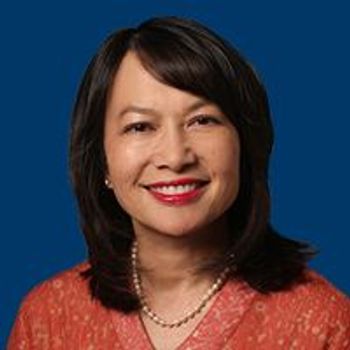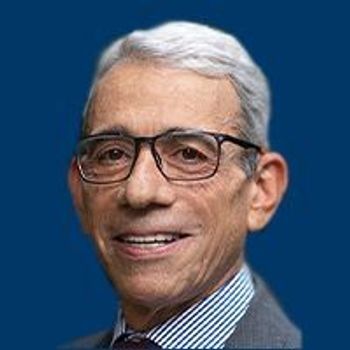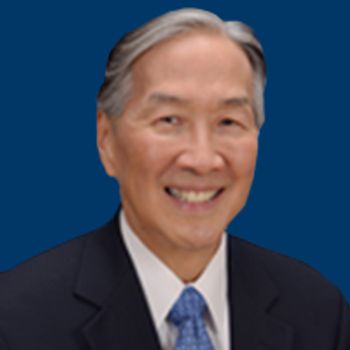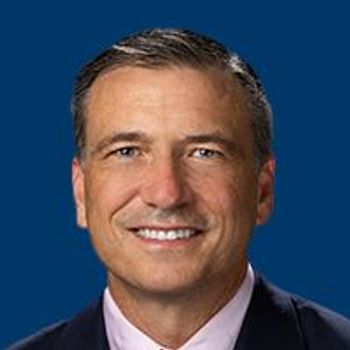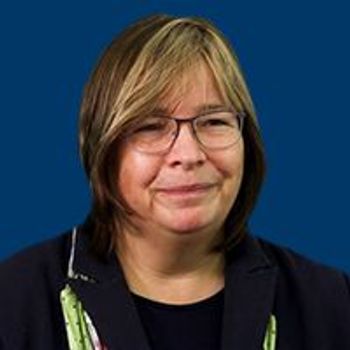
Fox Chase Cancer Center is pleased to announce the hiring of Lindsey B. Taylor, MD, as an assistant professor in the Department of Hematology/Oncology and the Breast Cancer and Hematology Programs.

Your AI-Trained Oncology Knowledge Connection!


Fox Chase Cancer Center is pleased to announce the hiring of Lindsey B. Taylor, MD, as an assistant professor in the Department of Hematology/Oncology and the Breast Cancer and Hematology Programs.

Moxetumomab pasudotox-tdfk will be permanently discontinued in the United States market for the treatment of relapsed/refractory hairy cell leukemia.

Leading experts in the field of liver cancer contextualized how recent data are influencing the treatment paradigm in hepatocellular carcinoma.

Treatment with brexucabtagene autoleucel produced ongoing responses in patients with mantle cell lymphoma with high-risk disease characteristics, including those with a lower ECOG performance score and tumor burden and less frequent prior use of bridging or platinum therapy.

ADXS-504, an investigational off-the-shelf neoantigen therapy, has been reported to be well tolerated and safe in patients with biochemically recurrent early prostate cancer.

The utilization of the anti-CD40 agonist, CDX-1140, in combination with pembrolizumab was generally well tolerated and demonstrated preliminary efficacy in patients with anti–PD-1/PD-L1 resistant, locally advanced or metastatic solid tumors.

Results from a study of 318,549 Medicare beneficiaries with poor-prognosis cancers showed than Black and Hispanic patients were substantially less likely to receive any opioids or long-acting opioids than White patients at the end of life.

Long-serving pharmacy executive, Ray Bailey, retired on December 31, 2022.

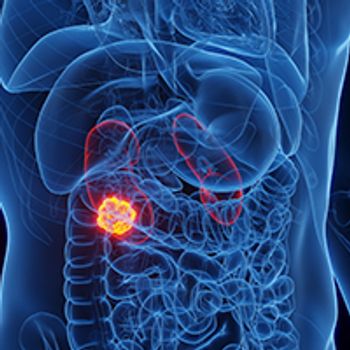
The FDA has granted an orphan drug designation to QN-302 for the treatment of patients with pancreatic cancer.

because of the differences between the characteristics of research subjects and individuals routinely cared for outside the confines of a clinical trial, appropriately designed examinations of “real-world” populations may provide a more relevant picture of the actual influence of a particular therapeutic intervention.

Ajai Chari, MD, shares some background on talquetamab, reported safety and efficacy findings from MonumenTAL-1, and highlighted other ways in which the agent is being explored in multiple myeloma.

The combination of BXCL701 and pembrolizumab produced encouraging responses in patients with small cell neuroendocrine carcinoma metastatic castration-resistant prostate cancer, according to topline data from a phase 2 trial.

Alexander Spira, MD, PhD, FACP, highlights the top advancements across non–small cell lung cancer in 2022, emphasized the need for increased genetic testing to inform treatment decisions, and previewed other agents under development.

A type of chronic leukemia can simmer for many years and for a small percentage of patients, the slower paced disease can transform into an aggressive cancer, called secondary acute myeloid leukemia, that has few effective treatment options.

The National Medical Products Administration of China has approved mobocertinib for the treatment of adult patients with locally advanced or metastatic non–small cell lung cancer harboring EGFR exon 20 insertion mutations and whose disease progressed on or following platinum-based chemotherapy.

The FDA has granted a fast track designation to best-in-class threonine tyrosine kinase inhibitor CFI-402257 for the treatment of adult patients with estrogen receptor (ER)–positive/HER2-negative advanced breast cancer after disease progression on prior CDK4/6 inhibitors and endocrine therapy.

Treatment with the folate receptor α–directed antibody-drug conjugate luveltamab tazevibulin led to a 37.5% overall response rate in Frα-selected patients with advanced ovarian cancer, defined by a tumor proportion score above 25%.

The biomarker claudin 18.2 has recently shown promise as an intriguing new target in the gastroesophageal junction adenocarcinoma space.

Vamsidhar Velcheti, MD, highlights the advancement of CTLA-4–based combinations in non–small cell lung cancer treatment, the emergence of antibody-drug conjugates in non–small cell lung cancer, and the impact of the POSEIDON trial on the treatment landscape.

Treatment with adjuvant pembrolizumab resulted in favorable quality-of-life outcomes vs high-dose interferon α 2b or ipilimumab in patients with resected melanoma at high risk for relapse.

Geneoscopy’s at-home, stool-based diagnostic screening test to detect colorectal cancer and advanced adenomas in average-risk individuals displayed high sensitivity and specificity, meeting the primary objectives of the phase 3 CRC-PREVENT trial.

Henry Ford Hospital has earned a three-year accreditation from the National Accreditation Program for Rectal Cancer, which was developed through a collaboration between the OSTRiCh consortium and the Commission on Cancer, a quality program of the American College of Surgeons.

The FDA has granted an orphan drug designation to azeliragon for the treatment of patients with glioblastoma.

The European Commission has issued an orphan drug designation to duvelisib for the treatment of adult patients with peripheral T-cell lymphoma.

Erin K. Crane, MD, MPH, talked to Oncology Fellows about helping trainees care for their own health and wellness, navigate the politics surrounding gynecologic care, and the lessons she hopes they take away from the program.

The Center for Drug Evaluation of China's National Medical Products Administration has granted a breakthrough therapy designation to IBI351 for the treatment of patients with advanced non–small cell lung cancer harboring a KRAS G12C mutation who have received at least 1 prior line of systemic therapy.

Tanya B. Dorff, MD, highlights improvements in the current treatment paradigm for other genitourinary cancers and spotlights efforts being made to expand the role of immunotherapy and targeted therapy combinations.

The FDA has granted an orphan drug designation to LP-284, a novel small-molecule, next-generation acylfulvene, for the treatment of mantle cell lymphoma

Chan Y. Cheah, MD, MBBS, discusses the the phase 1 BGB-11417-101 trial, which showed that the BCL-2 inhibitor BGB-11417, administered alone or in combination with the BTK inhibitor zanubrutinib, induced promising response rates and was well tolerated patients with chronic lymphocytic leukemia.

Patients with stage III colon cancer who receive longer courses of adjuvant oxaliplatin, exercise for less than 9 hours per week, have diabetes, or have a higher body mass index could experience higher rates of severe oxaliplatin-induced peripheral neuropathy.