
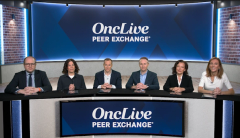
Opinion|Videos|January 26, 2026
Broader Advances in AML: Triplets, Oral Regimens, and Expanding MRD-Guided Strategies
This segment shifts toward the broader excitement in AML therapeutics beyond induction paradigms, focusing on emerging triplet strategies, fully oral regimens, and longer-term survival improvements demonstrated in recent clinical trials.
Advertisement
Episodes in this series
This segment shifts toward the broader excitement in AML therapeutics beyond induction paradigms, focusing on emerging triplet strategies, fully oral regimens, and longer-term survival improvements demonstrated in recent clinical trials. The panel begins by highlighting ongoing work with oral therapy combinations, particularly regimens built from menin inhibitors paired with oral HMAs. These “all-oral” strategies have shown promising response rates and may offer patients more flexibility, reduced clinic time, and improved quality of life.
The discussion then moves to the azacitidine–venetoclax–gilteritinib triplet, with data from MD Anderson demonstrating nearly tripled overall survival compared with azacitidine–venetoclax alone in FLT3-positive patients. The panel emphasizes the importance of dosing finesse, adjusting schedules to maintain tolerability without sacrificing efficacy, an area in which MD Anderson has pioneered practical algorithms. They also mention the upcoming VICEROY multicenter data, reinforcing that such regimens can succeed beyond single-center expertise.
The panel notes that these advancements lay the groundwork for a future where targeted triplets may be increasingly common in both older and younger patients with AML, particularly those with actionable mutations such as IDH1/2, KMT2A rearrangements, FLT3, and NPM1. As survival improves, the role of MRD testing becomes even more critical. New MRD tools, including highly sensitive assays for KMT2A-rearranged AML, promise to refine decision-making around treatment continuation, intensification, and transplant timing.
The AML field is expanding rapidly, with multiple therapeutic avenues (oral regimens, triplets, mutation-driven strategies, and advanced MRD monitoring) working together to reshape both induction and consolidation strategies.
Advertisement
Related to this article
A pilot study represents a milestone toward testing a faster, more powerful, and potentially less-toxic form of radiation therapy for cancer treatment.
Oral azacitidine and cedazuridine met the end point of total cycle azacitidine exposure vs subcutaneous azacitidine in MDS or CMML.
UTRxMYCN M1-14 received orphan drug status for soft tissue sarcoma and RPDD for rhabdomyosarcoma.

Interim data showed that the BCMA-directed CAR T-cell therapy NXC-201 generated complete responses in relapsed/refractory AL amyloidosis.

Estelamari Rodriguez, MD, MPH, discusses the rationale, design, and practice implications of the phase 3 RELATIVITY-1093 trial in nonsquamous NSCLC.

Experts spotlight the variety of breast cancer research being presented at the 2026 ESMO Congress.

The third BLA submission for tabelecleucel follows 2 CRLs and includes updated ALLELE data with additional patients and longer follow-up.

A New England Journal of Medicine report describes complete hepatoblastoma regression in a 3-year-old treated with a novel immunotherapy.
Advertisement
Advertisement
Trending on OncLive
1
FDA Grants Fast Track Designation to Plinabulin Plus Docetaxel in Post-ICI Non-Squamous NSCLC
2
Breast Cancer Experts Highlight Abstracts to Watch at ESMO 2026
3
Navigating DLL3-Targeting T-Cell Engagers and the Evolving Small Cell Lung Cancer Treatment Landscape
4
FDA Approves Denosumab Biosimilar for Skeletal-Related Events, GCTB, and Hypercalcemia of Malignancy
5