
Opinion|Videos|January 19, 2026
When Intensification Belongs Upfront vs. Post-Remission: Balancing Cure and Toxicity
A critical question is when in the treatment timeline therapeutic intensification should occur: during induction or post-remission.
Advertisement
Episodes in this series
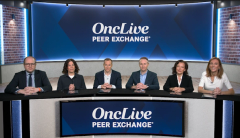
A critical question is when in the treatment timeline therapeutic intensification should occur: during induction or post-remission. The panel emphasizes that AML management increasingly requires careful sequencing rather than simply escalating or de-escalating therapy globally. The speakers explore the rationale for early versus delayed intensification, particularly in the context of emerging triplet regimens and targeted therapies.
One of the panelists raises a key concern: although triplets may achieve deep remissions without the toxicity of intensive chemotherapy, some patients may still require transplant. If intensification is deferred until later, at a moment when the leukemia burden is low, patients may tolerate it better, but clinicians risk missing the window to control aggressive disease at diagnosis. In contrast, applying maximal intensification upfront may benefit biologically high-risk patients but carries greater immediate toxicity.
The group reflects on real-world examples in which even patients with favorable-risk features (such as NPM1-mutated AML) sometimes ultimately require transplantation after intensive therapy, reminding the audience that biologically “favorable” does not guarantee long-term cure without consolidation or transplant. They point out that this uncertainty complicates decisions about whether a low-intensity triplet is sufficient on its own or whether certain patients should still receive intensive induction regardless of early response depth.
Panelists also discuss how MRD may eventually help settle this dilemma by allowing for response-adapted strategies. However, MRD-guided treatment in AML is still evolving, and current evidence is insufficient to rely on MRD to decide between induction intensities in most cases.
Although low-intensity induction continues to expand, the decision to escalate therapy, either upfront or later, will remain patient-specific, mutation-guided, and influenced by future clinical trial data.
Advertisement
Related to this article

The FDA approved pirtobrutinib for untreated chronic lymphocytic leukemia, granted priority review to elinzanetant for breast cancer hot flashes, and more.

The 2026 amendment adds 40 new recommendations, including active surveillance, office-based treatment, and chemoablation for select recurrent low-grade disease.

The FDA has approved pirtobrutinib for the treatment of adult patients with previously untreated CLL or SLL harboring no known 17p deletion.

By finding a way to attack the most important human oncogene, KRAS, the UCSF chemical biologist launched a new era in cancer treatment.

TRE-515 earned fast track status in combination with KRAS inhibitors for G12C-mutated NSCLC after anti–PD-(L)1 therapy and platinum-based chemotherapy.

An NDA for zipalertinib in EGFR exon 20 insertion–positive NSCLC is being supported by phase 3 REZILIENT3 data.
Did you catch all of this week's top oncology news? Test your knowledge with OncLive's Weekly News Quiz.
Aglatimagene besadenovec plus EBRT was linked to a 41% lower risk of prostate cancer recurrence or death, alongside durable immune activity.
Advertisement
Advertisement
Trending on OncLive
1
FDA Approves Pirtobrutinib for Previously Untreated CLL/SLL
2
FDA Grants Fast Track Designation to TRE-515 Plus KRAS Inhibitors in Pretreated KRAS G12C+ NSCLC
3
NDA Submission Is Initiated for Zipalertinib Plus Chemotherapy in Frontline EGFR Exon 20 Insertion+ NSCLC
4
Oral Azacitidine and Cedazuridine Meets Primary Pharmacokinetic End Point in MDS and CMML
5