
Opinion|Videos|January 12, 2026
Triplet Therapy Potential and the Future of Induction Design
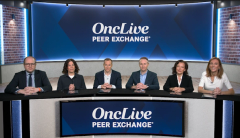
This segment discusses the promise of triplet regimens and how emerging data may reshape AML induction in select populations.
Advertisement
Episodes in this series
This segment discusses the promise of triplet regimens and how emerging data may reshape AML induction in select populations. The experts begin by noting that if venetoclax-based therapy (such as azacitidine + venetoclax) proves slightly superior in certain younger, fit patients, those individuals may also tolerate the addition of a third agent, whether targeted or non-targeted, without prohibitive toxicity. This insight positions such patients as ideal candidates for future triplet strategies.
The panel highlights low early-mortality rates seen in triplet-treated populations in recent studies, suggesting that expanding these regimens beyond traditionally older or unfit cohorts could be feasible. They emphasize that younger patients, with better organ reserve and marrow resilience, may be able to safely receive combinations involving venetoclax, HMAs, and mutation-directed drugs. Because many younger individuals also have biologically defined targets such as NPM1, IDH1/2, or KMT2A rearrangements, the rationale for augmentation grows stronger.
The group then compares ongoing randomized trials evaluating intensive chemotherapy + targeted agents (e.g., menin inhibitors or FLT3 inhibitors) versus intensive chemotherapy alone. They question whether these trials will still be clinically relevant once triplet venetoclax-based regimens mature, given the faster development of low-intensity triplets. They also acknowledge the complexity of proving equivalence or superiority across these evolving paradigms.
Finally, the panel discusses the timing of therapeutic intensification. Some patients may benefit by front-loading intensity through intensive chemotherapy; others may benefit from delaying maximal intensity until after disease clearance, such as at transplant. They stress that intensification in remission may be safer for certain patients and pose different toxicity risks than intensive induction. Overall, this segment frames the emerging debate: whether the future of AML treatment will center on optimized low-intensity triplets or on enhanced versions of traditional intensive induction.
Advertisement
Related to this article
A pilot study represents a milestone toward testing a faster, more powerful, and potentially less-toxic form of radiation therapy for cancer treatment.
Oral azacitidine and cedazuridine met the end point of total cycle azacitidine exposure vs subcutaneous azacitidine in MDS or CMML.
UTRxMYCN M1-14 received orphan drug status for soft tissue sarcoma and RPDD for rhabdomyosarcoma.
Interim data showed that the BCMA-directed CAR T-cell therapy NXC-201 generated complete responses in relapsed/refractory AL amyloidosis.

Estelamari Rodriguez, MD, MPH, discusses the rationale, design, and practice implications of the phase 3 RELATIVITY-1093 trial in nonsquamous NSCLC.

Experts spotlight the variety of breast cancer research being presented at the 2026 ESMO Congress.

The third BLA submission for tabelecleucel follows 2 CRLs and includes updated ALLELE data with additional patients and longer follow-up.

A New England Journal of Medicine report describes complete hepatoblastoma regression in a 3-year-old treated with a novel immunotherapy.
Advertisement
Advertisement
Trending on OncLive
1
FDA Grants Fast Track Designation to Plinabulin Plus Docetaxel in Post-ICI Non-Squamous NSCLC
2
Breast Cancer Experts Highlight Abstracts to Watch at ESMO 2026
3
Navigating DLL3-Targeting T-Cell Engagers and the Evolving Small Cell Lung Cancer Treatment Landscape
4
FDA Approves Denosumab Biosimilar for Skeletal-Related Events, GCTB, and Hypercalcemia of Malignancy
5